
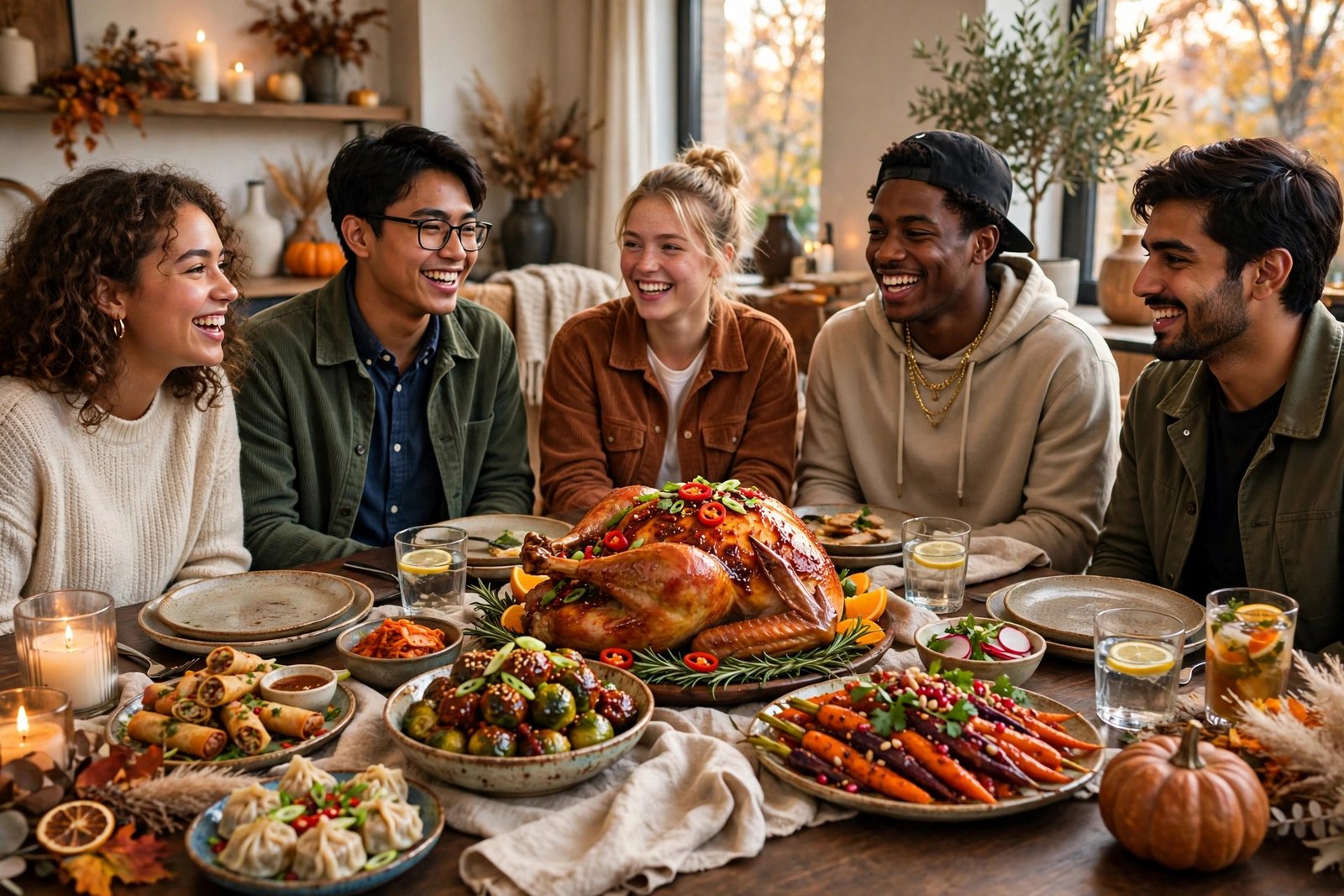
Thanksgiving falls on Thursday, November 26, 2026, and this year the holiday table is getting a bold new look. Turkey and pumpkin pie are not going anywhere, but the generation now old enough to host the meal is seasoning, swapping, and remixing the classics in ways that would have surprised their grandparents. Gen Z hosts are bringing gochujang Brussels sprouts, harissa honey-glazed carrots, chili crisp, miso, and dumplings to a holiday that once prized doing everything exactly the same way every year.
The shift is not about rejecting tradition. It is about making tradition personal. According to food trend experts and chefs interviewed by USA Today, younger hosts are keeping the dishes they grew up with and adding the flavors they actually eat and love the rest of the year. The result is a Thanksgiving that still feels familiar, with mashed potatoes, gravy, and cranberry sauce on the table, but tastes brighter, spicier, and more varied than the holiday many Americans remember from childhood.
What Is New on the Thanksgiving Table?
The clearest change is heat and global flavor. Gen Z is keeping the classics like turkey and pumpkin pie, but getting creative with them, according to Miriam Aniel Oved, a senior consumer trends analyst at Tastewise, a food and beverage consumer intelligence site. About one in ten Gen Z Thanksgiving foods include something mashed, spicy, barbecued, mini, gluten-free, or deviled, according to Tastewise data cited by USA Today. Instead of bringing the traditional green bean casserole, a younger host might bring a spicy version, or a single serving sized for a relative with dietary restrictions.
That one-in-ten figure captures a wider attitude. Gen Z loves to take dishes and make them more exciting with spice, texture, and different cultural flavors, said Jessica Woo, a Las Vegas cook and author of the cookbook Let’s Make Some Lunch. Things like chili crisps, hot honey, and spicy seasonings are changing traditional dishes, she said, and the change is happening across the whole meal, from the first appetizers to the last slice of pie. The holiday is becoming a showcase for the flavors this generation grew up with, not just the ones printed on a recipe card decades ago.
Spice, Heat, and Global Flavor in Every Dish
Gochujang, harissa, miso, and chili crisp are the flavors showing up most often in this year’s Thanksgiving talk, and they are appearing in places that once belonged to butter and sage alone. According to Rowena Scherer, a chef, cookbook author, and founder and chief executive of the global cooking-kit brand eat2explore, you might see gochujang, chili crisp, miso, and harissa show up in glazes, butters, and dressings. A spoonful of gochujang in a glaze or a swirl of miso in butter can change a familiar side dish without changing what it is.
The vegetables are where the change is easiest to taste. Gochujang Brussels sprouts and harissa honey-glazed carrots were the two dishes USA Today singled out as emblematic of the new Thanksgiving, and they work because the underlying vegetables are already on the table. Roasted Brussels sprouts take beautifully to a sweet, spicy, fermented chili paste, and carrots love the warmth of harissa balanced with honey. These are not complicated restaurant techniques. They are pantry ingredients, used with confidence, and they turn a side dish that people used to politely ignore into one they ask about.
The Turkey Is Staying, but It Is Getting a Makeover
The turkey is not going anywhere, but it is getting a makeover, said Scherer, and that sentence sums up the whole Gen Z approach to Thanksgiving. The bird stays at the center of the table, but the way it is seasoned and served is changing. A spice rub, a citrus-chili marinade, or a chimichurri on the side can give the same roast turkey a completely different character, and younger cooks are happy to try all three. The pumpkin pie stays too, Scherer said, maybe next to a tres leches or a mochi dessert, so the familiar and the new sit side by side.
That mix-and-match spirit is also showing up in how people think about the main course itself. Own Han, a culinary content producer and author of Stacked: The Art of the Perfect Sandwich, told USA Today that at his Thanksgiving he still makes mashed potatoes, gravy, and roasted vegetables, but he brings dishes that feel more like him, like mac and cheese and a dish leaning into his Italian roots, such as pasta with vodka sauce or a lighter tomato sauce. Instead of the main turkey dish, Han said, he prefers a roast chicken and steak. For him, and for many hosts like him, the point is not to follow a script, but to cook food that reflects who is actually at the table.
Appetizers From Around the World
The first course is where the global influence is most visible. Dumplings, empanadas, and spring rolls might be part of an appetizer spread, according to Scherer, and that is a long way from the cheese-and-crackers tray that once opened most Thanksgiving meals. These are foods that many Gen Z hosts grew up eating at home, and bringing them to Thanksgiving is a way of saying that their family’s food belongs at the holiday table too. A plate of dumplings next to the cranberry sauce is not a rejection of tradition. It is an expansion of it.
That expansion matters because Thanksgiving has always been, at its heart, a meal about bringing people together, and the people coming together now come from more mixed and more diverse families than the holiday’s old image suggested. People seem less attached to doing things a certain way just because that is how they have always been done, Han said. The idea of getting everyone together and having a big meal is still there, but the food can be a lot more personal and reflect the cultures and values of the more diverse or mixed families that are hosting. When every guest brings something from home, the table tells a truer story about the family eating at it.
Friendsgiving Is Driving the Change
Much of this change comes from Friendsgiving, the gathering where friends celebrate Thanksgiving together with their own dishes, and where the usual rules are loosest. Friendsgiving is where it really takes off, Scherer said. When everyone brings a dish from their own family, the table becomes a potluck of traditions: Filipino lumpia beside Southern mac and cheese, Mexican tamales beside cranberry sauce. There is no correct menu anymore, just the traditions people actually carry with them, she said.
Friendsgiving works as a testing ground because the stakes are lower and the crowd is more forgiving. A friend who tries a gochujang-glazed side dish at a Friendsgiving in early November may bring it to the family table later in the month, and a dish that works once tends to come back the next year. Woo put it simply when she told USA Today that people still love the nostalgic classics, but Thanksgiving feels a lot less strict now. More families are mixing in foods from their culture, trying viral recipes, or just making what everyone actually likes, she said, and that is the real change: the holiday is being shaped by taste, not by obligation.
Social media is doing much of the spreading. On TikTok, cooks are sharing short videos of Thanksgiving recipes, including Brussels sprouts coated in gochujang sauce, and viewers are saving the ideas for their own tables. That is how a flavor that once belonged to Korean cooking ends up on a Thanksgiving table in Ohio or Texas: someone sees a thirty-second video, tries the glaze on a weeknight, and decides it belongs at the holiday. The platform rewards dishes that look good and taste bold, and Thanksgiving, with its big platters and bright colors, photographs well. For younger hosts who learned to cook from videos rather than from printed cookbooks, trying a viral recipe is not a break with tradition. It is simply how cooking works now.
Sides Are Taking Center Stage
The side dishes have always been the secret stars of Thanksgiving, and in 2026 they are getting even more attention. According to Campbell’s fifth annual State of the Sides report, based on research among 5,017 American adults who celebrate Thanksgiving, 46 percent of people celebrating Thanksgiving would welcome a meal made entirely of sides. That figure rises to 65 percent among Gen Z and 56 percent among Millennials, which helps explain why younger hosts are putting so much creativity into the dishes that surround the turkey.
The same report found that 88 percent of people like the traditional accompaniments, so this is not a revolt against the classics. It is a vote for giving the sides the same care as the main course. Mac and cheese is a good example: 57 percent of people in the Campbell’s research consider it the dish everyone can agree on, and 51 percent identify it as the Thanksgiving dish they eat most often throughout the year, rising to 68 percent among Gen Z. And 96 percent would consider an addition to it, including a different cheese, meat, or spices, which is an open invitation for a host to add chili crisp, hot honey, or a new cheese and still keep everyone happy.
Dessert, Drinks, and How to Host a Gen Z Thanksgiving
Dessert is following the same pattern as the rest of the meal: the classics stay, and something new joins them. Scherer’s suggestion of a tres leches or a mochi dessert next to the pumpkin pie captures the mood, and it fits a wider food trend that analysts call swicy, the combination of sweet and spicy flavors. According to Tastewise’s research on Gen Z eating habits, sweet flavors dominate consumption intent, and spicy flavors follow, which is why a dessert with a little heat, or a sweet glaze with chili in it, feels natural to this generation rather than strange.
The swicy trend has been building all year, and Thanksgiving is a natural place for it to land, because the holiday meal already mixes sweet and savory in dishes like cranberry sauce, sweet potato casserole, and honey-glazed ham. A hot honey drizzle over roasted vegetables, a chili-spiced cranberry sauce, or a gochujang glaze on carrots all use the same sweet-heat balance that younger eaters already love in snacks and street food. Tastewise’s Gen Z research notes that flavor influences Gen Z food decisions far more than health and nutrition, with taste as the primary driver for most young eaters, and Thanksgiving is the one meal of the year where taste is allowed to matter most.
For anyone hosting this year, the lesson from the chefs and trend experts is reassuringly simple: keep what you love, and add what feels like home. Woo’s own table is a good model. She still loves Thanksgiving, so she will always have the classic turkey, mashed potatoes, and stuffing combination, but she adds a twist. She grew up eating rice with everything, so even with a full Thanksgiving meal, there is going to be white steamed rice on the table. She adds Korean sweet potatoes to her sweet potato casserole, which keeps the classic meal but adds in something she grew up eating and makes it feel a little more like her family.
That is the formula that works for most families: one or two bold changes, not a whole new menu. A spicy green bean casserole, a citrus-chili turkey marinade, dumplings as an appetizer, or a mochi dessert beside the pumpkin pie can refresh the meal without making it unrecognizable. Ask guests about dietary needs before the day, keep the dishes everyone expects, and let one dish tell a story about where your family comes from. As Woo told USA Today, that is what Thanksgiving looks like for a lot of families now. You keep the traditions you love, but you also add the foods that feel like home, and the table is better for it.
A little planning makes the new Thanksgiving easier than it looks. Most of the flavors at the center of this year’s trend, gochujang, harissa, miso, chili crisp, and hot honey, are now sold in ordinary supermarkets, not only in specialty stores, and a single jar or tube can season several dishes. Buy them a week ahead, taste the glaze before the big day, and make one new dish rather than five, so the meal stays manageable. Keep the turkey, the mashed potatoes, and the pie exactly as your family expects them, and let the new dish be the surprise. That way, even the guest who is nervous about change still finds the meal they remember, and the guest who wants something new finds it too.
For more on the trend, read the USA Today report on how Gen Z is rewriting Thanksgiving, the Tastewise research on Gen Z eating habits, and the report on Campbell’s State of the Sides findings for Thanksgiving 2026.
FAQ
When is Thanksgiving in 2026?
Thanksgiving falls on Thursday, November 26, 2026. It is always celebrated on the fourth Thursday in November in the United States.
What foods are Gen Z hosts adding to Thanksgiving?
Gen Z hosts are adding gochujang, harissa, miso, and chili crisp to glazes, butters, and dressings, along with dishes like gochujang Brussels sprouts, harissa honey-glazed carrots, dumplings, empanadas, and spring rolls.
Is turkey still the centerpiece of Thanksgiving?
Yes. Chefs say the turkey is not going anywhere, but it is getting a makeover with spice rubs, citrus-chili marinades, or chimichurri on the side. Pumpkin pie also stays, often beside a tres leches or mochi dessert.
What is Friendsgiving?
Friendsgiving is a gathering where friends celebrate Thanksgiving together, each bringing dishes from their own families. Chefs say it is a major driver of the new Thanksgiving, because it turns the meal into a potluck of traditions.
How many Americans would eat a meal made only of Thanksgiving sides?
According to Campbell’s State of the Sides report, 46 percent of Americans celebrating Thanksgiving would welcome a meal made entirely of sides, rising to 65 percent among Gen Z.