
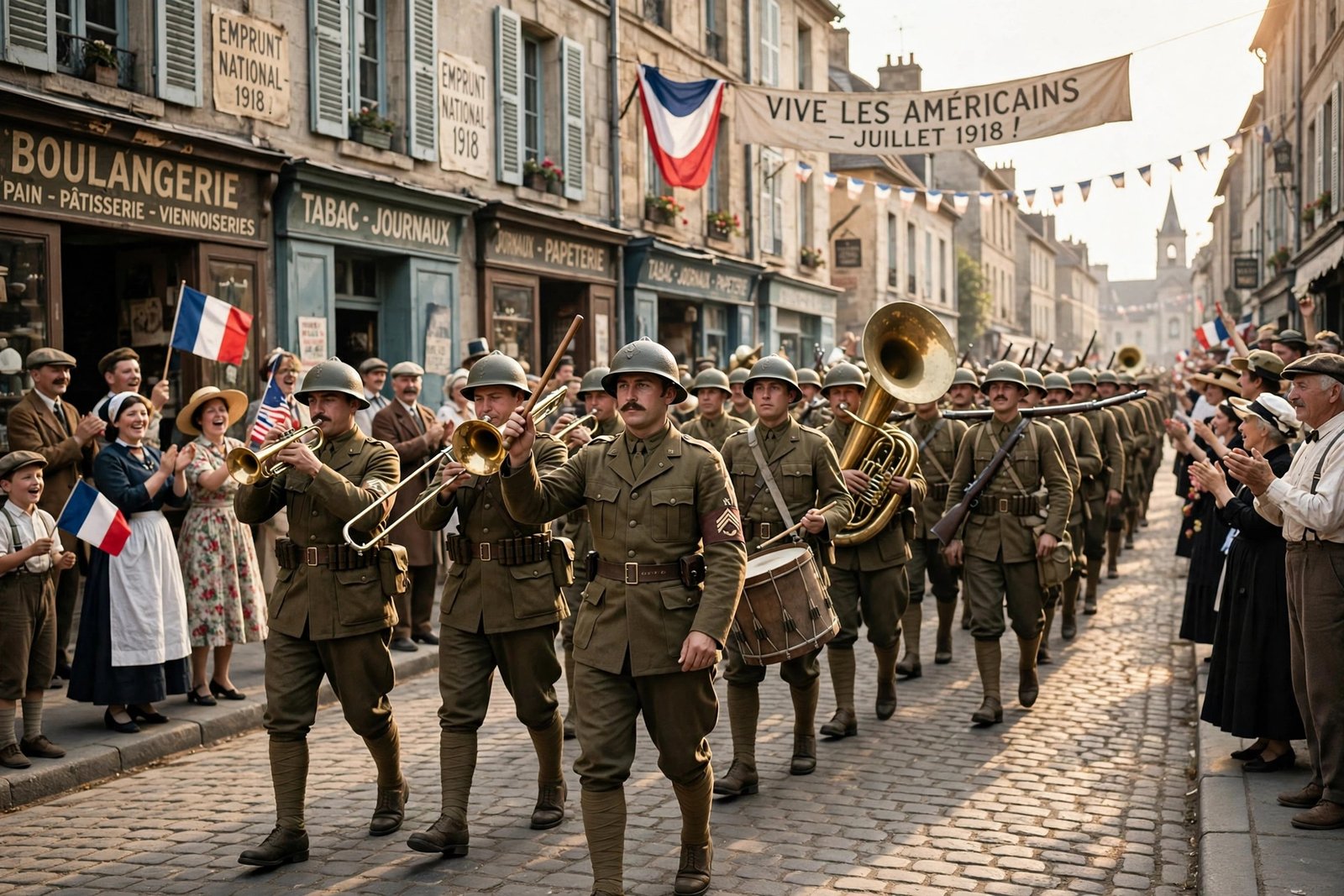
They spent 191 days in the front-line trenches, more than any other American unit in World War I. They suffered 1,500 casualties, more than any other American regiment. They were the first Allied unit to reach the Rhine River, and they came home to a hero’s parade through the streets of New York. And they did it all while fighting two wars at once: one against the German army in France, and one against racism in their own army.
They were the 369th Infantry Regiment, better known as the Harlem Hellfighters. This is the story of the Black regiment that fought for a country that had not yet decided to treat them as equals, and of how their courage on the battlefield helped change America.
A Regiment Born in Harlem
The regiment began as the 15th New York National Guard Regiment, constituted on June 2, 1913, and organized in New York City in June 1916. New York Governor Charles Whitman appointed William Hayward, a white attorney and former Nebraska National Guard colonel, as the regiment’s commanding officer. The unit recruited heavily in Harlem, the center of Black culture in New York City, and it quickly became a source of pride for the community.
At the end of 1916, the regiment enlisted one of its most famous members: James Reese Europe, the celebrated Black musician and composer who was a leading figure in the transition from ragtime to jazz. Europe became the leader of the regimental band, and the band itself became famous, introducing French audiences to American jazz and ragtime during the war.
When the United States entered World War I in April 1917, Black Americans traveled to New York City from across the country to enlist in the 15th. Around 375,000 African Americans served during the war, and about 200,000 were shipped overseas. But only two Black infantry units saw combat, accounting for around 42,000 troops. The 369th was one of them. Most Black soldiers were assigned to labor and support roles, building roads, unloading ships, and digging trenches, because the segregated Army did not trust them in combat. The men of the 15th New York were determined to prove that wrong.
Handed to the French
On March 1, 1918, the unit was redesignated as the 369th Infantry Regiment. A month later, it finally got its wish to see active duty, but not as part of the army it had come to represent. The American commander, General John J. Pershing, was under pressure from his French allies, who desperately needed reinforcements, and he made a decision that revealed the Army’s attitude toward its Black troops: he loaned the 369th to the French Army.
The handover came with indignities that the men never forgot. After their limited combat training stateside, they had been issued Springfield rifles. When they were assigned to the French, they had to give back their Springfields, along with almost every bit of American gear they had, including their helmets, their Army uniforms, and their food rations. In place of the Springfields, they received the French Lebel rifle, a reliable weapon but one that was temperamental and annoying to load, and French helmets, French uniforms, and French rations.
But the French treated the men differently in one crucial way: they treated them as soldiers. Unlike the Americans, the French were far less concerned with race, and they fully integrated the 369th into their forces, welcoming them with open arms. The regiment was assigned to the French Army’s 16th Division, and in May 1918 it went into the trenches on the Western Front. The French called them the Men of Bronze, in French the Hommes de Bronze, after witnessing their gallantry in the trenches. Their commander, Colonel Hayward, called them the Black Rattlers, a name tied to the rattlesnake insignia on the regiment’s patch.
Henry Johnson and Needham Roberts
The most famous story of the regiment happened in the early hours of May 14, 1918, in the Argonne Forest in the Champagne region of France. Two soldiers, Private Henry Johnson and Private Needham Roberts, were on listening duty in a forward outpost when they were attacked by a German raiding party of about twelve men.
Roberts was wounded early in the fight, and Johnson fought on alone. Wounded himself, he used his rifle, then his bolo knife, and finally his bare hands to drive off the attackers. He killed at least one German soldier with the knife, and the raiding party retreated, leaving behind weapons and equipment. Johnson’s actions saved Roberts’s life and prevented the Germans from capturing prisoners and intelligence.
The French awarded Johnson the Croix de Guerre, the French decoration for valor, and he was the first American to receive it. The story made headlines in the United States, and Johnson became one of the most famous soldiers of the war. The Army, however, did not award him the recognition his actions deserved at the time. It took nearly a century for the United States to catch up: Johnson was posthumously awarded the Purple Heart in 1996, the Distinguished Service Cross in 2002, and the Medal of Honor, the nation’s highest military decoration, in 2015.
That delay is part of the Hellfighters’ story, and it is worth telling plainly. The same Army that sent these men to fight under a foreign flag was slow to honor them when they came home. Johnson’s Medal of Honor came almost a hundred years after the night in the Argonne Forest. His son received it on his behalf at a White House ceremony.
191 Days Under Fire
The night in the Argonne was only the beginning. The 369th spent 191 days in front-line trenches, more than any other American unit during the war, and suffered 1,500 killed and wounded, the most losses of any American regiment, while receiving only 900 replacements. In one offensive, the regiment outpaced French units on either side by seven miles.
The regiment fought in the Champagne-Marne and Meuse-Argonne campaigns, the two great American offensives of 1918, and saw action at battles including the Second Battle of the Marne, Belleau Wood, Château-Thierry, and the Meuse-Argonne Offensive. Their reputation grew with every engagement. The Germans, according to the regiment’s own tradition, called them the Höllenkämpfer, or Hellfighters, a name that stuck and became the one by which history remembers them.
Here it is worth separating confirmed fact from legend, because the name’s origin is one of the most repeated stories in American military history and one of the least documented. The Army’s own history notes that there is no surviving German document using the term Höllenkämpfer for the regiment, and the name may have been a creation of the American press rather than a German nickname. What is not in doubt is that the nickname was in wide use by the end of the war, that the regiment embraced it, and that the Army officially recognized it as the unit’s special designation in September 2020, more than a century after the war. The nickname is real. The story of who coined it is legend, and honest history says so.
What is also documented is the regiment’s combat record. The 369th was one of the most decorated American units of the war, and its soldiers received numerous French Croix de Guerre awards for gallantry. When the war ended, the regiment was the first unit of the French, British, or American armies to reach the Rhine River, in November 1918, as the Allies pushed the retreating Germans back.
Coming Home to a Divided Country
The Hellfighters returned to American soil in February 1919, and on February 17, 1919, they marched in a victory parade up Fifth Avenue in New York City. Thousands of New Yorkers turned out to cheer them, and the parade was one of the great homecomings of the war. The regiment’s band, led by James Reese Europe, played as the men marched, and the city celebrated them as heroes.
But the welcome did not last, and it did not extend far beyond New York. The men returned to a country still gripped by Jim Crow segregation, where Black veterans were denied the respect they had earned and where the summer of 1919 brought a wave of racial violence across American cities. Their wartime service heightened a sense among Black Americans that sending men to fight for democracy abroad, while racial segregation and inequality went unchecked at home, was a bitter hypocrisy.
That contradiction became one of the driving forces of the civil rights movement. The Hellfighters’ service was cited for decades by Black leaders arguing that men who had bled for their country deserved full citizenship. The regiment’s story did not change America overnight, but it planted a seed. When the United States went to war again a generation later, the Tuskegee Airmen and the other Black units of World War II followed a path the Hellfighters had helped open, and the desegregation of the armed forces in 1948 was a direct descendant of their service.
The Legacy Today
The lineage of the 369th Infantry is carried on today by the 369th Sustainment Brigade of the New York Army National Guard, part of the 42nd Infantry Division. In September 2020, the Army officially recognized the nickname Harlem Hellfighters, a century after the men earned it, and made clear that Hellfighters is one word, not two. The regiment joins more than 700 other Army units with official special designations, but few carry a name with as much history behind it.
The story is kept alive in other ways too. In 2021, artist Bisa Butler created a quilt portrait of the Hellfighters, Don’t Tread on Me, God Damn, Let’s Go! The Harlem Hellfighters, based on a famous National Archives photograph of members of the regiment returning from France. The quilt is now on display at the Smithsonian American Art Museum, and the museum uses it to teach the layered history of the regiment to a new generation.
For me, the most powerful part of the story is its simplicity. These men asked for one thing: the chance to fight. They were given second-hand rifles, a foreign uniform, and a foreign army to serve under. They took all of it and became the most battle-tested regiment in the American Expeditionary Forces. They fought for a country that had not yet decided whether they were full citizens, and they came home as heroes anyway. That is what courage looks like, and it is why the Harlem Hellfighters are remembered more than a century later.
FAQ
Who were the Harlem Hellfighters?
The 369th Infantry Regiment, originally the 15th New York National Guard Regiment, was a segregated African American infantry regiment that fought in World War I. Recruited largely in Harlem, it spent 191 days in the front lines, more than any other American unit.
Why were they called Hellfighters?
The nickname is traditionally said to come from their German enemies, who supposedly called them Höllenkämpfer, meaning Hellfighters. There is no surviving German document confirming this, and the name may have been created by the American press. The Army officially recognized the nickname in September 2020.
Who was Henry Johnson?
Private Henry Johnson was a Hellfighter who, with Private Needham Roberts, fought off a German raiding party of about twelve men in the Argonne Forest on May 14, 1918, despite being wounded. He received the French Croix de Guerre and, posthumously, the Medal of Honor in 2015.
Why did the Hellfighters serve under the French?
The segregated U.S. Army assigned most Black soldiers to labor roles. General Pershing loaned the 369th to the French Army, which needed reinforcements and treated the men as combat soldiers, integrating them into the French 16th Division.
What happened when the Hellfighters came home?
The regiment returned in February 1919 and marched in a victory parade up Fifth Avenue in New York on February 17. But the men returned to a segregated country, and their service became a powerful argument in the long fight for civil rights.
Sources
- U.S. Army — after 100 years, the Harlem Hellfighters nickname is finally official
- Smithsonian Magazine — unpacking the stories behind the Harlem Hellfighters
- Military.com — untold stories of the Harlem Hellfighters of World War I
- National Archives — photographs and records of the 369th Infantry Regiment