
Between 1945 and 1950, five people vanished in the mountains of southwestern Vermont. They were different ages, from different walks of life, and they disappeared in different places and seasons. What tied them together was geography: all of them were last seen in the rugged country around Glastenbury Mountain, near the town of Bennington. The cluster was so strange that a Vermont author gave it a name that stuck: the Bennington Triangle.
The name sounds like something from a map of the Bermuda Triangle, and that is not an accident. The phrase was coined by Vermont author Joseph A. Citro, who popularized it in his books, including Shadow Child and Passing Strange: True Tales of New England Hauntings and Horrors, published in 1996. Citro drew a rough triangle around the disappearances and the lonely mountain at its center. The shape was his invention, but the disappearances were real, and they remain unsolved.
Glastenbury Mountain and a Town That Vanished
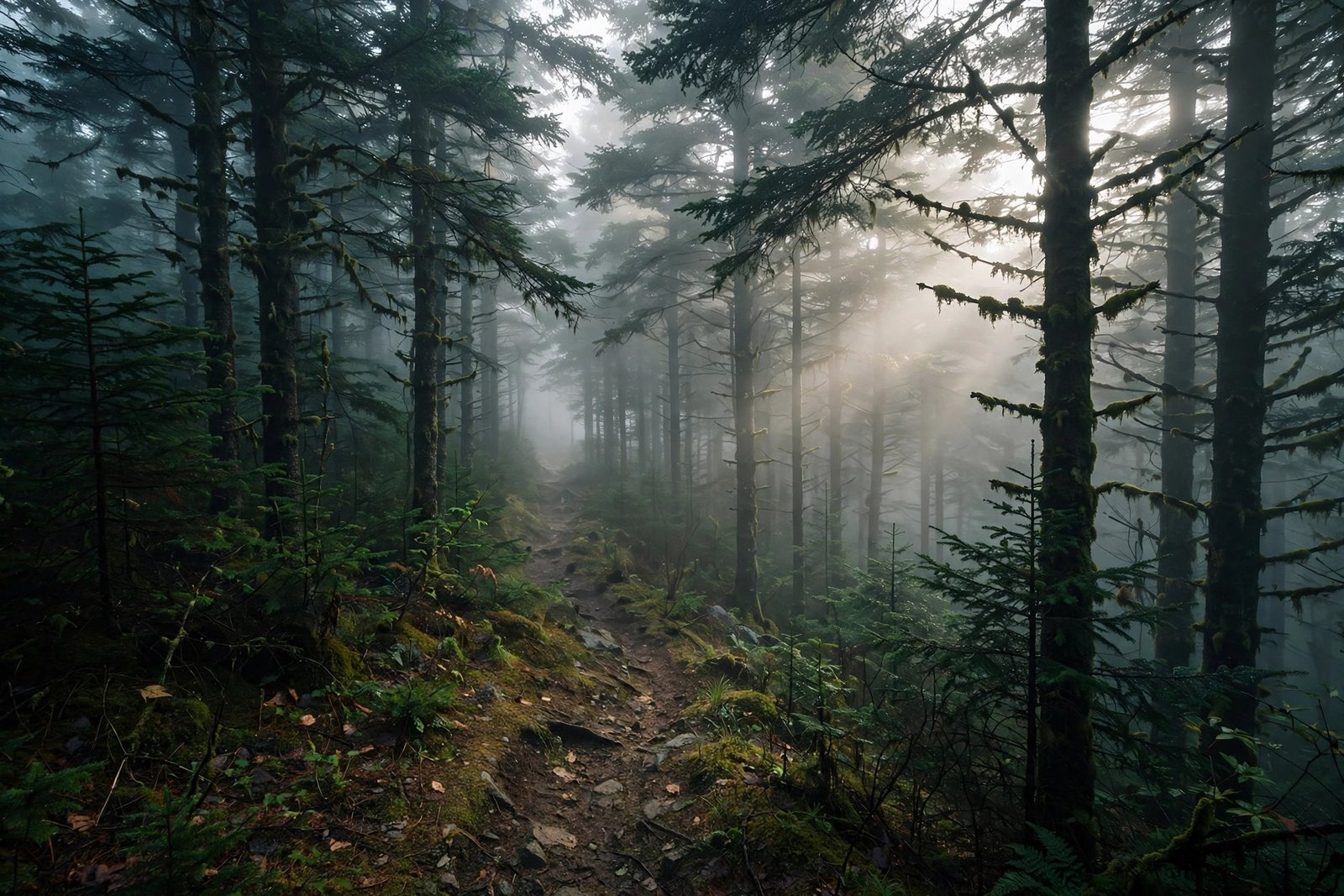
At the center of the Bennington Triangle is Glastenbury Mountain, a remote peak in the Green Mountains of southwestern Vermont. The area around it includes Bennington, Woodford, Shaftsbury, and Somerset. Today, much of this country is dense forest, crossed by hiking trails and old logging roads. It feels wild and empty, and in places it is.
It was not always empty. Glastenbury and Somerset were once logging and industrial towns, busy with mills, workers, and families. In the late nineteenth century, the timber ran out and the industries declined. People left. Houses were abandoned. By the early twentieth century, the towns were shadows of what they had been.
In 1937, the Vermont General Assembly unincorporated Glastenbury and Somerset. They became, in effect, ghost towns, places on the map with few or no permanent residents. The forests reclaimed the old roads and foundations. That history matters to the mystery because it sets the scene: a landscape that was once settled and then abandoned, where a person could walk into the woods and leave very little trace behind.
Middie Rivers: The Guide Who Knew the Woods
The first disappearance in the cluster was Middie Rivers, a 74-year-old hunting guide. On November 12, 1945, Rivers went hunting in Bickford Hollow, about four miles east of Bennington near Vermont Route 9. He was an experienced woodsman who knew the area well. He told his son-in-law he would be back for lunch.
He never came back. Searchers combed the woods around Bickford Hollow, but they found no trace of him. No body, no clothing, no rifle, no sign of a struggle. For a man of his experience to vanish without a trace in country he knew was deeply unsettling to the local community.
Paula Jean Welden: The Student in the Red Coat
The most famous case in the Bennington Triangle is that of Paula Jean Welden, an 18-year-old sophomore at Bennington College. Welden was from Stamford, Connecticut. On December 1, 1946, she set out to hike the Long Trail near Glastenbury Mountain. She was wearing a bright red coat.
Several witnesses saw her on the trail that day. Some warned her about her light clothing and the cold weather. She pressed on. She was never seen again. Searchers looked for her and for the bright red coat, which should have been easy to spot in the winter woods. No trace of her or the coat was ever found.
Welden’s disappearance shocked Vermont and drew national attention. At the time, Vermont had only one state investigator, and there was no organized state police force to coordinate a large search or investigation. Her case led directly to the creation of Vermont’s state police force, a lasting legacy of a tragedy that was never solved.
James Tedford: The Veteran Who Never Got Off the Bus
Three years to the day after Welden vanished, another man disappeared. James Tedford, a 68-year-old World War I veteran, boarded a bus in St. Albans on December 1, 1949. He was heading home to the Vermont Soldiers’ Home in Bennington. Witnesses saw him board the bus. He was never seen again.
Tedford’s case is strange because it does not fit the pattern of a hiker lost in the woods. He was on a bus, in public, traveling a known route. He did not arrive at his destination, and no one reported seeing him get off the bus along the way. His luggage and belongings were reportedly still on the bus when it reached Bennington, though accounts differ on the details.
Paul Jepson: A Boy at the Town Dump
On October 12, 1950, eight-year-old Paul Jepson vanished from the Bennington town dump, where his mother was tending pigs. The boy had been with his mother and then was gone. Searchers brought in bloodhounds, which tracked his scent to the highway and then lost it.
The bloodhound trail suggested that Jepson had reached the road, but it gave no answer about what happened next. No body was found. No clothing was recovered. The case of a small child disappearing in broad daylight, near his mother, in a place that was not deep wilderness, remains one of the most haunting in the cluster.
Frieda Langer: The Only Body Ever Found
On October 28, 1950, Frieda Langer, a 53-year-old woman, vanished while hiking near Somerset. She had been hiking with her cousin and slipped into a stream. She went back to camp to change clothes, telling her cousin she would return. She never did.
Searchers looked for Langer through the fall and winter without success. The following May, her body was found. She was the only one of the five whose remains were ever recovered. The discovery answered one question, that she had died, but it did not answer how or why she had not been found sooner, or why she had not made it back to camp.
Langer’s case is sometimes treated as the least mysterious of the five, because her body was eventually found and because she had been wet and cold after falling into a stream. Hypothermia and disorientation are real dangers in the mountains, especially in late October. But the fact that she vanished so completely, so close to camp, and was not found for months still troubles those who study the case.
A Sometimes-Counted Sixth Case
A sixth case is sometimes counted alongside the core five. Martha Jeannette Jones, a 16-year-old girl, was reported missing in November 1950 after hitchhiking toward a seminary school in Manchester, Vermont. Her case is not part of the core five, and some accounts of the Bennington Triangle leave her out entirely.
It is worth mentioning her here because she shows how the triangle has grown over time. As the story spread, other disappearances in the region were folded into it, and the boundaries of the mystery expanded. The core five cases, from 1945 to 1950, are the ones most closely tied to Glastenbury Mountain and the Bennington area. The sixth case is a reminder that the triangle is a story people have built around real tragedies, not a fixed official list.
Bigfoot, UFOs, and Other Theories
Over the years, theories about the Bennington Triangle have ranged widely. Some writers have blamed Bigfoot, suggesting that a large unknown creature lives in the forests around Glastenbury Mountain. Others have pointed to UFOs, claiming that strange lights and objects have been seen in the area. Still others have suggested portals, curses, or supernatural forces tied to the mountain’s history.
These theories should be presented as folklore, not fact. There is no evidence for Bigfoot or UFOs in connection with any of the five disappearances. The theories say more about how people respond to an unsolved mystery than they do about what actually happened. When a place feels haunted by loss, stories grow up to explain it.
The Skeptical View: Nature Is Dangerous Enough
Skeptics offer a simpler explanation. The Green Mountains are dense, steep, and unforgiving. The forest is thick enough to hide a person a few feet from a trail. Rivers run fast and cold. Weather can change quickly. Hypothermia can set in faster than most people realize, and a disoriented person can walk in circles, make poor decisions, and die of exposure within hours.
On this view, the five disappearances were separate tragedies, not a single mystery. A guide could have a heart attack or a fall. A student in light clothing could have succumbed to the cold. A veteran on a bus could have gotten off at the wrong stop and become confused. A child could have wandered off and been picked up by someone, or fallen into water. A hiker who slipped into a stream could have died of hypothermia before she could get back to camp.
Frequently Asked Questions
What is the Bennington Triangle?
The Bennington Triangle is a name coined by Vermont author Joseph A. Citro for an area of southwestern Vermont centered on Glastenbury Mountain, where five people vanished between 1945 and 1950. The phrase was popularized in his books, including Passing Strange, published in 1996.
Who were the five people who vanished?
Middie Rivers, a 74-year-old hunting guide, in 1945; Paula Jean Welden, an 18-year-old Bennington College student, in 1946; James Tedford, a 68-year-old World War I veteran, in 1949; Paul Jepson, an 8-year-old boy, in 1950; and Frieda Langer, a 53-year-old hiker, in 1950. Langer’s body was the only one ever recovered.
Was Paula Jean Welden ever found?
No. Welden was last seen on December 1, 1946, hiking the Long Trail near Glastenbury Mountain in a bright red coat. No trace of her or the coat was ever found. Her case led to the creation of Vermont’s state police force.
Is there any evidence for Bigfoot or UFOs in the Bennington Triangle?
No. Theories involving Bigfoot, UFOs, and other supernatural causes are folklore, not fact. There is no evidence linking them to any of the disappearances. Skeptics attribute the cases to natural hazards such as dense forest, cold water, hypothermia, and disorientation.
Can I hike in the Bennington Triangle today?
Yes. The Long Trail runs through the area, and the mountains are open to hikers. Visitors should prepare carefully, tell someone their plans, dress for changing weather, and avoid hiking alone in remote sections.
Sources
- Wikipedia — Bennington Triangle
- Mental Floss — The Bennington Triangle and Paula Welden
- Listorati — Unraveling the Bennington Triangle