In the week after the November 3 midterm elections, something extraordinary happened on American TikTok. As the results came in — Democrats sweeping back into control of both the House of Representatives and the Senate in what news outlets called a historic upset — a wave of blue flooded the app. The hashtag #bluewave climbed past 425 million views. A newer tag, #bluetsunami, surged 64 percent in a single week. And a stranger hashtag, #piratetoken, racked up more than 190 million views alongside them.
It was the fastest political trend of the month, and it showed how quickly American politics now moves from the ballot box to the feed. Within days of the election, TikTok’s trending pages looked less like an entertainment app and more like a victory parade, a newsroom, and a meme factory rolled into one.
Here is what the Blue Wave surge actually was, how big it got, and what it says about the way Americans experience elections in 2026.
The Numbers: A Wave You Could Measure
TikTok trend trackers watched the surge in real time. According to data from TikTok’s Creative Center, compiled by the trend site HowToGoViral, the hashtag #bluewave reached 425.5 million views in the week after the election, making it the most-viewed TikTok hashtag of the week. The hashtag #democrats reached 449.9 million views. The newer #bluetsunami, a play on the wave metaphor, climbed 64 percent in a week to 64 million views. And #piratetoken, a tag associated with the same wave of political content, rose 51 percent to 190.4 million views.
For comparison, the biggest entertainment hashtags of the same week — #november at 287.3 million views, #electionday at 143 million — were far behind. The political wave was not just the biggest story on TikTok. It was the biggest story, full stop.
The surge was driven by the scale of the election result. The November 3 midterms delivered large-scale victories for the Democratic Party across the nation, handing what multiple news outlets described as a drubbing to President Donald Trump’s Republicans. Democrats won commanding control of both chambers of Congress, a result that surprised even many pollsters and set off a wave of reaction content — celebrations, explainers, memes, and arguments — that filled American feeds for days.
What the Videos Actually Looked Like
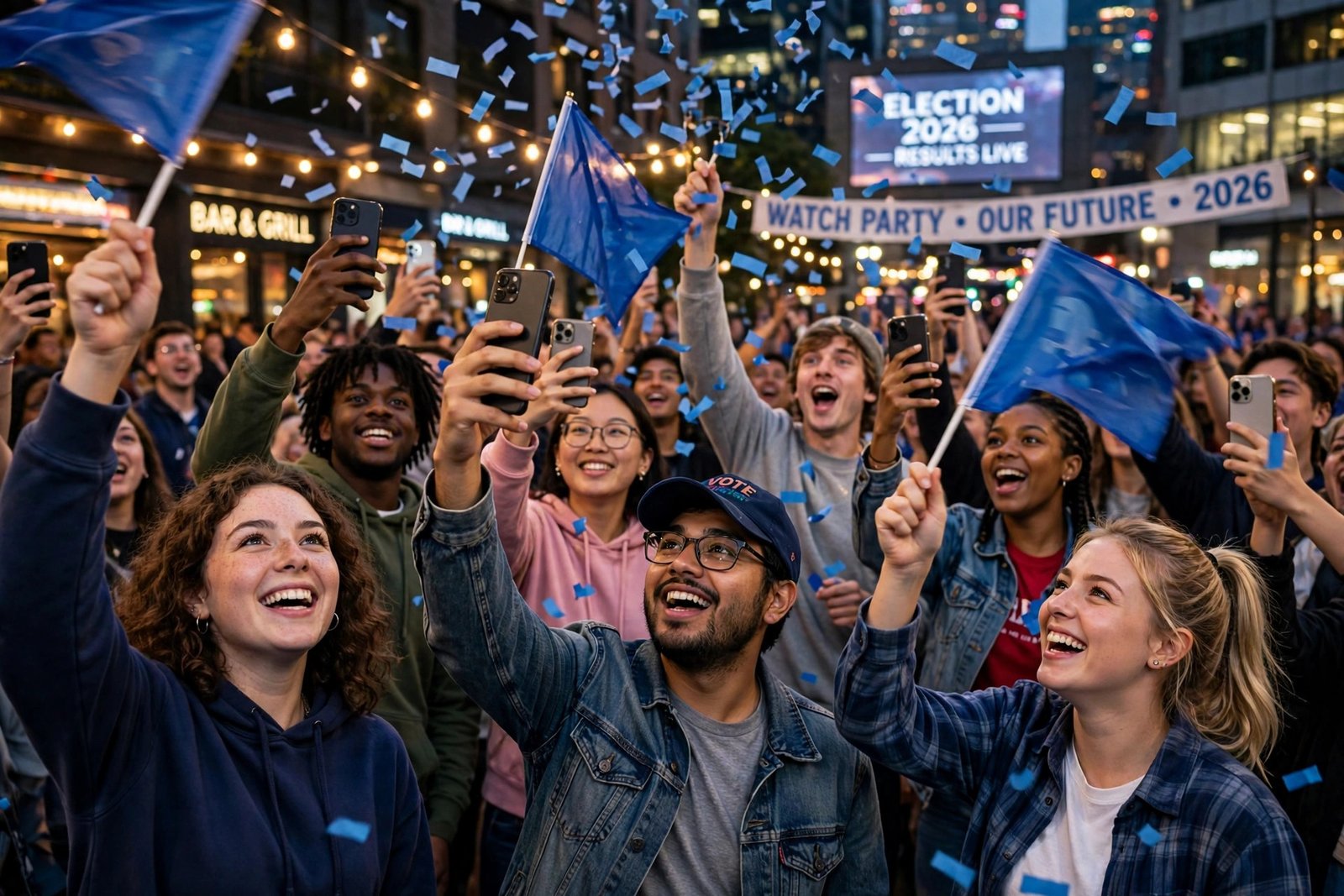
The Blue Wave content was not one format but many. Celebration videos showed creators dancing, cheering, and reacting to the results as they came in. Explainer videos broke down what a Democratic House and Senate would mean for the issues voters cared about — health care, the economy, and the courts. Reaction videos captured the other side too: supporters of the losing party processing the result in real time.
Music did much of the work. Creators set their videos to triumphant songs and trending sounds, and the wave spread through the same mechanics that power every TikTok trend: a sound catches on, a format gets copied, and within days thousands of variations exist. The #bluetsunami tag, in particular, became a home for the most creative entries — montages of election-night moments, before-and-after maps, and jokes about the speed of the result.
The #piratetoken tag was the oddest part of the wave. It appears to have been driven by a mix of political content and crypto-adjacent creators who attached themselves to the trending moment. On TikTok, a hashtag that is climbing fast attracts everyone — including people with only a tangential connection to the topic. The result is a feed that is part politics, part opportunism, and part chaos, which is to say, a feed that looks like TikTok.
Why It Matters: Elections Now Happen on the Feed
The Blue Wave surge is a reminder of how completely TikTok has become part of American political life. For millions of younger voters, the app is not just where they hear about elections — it is where they experience them. The results arrive as videos, not headlines. The analysis comes from creators, not anchors. The celebration and the argument happen in the comments, in real time, with millions of people watching.
That matters because the audience is young. The voters most likely to be on TikTok are also the voters whose turnout surprised analysts in this election, and whose preferences — on issues from health care to the cost of living — are reshaping American politics. The app’s own data shows that political content now competes directly with entertainment for the top trending spots, and in election weeks, it wins.
It also matters because the wave was fast. The election was on Tuesday, November 3. By the end of the week, #bluewave had passed 400 million views. In previous election cycles, the cultural reaction to a result took days to form in newspapers and on television. On TikTok in 2026, it took hours. The speed is the story as much as the scale.
The Upset Nobody Saw Coming — At Least Not Like This
Part of the reason the wave was so big is that the result itself was a shock. The midterm elections delivered sweeping Democratic victories across the country, handing President Donald Trump’s Republicans what news outlets described as a drubbing. Democrats won commanding control of both the House of Representatives and the Senate, a result that defied many pre-election expectations and left political analysts scrambling to explain what they had missed.
That shock is what turns an election into a viral moment. When a result is expected, the reaction is muted. When it is a surprise, the reaction is explosive — and TikTok is built to amplify exactly that kind of energy. Creators who had prepared videos for a close result suddenly had a landslide to celebrate. Creators who had predicted a Republican win had to explain themselves on camera. The disbelief itself became content, and the content fed the wave.
The aftermath played out in Washington as well. Within days of the election, the White House was facing new scrutiny, with impeachment articles introduced against Defense Secretary Pete Hegseth and the President urging the Senate to rush through 161 pending nominations before the new Congress takes its seats. Every one of those developments generated its own wave of TikTok explainers, reaction videos, and arguments, keeping the political conversation at the top of the feed for a full week.
The Other Side of the Wave
Not everyone on TikTok celebrated. The app’s political feeds are famously polarized, and the Blue Wave surge drew a counter-wave of content from the other side — videos questioning the results, mocking the celebrations, and arguing about what the outcome really meant. The hashtag #democrats, at 449.9 million views, contained both praise and criticism, and the arguments in the comments were as heated as any cable news segment.
That is the nature of viral politics. A hashtag does not measure agreement. It measures attention. The Blue Wave was the most-viewed political story of the week because millions of people wanted to celebrate it, millions wanted to argue about it, and millions more simply wanted to see what everyone else was talking about. On TikTok, attention is the currency, and the election paid out in full.
The wave is already fading, as all TikTok trends do. The Christmas content is taking over the feed — Mariah Carey’s annual “It’s Time” video, the holiday decoration videos, the gift guides. But the Blue Wave left a mark. It showed that in 2026, an election result is not just a news event. It is a piece of content, and when it catches fire, it can flood the most popular app in America in a matter of days.
Frequently Asked Questions
What is the Blue Wave on TikTok?
The Blue Wave is the surge of political content on TikTok after the November 3, 2026 midterm elections, in which Democrats won control of both the House and the Senate. The hashtag #bluewave passed 425 million views in the week after the election.
How many views did #bluewave get?
According to TikTok Creative Center data compiled by HowToGoViral, #bluewave reached 425.5 million views in the week after the election, and #democrats reached 449.9 million views. The newer tag #bluetsunami climbed 64 percent to 64 million views.
What is #piratetoken?
#piratetoken is a hashtag that surged alongside the Blue Wave, reaching 190.4 million views. It appears to be driven by a mix of political content and crypto-adjacent creators who attached themselves to the trending moment.
Why did the Blue Wave trend so fast?
The midterm results were a major upset, with Democrats winning both chambers of Congress. The scale of the result, combined with TikTok’s speed — videos, sounds, and formats spread within hours — turned the election into the biggest viral story of the week.
Is the Blue Wave still trending?
The surge peaked in the week after the election and is already fading as holiday content takes over the feed. But it remains one of the biggest political moments in TikTok’s history by view count.
Sources
- HowToGoViral — TikTok Trends This Week (November 2026), data from TikTok Creative Center
- Malay Mail / AFP — Midterm elections deliver large-scale Democratic victories
- Crypto Economics News — Global Digest: US Electoral Shocks, November 10, 2026