
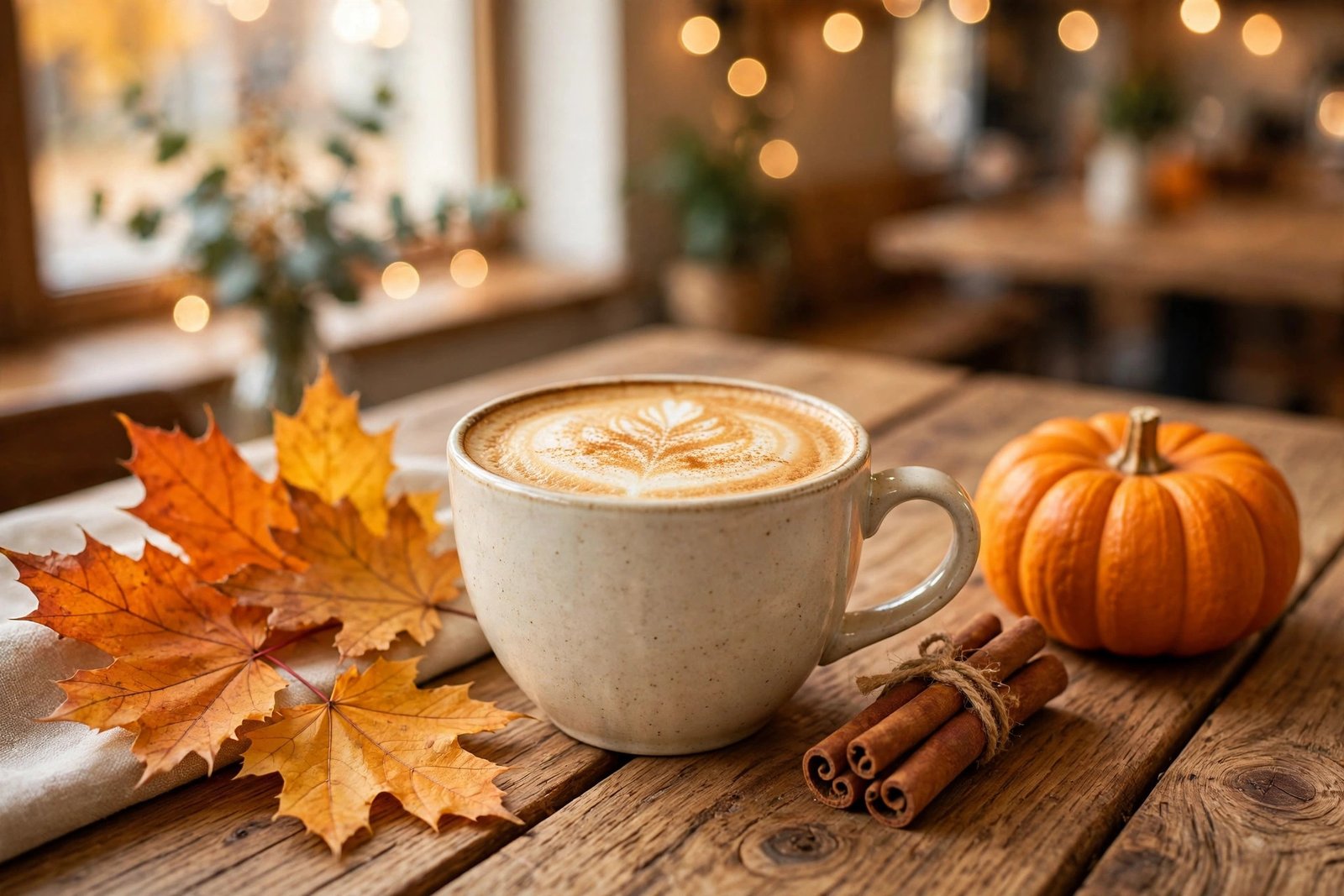
Every fall, without fail, it happens. The coffee cups turn orange, the candles smell like pie, the grocery aisles fill with muffins and cereal and creamer, and the whole country starts talking about a flavor that, not so long ago, barely existed. Pumpkin spice is not just a taste. It is a season, a feeling, and one of the most successful flavor stories in American history.
The numbers are staggering, even if you only look at the surface. Pumpkin spice products now appear in hundreds of items every fall, from lattes and doughnuts to pasta sauce and pet treats. The flavor has its own countdown, its own memes, and its own fierce defenders and critics. It is loved, mocked, and above all, bought.
How did a spice blend that was once just an ingredient in a Thanksgiving pie become the defining flavor of American fall? The answer starts with a latte, and it says a lot about how America eats, drinks, and celebrates.
The Latte That Started It All
Pumpkin spice began as a baking ingredient, not a drink. The blend of cinnamon, nutmeg, ginger, and cloves has been used in pumpkin pie for generations, and the familiar orange can of pumpkin pie spice has sat in American pantries for decades. But nobody thought of it as a flavor on its own until the early 2000s, when a team at Starbucks set out to create a new fall drink.
The story, as Starbucks tells it, began in the spring of 2003, when the company’s espresso team gathered in a Seattle laboratory to brainstorm seasonal drinks. They tried chocolate and caramel ideas, and then someone suggested pumpkin. The team worked through the summer, tasting combinations of pumpkin, cinnamon, nutmeg, and espresso, and by the fall of 2003, the Pumpkin Spice Latte was ready.
The drink launched in about 100 stores in Vancouver and Washington, DC, as a test. It sold well enough that Starbucks rolled it out nationwide the following year, and it has been back every fall since. The PSL, as fans call it, became Starbucks’ most popular seasonal drink, and it turned a baking spice into a cultural phenomenon.
There is an irony in the drink’s success. The original Pumpkin Spice Latte contained no actual pumpkin. It was pumpkin flavor, built from spices and syrup, not from the squash itself. Starbucks did not add real pumpkin puree to the recipe until 2015, after years of online criticism. The flavor was never really about pumpkin. It was about the spices, and about what those spices made people feel.
Why Pumpkin Spice Works
The appeal of pumpkin spice is not really about taste. It is about association. The spices in the blend, cinnamon, nutmeg, ginger, and cloves, are the flavors of fall baking, of Thanksgiving pie, of holiday kitchens and cozy houses. When people taste pumpkin spice, they are not just tasting a drink. They are tasting a memory, or at least the idea of one.
Food scientists and marketers have a term for this: nostalgia marketing. The flavors of fall are tied to some of the warmest memories in American life, and pumpkin spice is a shortcut to those feelings. It is the taste of a season when the weather turns cool, the leaves change, and the holidays are coming. It is comfort in a cup.
The timing matters too. Pumpkin spice arrives at a very specific moment in the year, when summer is over and the long stretch of fall and winter holidays is beginning. It marks the transition, and its return each year feels like a signal that the cozy season has begun. That is why the release date of the Pumpkin Spice Latte has become a news event in its own right, and why fans count down to it.
There is also a social element. Pumpkin spice is a shared experience, something that millions of people do at the same time every year. Ordering a PSL is a small ritual, a way of participating in the season, and posting about it on social media is part of the fun. The drink has become a badge of fall, as recognizable as a Halloween costume or a Christmas tree.
The Pumpkin Spice Economy
What started as a single drink has become an industry. Once Starbucks proved that pumpkin spice could sell, every other company in America wanted a piece of it. The flavor now appears in coffee, tea, beer, cereal, yogurt, ice cream, cookies, candles, air fresheners, lip balm, and dog treats. There are pumpkin spice protein bars, pumpkin spice pasta, and pumpkin spice Spam, a product that was real, and that sold out.
The season for pumpkin spice has also grown longer. What was once a fall flavor now appears in stores as early as August, and some products stay on shelves through the winter. The competition to release pumpkin spice products first has become a race, with brands announcing their fall lineups earlier every year.
This expansion has made pumpkin spice a target for mockery as well as love. Critics call it basic, overdone, and artificial, and the phrase “pumpkin spice everything” has become shorthand for American excess. The backlash is part of the story, and it has only made the flavor more famous. Love it or hate it, everyone has an opinion about pumpkin spice, and that is exactly what makes it valuable.
The Science of a Seasonal Craving
There is a real reason why pumpkin spice feels so good, and it is not just marketing. The spices in the blend, especially cinnamon, have been shown to trigger feelings of warmth and comfort, and the smell of cinnamon and nutmeg is strongly associated with home cooking and the holidays. The scent alone can change a person’s mood, and the flavor reinforces it.
The drink is also engineered to be satisfying. A Pumpkin Spice Latte is sweet, warm, creamy, and spiced, a combination that hits multiple pleasure centers at once. The caffeine in the espresso adds a lift, and the ritual of holding a warm cup on a cold morning adds a physical comfort that goes beyond taste.
Seasonal scarcity plays a role too. Pumpkin spice is available for a limited time each year, and that scarcity makes it more desirable. Psychologists call this the scarcity effect: people want things more when they know they will not be available for long. The fact that the PSL disappears in the winter and returns in the fall is part of why people look forward to it.
How to Enjoy Pumpkin Spice Season
For fans of the flavor, the season offers endless options. The classic Pumpkin Spice Latte remains the standard, but there are also cold brew versions, iced versions, and pumpkin cream cold brew, a newer Starbucks creation that has become popular in its own right. At home, pumpkin spice can be added to coffee, oatmeal, pancakes, and baked goods, and the spice blend itself is easy to make from cinnamon, nutmeg, ginger, and cloves.
For those who are skeptical, the season is also an opportunity to enjoy fall flavors without the hype. A homemade pumpkin pie, a pot of spiced cider, or a batch of gingerbread cookies will deliver the same spices without the branding. The flavors are the same. The difference is the packaging.
And for the truly adventurous, there is always the pumpkin spice aisle at the grocery store, where new products appear every year. Some of them are delicious. Some of them are strange. All of them are part of the same story: a flavor that escaped the pie tin and took over the country.
Frequently Asked Questions
When did the Pumpkin Spice Latte launch?
Starbucks launched the Pumpkin Spice Latte in the fall of 2003, testing it in about 100 stores before rolling it out nationwide the following year. It has returned every fall since.
Does the Pumpkin Spice Latte contain real pumpkin?
It does now. The original recipe contained pumpkin flavor but no actual pumpkin. Starbucks added real pumpkin puree to the drink in 2015.
What spices are in pumpkin spice?
The classic pumpkin spice blend is cinnamon, nutmeg, ginger, and cloves. Some blends also include allspice. It contains no pumpkin itself; it is the spice mix traditionally used to flavor pumpkin pie.
When does pumpkin spice season start?
Starbucks typically brings back the Pumpkin Spice Latte in late August, and most pumpkin spice products appear in stores from August through November. The exact date varies from year to year.
Why is pumpkin spice so popular?
The flavor is tied to nostalgia for fall baking and the holidays, and its limited seasonal availability makes it feel special. The spices trigger feelings of warmth and comfort, and the drink has become a shared social ritual every autumn.
Is pumpkin spice only in coffee?
Not anymore. Pumpkin spice now appears in hundreds of products, including cereal, yogurt, ice cream, beer, candles, lip balm, and even pet treats. The flavor has become a seasonal industry of its own.