
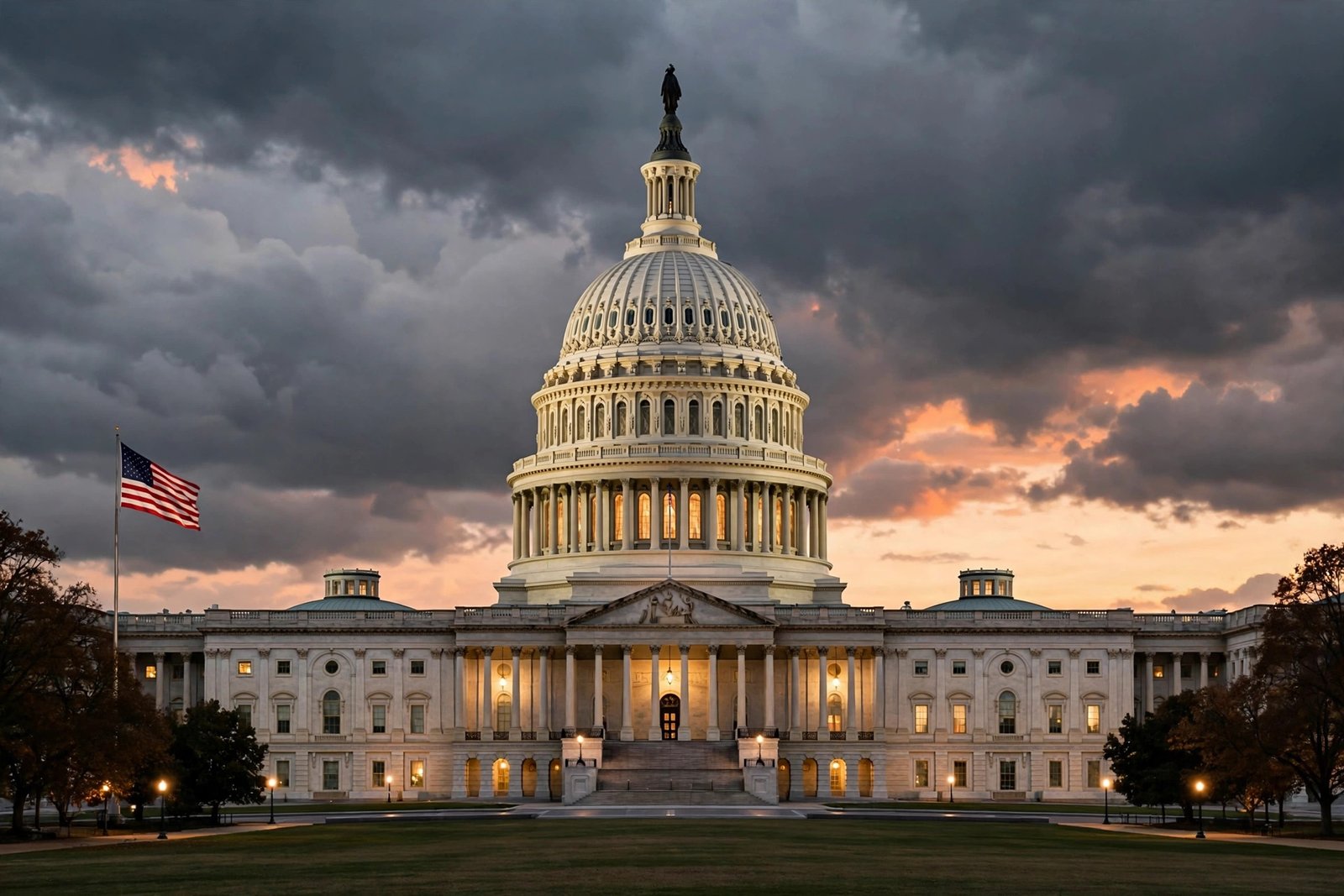
The federal government shutdown that began on October 1, 2026 has now lasted 41 days, making it the longest shutdown in American history. It has passed the 35-day record set in 2018 and 2019, and for more than a month it has touched almost every part of daily life, from airports and food assistance to the paychecks of hundreds of thousands of federal workers. On Monday night, November 9, the Senate finally found a way forward, voting 60 to 40 to pass a bipartisan funding package that could bring the shutdown to an end. Now the focus moves to the House of Representatives, which is expected to vote on Wednesday evening, November 11. If the House passes the package, President Donald Trump can sign it into law and the government can begin reopening. The shutdown is not yet over at the time of publication, and the House vote is the step that still has to happen.
A shutdown that broke the record
When the shutdown began on October 1, 2026, Congress had not agreed on spending bills, so parts of the federal government closed and many federal employees were sent home or told to keep working without pay. What made this shutdown different was how long it lasted. Day after day, negotiations stalled, and the closure kept going until it passed the previous record of 35 days. At 41 days, it is now the longest federal government shutdown in United States history. The length matters because the effects of a shutdown build up over time. A short shutdown is disruptive. A long one strains systems that were never designed to run for weeks without funding, and it puts real pressure on the people who keep those systems running.
The road to a deal was also unusually long. Before the agreement, the Senate had rejected stopgap bills 14 times. Each failed vote kept the shutdown going and deepened the sense that Congress was stuck. When those bills fail again and again, there is no bridge funding, and the shutdown continues. That pattern held for weeks in this case, until a weekend of negotiation finally produced a package that could win the votes it needed in the Senate.
How the Senate deal came together
The breakthrough came over the weekend before the Senate vote, when Senate Majority Leader John Thune worked with Senators Hassan, Shaheen and King to broker a bipartisan agreement. The involvement of senators from both parties was important, because the package needed 60 votes to pass the Senate, and that threshold can only be reached with support from across the aisle. The vote itself came late on Monday night, November 9, when the Senate passed the funding package by 60 to 40. Forty senators still voted against it, but the 60-vote result was enough to move the package forward.
The House is the next step, and its timing adds to the drama of the moment. The House has been out of session since September 19, which means its members have not been in Washington voting for weeks. They are now expected to return and vote on Wednesday evening, November 11. That vote is the decisive moment for the shutdown. If the House passes the package, the bill goes to President Donald Trump for his signature, and the shutdown can end. If the House does not pass it, the shutdown continues and the search for a deal starts again.
What is actually in the package
The funding package funds most of the government through January 30, while giving three departments full-year funding through September 30. That structure is common in shutdown deals: some parts of the government get a full year of funding so they can plan ahead, while the rest get a shorter bridge that gives Congress more time to finish the remaining spending bills. The January 30 date is important to understand. It means that even if this shutdown ends, Congress will face another funding deadline at the end of January, and lawmakers will need to agree on the next round of spending before then. The deal ends this shutdown, but it does not settle every budget question for the year.
One of the most closely watched parts of the package is what it does not do. It does not extend Affordable Care Act subsidies that are set to expire at the end of December. Those subsidies help people who buy health insurance through the Affordable Care Act marketplaces, and their expiration has been a major point of debate throughout the shutdown. The decision not to extend them in this package means that question remains unresolved, and it is likely to return as a major issue in the weeks ahead. Either way, the deal is best understood as a package to reopen the government, rather than one that resolves every policy dispute behind the shutdown.
What it means for air travelers
For many Americans, the most visible effect of the shutdown has been at the airport. The Federal Aviation Administration ordered airlines to cut domestic flights at 40 busy airports, starting with a cut of 4 percent from November 7, rising to 6 percent by November 11, 8 percent by November 13, and 10 percent by November 14 if the shutdown continues. Those cuts were ordered because the aviation system has been under severe strain. About 13,000 air traffic controllers and 50,000 airport screeners have worked without pay since October 1, and that pressure has built up over 41 days. When the people who guide planes and screen passengers are working without paychecks, staffing becomes harder to sustain, and delays and cancellations follow.
The scale of the planned cuts shows how serious the situation has become. Aviation analytics firm Cirium estimates that about 1,800 flights and 268,000 seats a day would be cut at the full 10 percent level. That is a large number of journeys disrupted every day, affecting business trips, family visits, holidays and connecting flights across the country. If the House passes the deal tonight and the president signs it, the shutdown ends and the conditions that forced the flight cuts should begin to ease. Controllers and screeners would be paid again, staffing should stabilize, and airlines would be able to restore schedules. That recovery may not be instant, but the direction would change from cuts getting deeper to service being restored.
Food aid and federal workers
Beyond the airports, two groups have felt the shutdown most directly: people who rely on food assistance, and the federal workers who have kept working without pay. Funding for SNAP, the food-aid program, ran out on November 1. That left households uncertain about whether they would receive the help they depend on to buy groceries. A federal court ordered the United States Department of Agriculture to use emergency funds to keep the program going, a step that provided some relief but did not remove the underlying problem. Emergency funds are a temporary answer, not a long-term solution. Ending the shutdown restores regular funding and removes that uncertainty, which is one of the most important practical effects of the deal.
Federal workers have carried a heavy burden through all 41 days. Hundreds of thousands of federal workers have gone unpaid during the shutdown. Some were furloughed and sent home. Others, including air traffic controllers, airport screeners and many others in essential roles, were required to keep working without pay. The funding package matters to these workers because it restores their pay and allows the government to return to normal operations. It does not erase the hardship of the past 41 days, but it ends the period of working without pay and lets workers and their families plan again.
What happens tonight in the House
Tonight, the House of Representatives is expected to vote on the funding package that the Senate passed 60 to 40 on Monday night. That vote is the final legislative step before the bill can go to the president. If the House passes it, President Donald Trump can sign it, the government can reopen, and the work of restoring services, paying workers and rebuilding flight schedules can begin. If the House rejects it or delays it, the shutdown continues into a 42nd day and beyond, and the flight cuts, food-aid uncertainty and unpaid work continue with it. Watch for whether the House passes the bill, whether the president signs it promptly, and whether agencies begin reopening. Until all three happen, the shutdown remains in place, even though the Senate has acted.
Frequently asked questions
How long has the shutdown lasted? The shutdown began on October 1, 2026 and has lasted 41 days, making it the longest federal government shutdown in United States history, passing the previous record of 35 days set in 2018 and 2019.
What did the Senate vote? Late on Monday night, November 9, the Senate voted 60 to 40 to pass a bipartisan funding package. The deal was brokered over the weekend by Senate Majority Leader John Thune with Senators Hassan, Shaheen and King. Before the deal, the Senate had rejected stopgap bills 14 times.
What does the deal do? The package funds most of the government through January 30 and gives three departments full-year funding through September 30. It does not extend Affordable Care Act subsidies that expire at the end of December.
How has the shutdown affected flights? The FAA ordered airlines to cut domestic flights at 40 busy airports: 4 percent from November 7, rising to 6 percent by November 11, 8 percent by November 13, and 10 percent by November 14 if the shutdown continues. About 13,000 air traffic controllers and 50,000 airport screeners have worked without pay since October 1. At the full 10 percent level, Cirium estimates about 1,800 flights and 268,000 seats a day would be cut.
Is the shutdown over now? Not yet. The House, out of session since September 19, is expected to vote on Wednesday evening, November 11. If the House passes the package, President Donald Trump can sign it and the shutdown can end. Until then, the shutdown remains in effect.
Sources
- Senate Passes Deal to End Longest US Government Shutdown as House Vote Nears — NewsOne USA
- FAA Orders Flight Cuts at 40 Airports During Shutdown — InvestClarityPath
- US Flight Cuts Begin at 40 Airports as Shutdown Continues — Daily Rise USA