
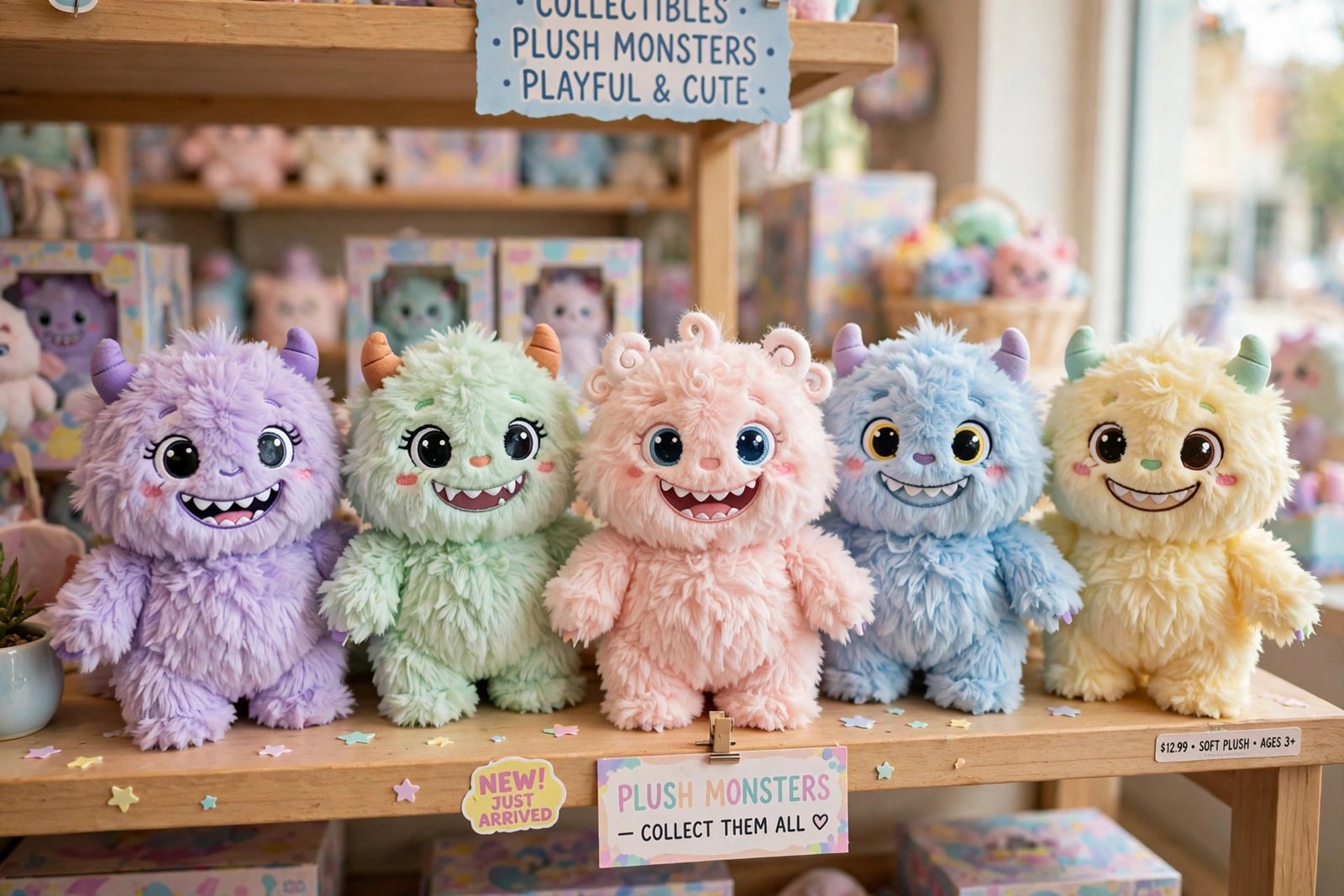
It has big eyes, a toothy grin, rabbit-like ears and a furry little body, and for a while in 2025 it seemed to be absolutely everywhere: clipped to handbags, dangling from backpacks, unboxed on camera, traded in parking lots and lined up on shelves in stores that had never sold anything like it before. Its name is Labubu, and its rise from a niche designer toy to a full-blown American craze is one of the most surprising pop culture stories of recent years.
Labubu is not a traditional toy in the way a teddy bear or a doll is traditional. It is a collectible character, sold largely in blind boxes, where buyers do not know exactly which version they will get until they open the package. That mystery, combined with a design that is both cute and a little mischievous, turned buying a Labubu into something closer to opening a trading card pack than simply buying a plush toy.
The craze also says something larger about how trends travel today. A character created by a Hong Kong artist, sold by a Beijing company, and popularized through social media and celebrity sightings, became a fixture of American malls, TikTok feeds and school hallways in a remarkably short time. This is the story of how Labubu took over America, why people loved it, and what happened when the frenzy began to cool.
Meet Labubu: A Mischievous Little Monster
Labubu is a character in Pop Mart’s The Monsters collection, based on Nordic folklore-inspired stories created by Hong Kong-born artist Kasing Lung. Lung first introduced the character in his own art in 2015, according to accounts of the character’s history, and Pop Mart later licensed the character and turned it into a collectible toy line. The result is a small, furry creature with large eyes, pointed ears and a wide, toothy smile that looks both friendly and a little wild.
That in-between quality is part of the appeal. Labubu is not purely cute, and it is not purely scary. It is playful, slightly naughty, and instantly recognizable, even at a glance on a crowded bag charm display. Fans describe the character as a mischievous forest spirit, a description that fits the design: part plush toy, part little monster, part fashion accessory.
Pop Mart, founded in Beijing in 2010 by Wang Ning, built its business around designer toys sold as collectibles, often in blind boxes. The company operates hundreds of stores in many countries, and in the United States it expanded rapidly during the Labubu boom, opening stores in major cities and shopping centers. Its first New York presence began with a location in the World Trade Center area, and it later expanded to other neighborhoods and cities, bringing the blind-box model to American shoppers who had not encountered it before.
For many American buyers, Labubu was their first introduction to designer toys as a hobby. Unlike a mass-market toy bought once and forgotten, a Labubu invites collecting: different colors, outfits, sizes and series, plus the thrill of chasing a rare version. That collecting instinct, familiar to anyone who has collected cards, sneakers or figurines, is central to understanding the craze.
The Blind Box: Why Not Knowing Is the Point
The blind box is the engine of the Labubu craze, and it is worth understanding on its own terms. When you buy a blind-box Labubu, you know the series, but you do not know which specific character or color variant is inside until you open it. Some variants are common, others are rarer, and a secret or hidden version is much harder to pull, with reports putting the odds for a secret Labubu at about one in 72.
That uncertainty changes the buying experience completely. Opening a box becomes an event, worth filming and sharing, and getting a duplicate becomes a reason to trade, not just a disappointment. Social media amplified this effect enormously. Unboxing videos, where creators film themselves opening boxes live, turned a private purchase into a shared moment, and viewers who had never heard of Labubu could watch the excitement unfold in real time.
The blind-box model also creates scarcity and urgency. When a new series launches, popular versions can sell out quickly, both in stores and online, and fans learn to watch for restocks, line up for releases, and trade with one another to complete a set. That sense of a hunt, familiar from sneaker drops and limited-edition releases, helped Labubu move from toy shelves into broader youth and fashion culture.
There is a flip side, and it is worth naming honestly. Blind boxes can encourage buying more than you planned, chasing a rare pull, and spending on duplicates you did not want. Consumer advocates and parents have raised questions about that dynamic, especially for younger buyers, and some countries have placed limits on blind-box sales to children. The excitement is real, but so is the need to buy thoughtfully, set a budget, and remember that a rare pull is never guaranteed.
How Labubu Conquered America in 2025
Labubu was already well known in Asia before it broke through in the United States, but in 2025 its American moment arrived. Fast Company, looking back on what it called Labubu’s monster summer, described a character with big eyes, sharp teeth and a furry body that adorned millions of belts and bags and created an entire mini-economy of customization around it, from outfits to accessories to display cases.
Several forces came together at once. Celebrities and collectors on social media helped push the character into the mainstream, sharing photos of Labubus clipped to designer bags and worn as accessories. Pop Mart expanded its American store footprint rapidly, with Fast Company noting the opening of 22 Pop Mart stores in six months during the boom period. And a new Labubu series, Big Into Energy, launched in April 2025, gave fans a fresh reason to line up and buy, after months without a new series on the market.
The result was a summer in which Labubu felt unavoidable. Shoppers waited in lines, stores sold out, resale markets flourished, and the character appeared in fashion, memes and everyday conversation. For a toy that had started as an artist’s creation, the scale of that summer was extraordinary, and it turned Pop Mart from a niche retailer known mainly to collectors into a name recognized by mainstream American shoppers.
The numbers behind that summer, as reported after the fact, help explain why it drew so much attention. Fast Company reported that Pop Mart’s 2025 revenue reached 5.1 billion dollars, a jump of 184 percent year over year, with The Monsters, Labubu’s collection, bringing in 2.1 billion dollars globally in 2025 and North America as the company’s largest growth market. Those figures describe a company transformed by a single character, at least for a season.
From Bags to Fashion: Why Adults Fell for It Too
One of the most striking things about the Labubu craze is that it was not only a children’s trend. Adults, including fashion lovers, collectors and young professionals, embraced Labubu as a bag charm and accessory, clipping it to purses, totes and backpacks as a playful contrast to more formal outfits. That adult embrace is part of why the craze spread so visibly: Labubus were not hidden in bedrooms, they were carried in public, on the subway, at work, and in photos.
That visibility created a feedback loop: seeing a Labubu on someone else’s bag sparked curiosity, a first purchase often led to a second, and customization, with tiny outfits and accessories shared online, turned the toy into a canvas for personal expression.
Collecting culture also played a role. Many Labubu buyers were already collectors of something else, from sneakers to figurines to trading cards, and they recognized the familiar rhythms: new drops, rare variants, trading communities, display shelves and the satisfaction of completing a set. Labubu fit neatly into that world, while also bringing in newcomers who had never collected anything before.
For Pop Mart, the adult audience mattered commercially as well. Adult collectors are willing to seek out new series, visit stores, and follow releases closely, and their enthusiasm helped sustain demand even as the initial novelty wore off for casual buyers. The craze was never only about a cute toy; it was about a community forming around a shared object, with its own language, rituals and inside jokes.
Counterfeits, Resale and the Frenzy’s Costs
Where there is a hot collectible, counterfeits and resale frenzies usually follow, and Labubu was no exception. As demand surged, fake Labubus appeared, some convincing enough to fool casual buyers, and resale prices for rare or sold-out versions climbed well above store prices. That secondary market created excitement for some sellers, but frustration for fans who simply wanted to buy a genuine Labubu at a normal price.
Stores and Pop Mart responded in various ways, including restocks, purchase limits and new releases, but the balance between scarcity, which fuels excitement, and availability, which keeps fans happy, is hard to strike. Too much scarcity breeds resentment and counterfeits; too much availability can dull the thrill of the hunt. Pop Mart’s challenge, like that of any collectible company, is to keep that balance without alienating the community that made the character popular.
The frenzy also had a social cost that is easy to overlook in unboxing videos. Long lines, sold-out releases and competitive buying can turn a fun hobby into a stressful one, especially for younger fans or for parents trying to buy a gift. Reports of hours-long lines and resale frenzies during the peak of the craze captured both the excitement and the exhaustion of that moment.
That is why the later cooling of the craze, which we will turn to next, was not entirely bad news. A calmer market can mean genuine products are easier to find, prices are closer to normal, and collecting can return to being a hobby rather than a race. For longtime fans, that shift may be welcome, even if it lacks the drama of the peak.
Is the Craze Over? The Honest Answer
By early 2026, reporting on Labubu had shifted tone. The Straits Times, in a piece on Pop Mart’s next chapter, noted that shoppers were no longer fixated solely on Labubu, with other Pop Mart characters such as Skullpanda, Crybaby and Twinkle Twinkle drawing crowds of their own and climbing the company’s sales rankings. In the United States, Skullpanda had become Pop Mart’s second-ranked intellectual property, according to Morgan Stanley figures cited in that reporting.
Other signs pointed in the same direction. As supply increased and counterfeit dolls proliferated, resale mark-ups narrowed and the frenzy eased. In the United States, year-on-year sales growth slowed sharply from its peak, according to Bloomberg Second Measure data cited in the same reporting, falling from extraordinary triple-digit growth in 2025 to much more modest growth in early 2026. That does not mean Labubu disappeared; it means the explosive phase passed, as explosive phases usually do.
Even so, Labubu remains central to Pop Mart’s business. The Monsters series still generated about a quarter of Pop Mart’s global sales volume in 2025, roughly 100 million dolls, according to the Straits Times reporting, and analysts described Labubu as a critical hook for the company overseas. In other words, the mania may be over, but the character is not gone. It has moved from a frenzy to a fixture, a popular character among several, rather than the only character anyone talks about.
That arc is familiar from other crazes, from Beanie Babies to sneakers to trading cards. A new object captures attention, scarcity and social media amplify it, prices and lines spike, and then the market settles into something more sustainable, with a core community of fans remaining after casual buyers move on. Labubu appears to be following that pattern, which is not a failure; it is how most pop culture phenomena age.
What Labubu Says About America Right Now
Beyond the toy itself, the Labubu craze says something about how Americans discover and adopt trends today. Social media can take a character from another continent and make it familiar in weeks, without a traditional advertising campaign or a movie tie-in. A short video, a celebrity photo, a friend’s bag charm, and suddenly a niche product is part of mainstream conversation.
It also shows how global culture flows in both directions: influence now moves from Hong Kong artists and Beijing companies into what American teenagers and young adults carry and collect, as well as the other way around.
Finally, Labubu reflects a broader appetite for small, joyful, tactile things in a digital age. In a world of screens and feeds, a soft, funny little creature you can hold, clip to a bag and customize offers a different kind of pleasure: physical, playful and personal. It is no coincidence that Labubu thrived alongside other small-treat and cozy trends, where people seek out affordable moments of delight.
Whether Labubu remains a beloved collectible for years, or fades as new characters take its place, its summer of 2025 will remain a memorable chapter in American pop culture: the summer a mischievous little monster, sold in a mystery box, took over the country’s bags, feeds and imaginations.
FAQ
Who created Labubu?
Labubu was created by Hong Kong-born artist Kasing Lung, who first introduced the character in his art in 2015. Pop Mart later licensed the character as part of its The Monsters collection and turned it into a collectible toy line.
Why are Labubus sold in blind boxes?
In a blind box, you know the series but not the exact variant inside until you open it. That mystery drives unboxing videos, trading and collecting, and makes rare versions, including secret versions reported at about one in 72, especially sought after.
Is the Labubu craze over?
The explosive frenzy of 2025 has eased, with resale mark-ups narrowing and other Pop Mart characters gaining attention, according to 2026 reporting. Labubu itself remains a major seller and a central part of Pop Mart’s business, just no longer the only character in the spotlight.
How can I avoid buying a fake Labubu?
Buy from Pop Mart’s own stores or official channels where possible, be cautious about deals that seem unusually cheap for a sold-out version, and check packaging and details carefully. If a price or seller seems questionable, it is safer to wait for an official restock.
Related reading
Explore more viral trends on Eng Post Now: Little treat culture, the viral trend explained, Fall aesthetic and cozy season viral videos, and Gym bros, Pilates and the viral workout humbling.
Read the reporting: Fast Company on Labubu’s monster summer, the Straits Times on what came after Labubu mania, and KraneShares on Labubu’s rise in the U.S..