
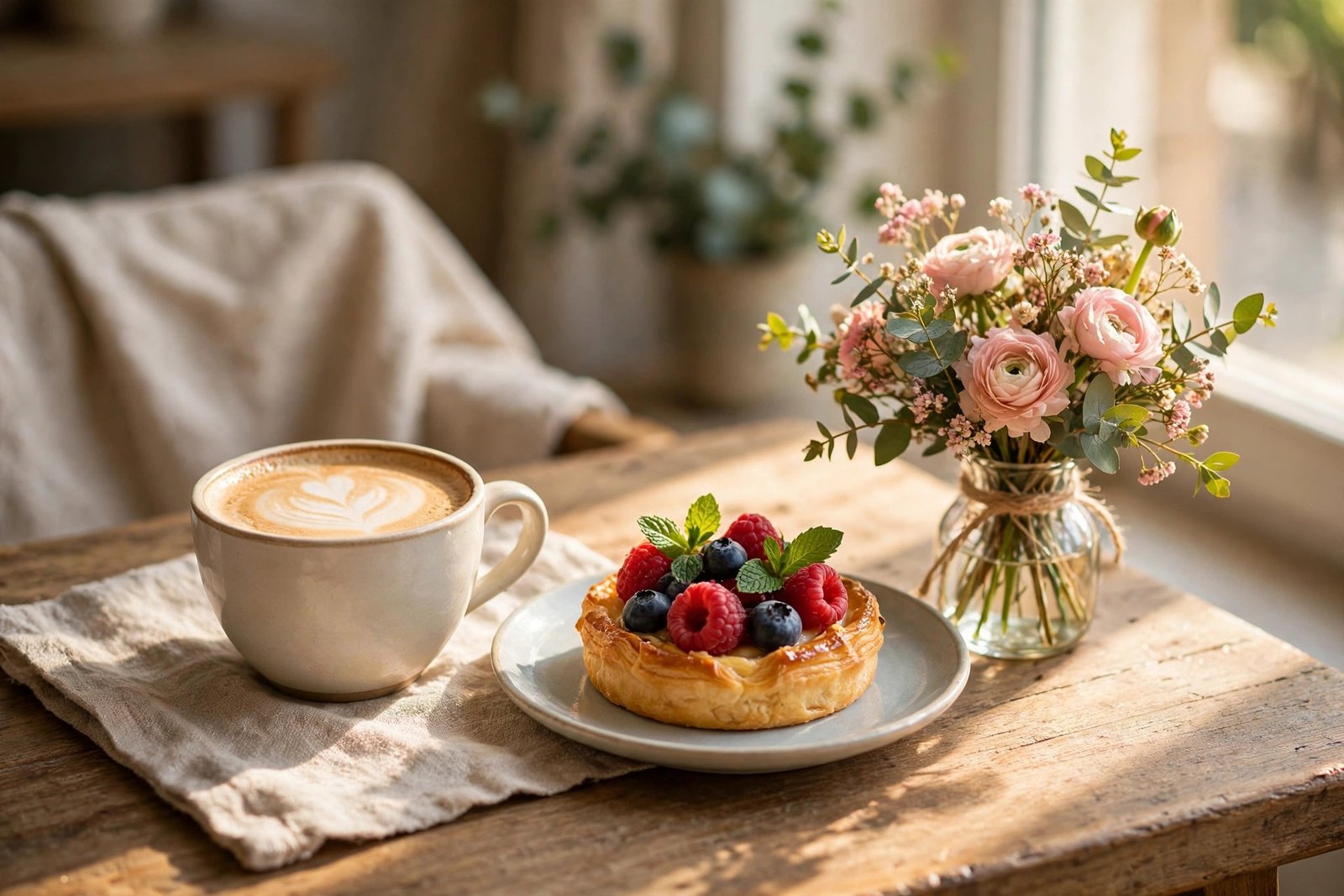
You have heard the phrase, probably this week, possibly from your own mouth: “I deserve a little treat.” It arrives after a hard day, a long meeting, a workout, or sometimes no accomplishment at all — just the feeling that something small and pleasant would make the day better. A coffee you did not strictly need. A pastry on the way home. A candle, a lip balm, a fancy smoothie. The purchase is tiny, the language around it is playful, and the phenomenon has a name that has traveled from TikTok jokes into marketing reports and newspaper trend pieces: little treat culture.
Little treat culture is the act of finding joy in small, self-gifted purchases — a micro-reward system that punctuates ordinary life. It is not about luxury in the traditional sense. The point is rarely to show off wealth; often the joke is the opposite, that the treat is tiny compared with the things that feel financially out of reach. And yet the trend says something real about how Americans, especially younger Americans, are navigating an economy where big goals feel distant and small pleasures feel achievable. The little treat is small, but the habit — and what it reveals — is bigger than it looks.
What counts as a little treat?
Almost anything, which is part of the appeal. The classic little treat is edible: a matcha latte from a trending café, a pastry from a bakery, an iced coffee on a hot afternoon, a bag of fancy chips. But the category stretches easily to non-food rewards: a scented candle, a new lip balm, a small bouquet, a thrifted mug, a face mask for a quiet evening. The defining feature is not the price — a little treat can be a three-dollar pastry or a twenty-dollar smoothie — but the framing. It is presented, to yourself and to your friends, as deserved, manageable, and slightly indulgent, rather than as reckless spending.
The language matters. Calling something a “treat” acknowledges that it is unnecessary while giving it a purpose at the same time. It is a reward, a break, a small thing to look forward to. Social media gave that language a public life: a treat can be photographed, shared, and turned into a familiar joke among people who understand exactly what “I deserve this” means without requiring an explanation. The ritual is visual, inexpensive enough to repeat, and flexible enough to mean almost anything — which is why it spread so easily.
There is also a social dimension that predates TikTok. Treating a friend — picking up their coffee, bringing pastries to the office, surprising someone with their favorite snack — is an old form of care, and little treat culture extends it. The treat becomes a small act of friendship, a way of saying “I was thinking of you” without a grand gesture. In group chats and comment sections, friends trade treat recommendations the way earlier generations traded recipes: as a shared, low-stakes pleasure.
Why now? The economics of small pleasures
Little treat culture did not emerge in a vacuum. Its rise tracks a generation that grew up during the Great Recession and came of age during the pandemic, and that now faces housing costs, student debt, and everyday prices that make larger milestones — a house, a wedding, a long vacation — feel like long-term projects rather than next-year plans. When big goals feel distant, small goals feel satisfying. A coffee fits into an ordinary week; a down payment does not.
Economists have a name for a related pattern: the “lipstick effect,” the observation that consumers keep buying relatively affordable indulgences even when larger purchases become harder to justify. Little treat culture is the lipstick effect with a social media aesthetic — and with a twist. Where the lipstick effect was about maintaining appearances during downturns, the little treat is often explicitly about comfort and autonomy: a small choice you control, in a life where many large choices feel constrained. Researchers who study the trend note that it is less about mindless spending than about creating pockets of happiness in a routine that can feel relentless.
Brands noticed quickly, and that is where the trend gets complicated. Bakeries now market “dessert for one” and “little luxury” portions. Cafés sell limited-edition drinks designed to be photographed. Food companies package snacks in single-serve, gift-like formats. Industry research cited by trade publications finds that Gen Z and Millennial consumers indulge in little treats at least once a week, and that treats viewed on social media drive shoppers into stores. The commercial embrace is not sinister — businesses follow their customers — but it does mean the line between a personal ritual and a marketing category is blurrier than it used to be.
The case for the little treat — and the case against it
There is a genuine case for the little treat, and it is not just about sugar. Psychologists who study rewards note that small, anticipated pleasures can break up a stressful day, mark the end of a task, and give people something to look forward to — all of which support well-being in modest but real ways. A treat after a workout, a pastry on a Friday, a coffee with a friend: these are rituals, and rituals help humans cope. The treat’s smallness is the point. It does not require planning, saving, or permission, which is exactly why it works as a daily comfort.
The case against it is equally straightforward, and it is mostly arithmetic. A five-dollar coffee every workday is more than a thousand dollars a year. A daily pastry, a weekly candle, a monthly “little” beauty purchase: individually trivial, collectively significant. Critics of the trend — and there are many, including some of its own participants, joking about their bank statements — point out that the language of “deserving” can turn a habit into a justification, and that small luxuries can quietly crowd out savings for the very goals they substitute for. The trend’s own fans often acknowledge this tension openly; the joke, in many viral posts, is precisely that the treat budget is out of control.
The honest answer is that both things are true. A little treat can be a harmless ritual and a real expense, a moment of autonomy and a habit that deserves a glance at the budget. The trend’s staying power probably comes from that honesty: unlike traditional luxury marketing, which pretends a purchase will transform your life, little treat culture is candid that the purchase is small, temporary, and a little bit silly. That candor is refreshing, and it is why the phrase has survived long past its first viral moment.
How to enjoy the trend without letting it run you
If you like the ritual, keep it — with a few guardrails that preserve what makes it enjoyable. First, make it intentional rather than automatic. A treat you chose, savored, and looked forward to delivers more pleasure than one grabbed reflexively at a checkout counter. Second, set a loose budget that feels generous rather than punishing: a weekly treat allowance, for example, turns the habit into a game rather than a guilt trip. Third, vary the treats, and include free ones. A walk in a favorite park, a library book, a long bath, or a homemade pastry can deliver the same ritual pleasure without the price tag — and the trend, at its best, was always about the pause, not the purchase.
It also helps to notice when the treat stops working. If the coffee no longer cheers you up, if the pastry feels like an obligation, or if the habit leaves you more stressed about money than comforted, the ritual has outlived its purpose. The little treat works because it requires almost no planning; the moment it requires elaborate budgeting systems or delivery-app gymnastics, it has become the opposite of what it was meant to be. The best version of the trend is the simplest one: a small, pleasant thing, enjoyed on purpose, and then left behind as you get on with your day.
That simplicity is probably why little treat culture is not going away. People will always want breaks, rewards, and small things to anticipate, and they will always find language for them. A generation ago, the phrase might have been “treat yourself.” Today it is “little treat.” The words change; the human need behind them does not.
Frequently asked questions
What is little treat culture? A social trend, popular with Millennials and Gen Z, built around small, self-gifted purchases — a coffee, a pastry, a candle — framed as deserved micro-rewards.
Where did the phrase come from? It grew out of social media, especially TikTok, where users shared “little treat” purchases and routines, turning a private habit into a shared joke and ritual.
Is little treat culture bad for your budget? It can add up: small daily purchases can total hundreds or thousands of dollars a year. Fans of the trend often joke about this openly, and a loose weekly treat budget keeps the ritual enjoyable.
What is the “lipstick effect”? The long-observed pattern in which consumers keep buying affordable indulgences during economic pressure, even while postponing larger purchases.
Are non-food treats part of the trend? Yes. Candles, lip balms, flowers, thrift finds, and small beauty products are all common little treats, alongside coffee and pastries.
Related reading
- The American Potluck: History, Unwritten Rules, and Classic Dishes
- Pumpkin Everything: How Fall Baking Became an American Autumn Lifestyle
- The Great American Gas-Station Snack Culture: A Road Tripper’s Guide
Sources: Trill Magazine, “The Small Treat That Has Become a Load-Bearing Gen Z Habit” (trillmag.com); Supermarket Perimeter, “Why smaller treats are having a big moment” (supermarketperimeter.com).