
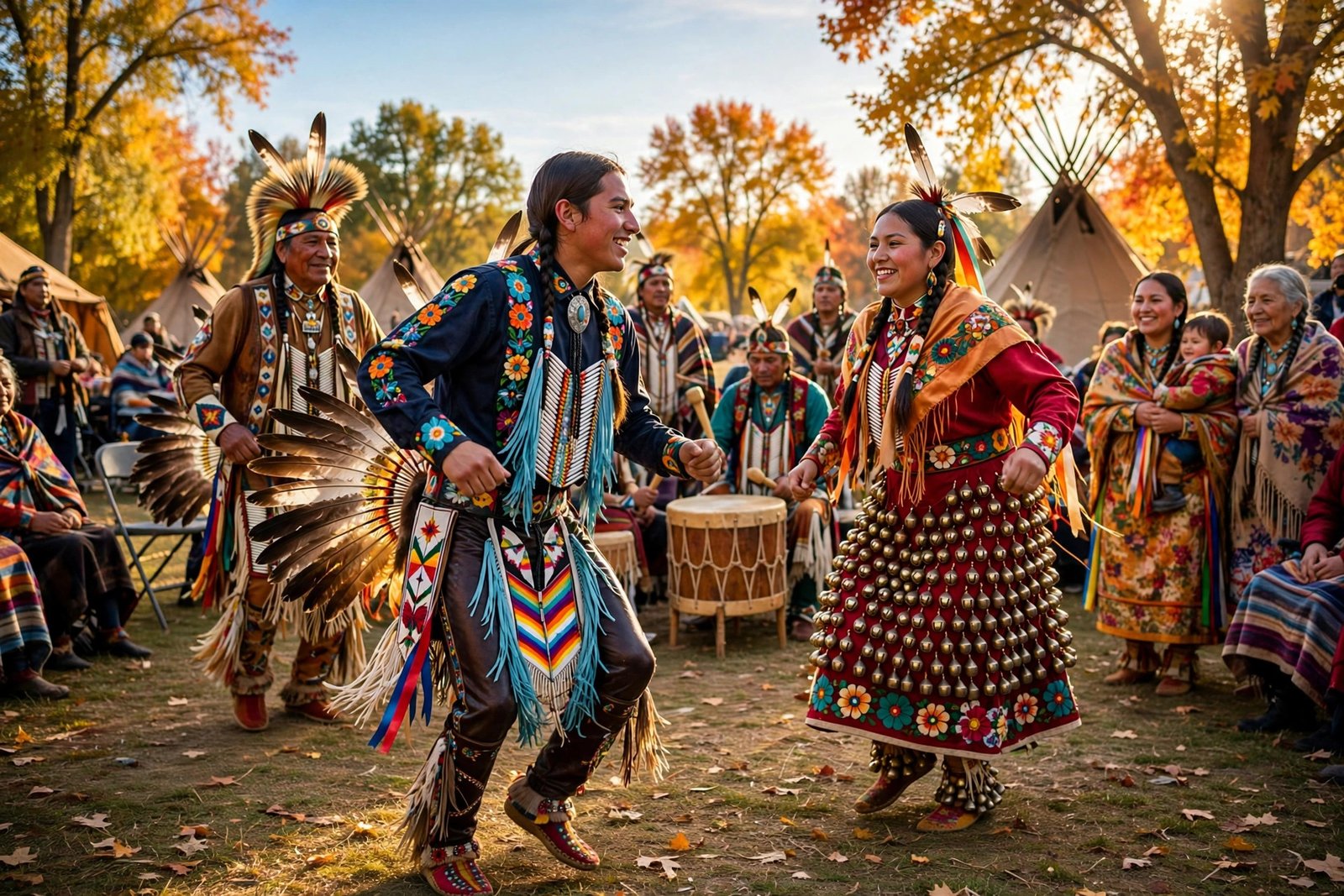
Every November, the United States sets aside a full month to recognize the histories, cultures, and living contributions of Native American, American Indian, and Alaska Native peoples. Native American Heritage Month is not a single parade or a single day of remembrance. It is a month-long invitation to learn, and it arrives at a moment in the calendar that makes its meaning especially sharp: the weeks around Thanksgiving, when many American families retell a simplified story of the nation’s beginnings. The real story is older, more complicated, and far more interesting — and it is still being written today by tribal nations that govern themselves, preserve their languages, and shape American art, law, science, and public life.
The month is observed by federal agencies, schools, museums, libraries, and tribal communities across the country. The Library of Congress and its partner institutions — including the Smithsonian’s National Museum of the American Indian, the National Archives, and the National Park Service — gather exhibits, lesson plans, and historical records on a shared federal portal each November. For readers who want to go beyond a social media post, that portal is the best front door. It leads to primary documents, oral histories, and the work of contemporary Native artists and scholars, rather than to a single simplified narrative.
How November became Native American Heritage Month
The road to a full month of recognition took most of a century. One of the earliest advocates was Dr. Arthur C. Parker, a Seneca historian and director of the Museum of Arts and Science in Rochester, New York, who urged the Boy Scouts of America to set aside a day honoring the first Americans. In 1915, the Congress of the American Indian Association, meeting in Lawrence, Kansas, formally approved a plan for an American Indian Day, and its president, the Reverend Sherman Coolidge, an Arapaho, issued a proclamation calling for the second Saturday of each May to be observed as American Indian Day. No national day followed, but New York’s governor declared the first state American Indian Day in May 1916, and other states gradually followed with their own observances.
The idea kept returning. Congress designated a week in late November 1986 as American Indian Week, and then, on August 3, 1990, President George H. W. Bush approved a joint resolution designating November 1990 as National American Indian Heritage Month. President Bush’s proclamation that November marked the first month-long federal observance, and similar proclamations have been issued every year since, under names that have evolved over time — including National Native American Heritage Month. In 2009, Congress also established Native American Heritage Day, observed on the Friday after Thanksgiving, adding a dedicated day inside the month itself.
That long timeline matters because it corrects a common misunderstanding. Native American Heritage Month was not handed down from Washington in a single gesture. It was built, decade by decade, by Native advocates who argued that the people whose ancestors lived on this continent for thousands of years before European contact deserved a place in the nation’s public calendar — not as figures from a distant past, but as citizens, leaders, and neighbors.
What the month actually recognizes
At its heart, the observance recognizes two things at once: deep history and present-day life. The history stretches back thousands of years, through hundreds of distinct tribal nations, languages, and traditions that existed long before the United States. The present is equally important. Today, 574 federally recognized tribal nations exist within the United States, each with its own government, history, and relationship with the federal government. The month is a chance to hear from those nations directly — through tribal museums, cultural centers, and community events — rather than through stereotypes that froze Native peoples in the nineteenth century.
That distinction shapes how the month is best observed. Museums like the National Museum of the American Indian in Washington, D.C., and New York City present contemporary Native art alongside historical collections, and its Native Knowledge 360° education initiative helps teachers move past one-dimensional textbook accounts. Tribal cultural centers across the country host dance performances, storytelling, food events, and language workshops in November. Many of these events are open to the public, and attending one — respectfully, as a guest — teaches more than any article can.
The month also carries a civic dimension. Native nations are sovereign governments, not interest groups. They negotiate with federal and state governments, run schools and health programs, manage natural resources, and send citizens to serve in the U.S. military at high rates. Understanding that government-to-government relationship is part of what the month asks Americans to learn, and it explains why issues like land, water rights, and tribal jurisdiction appear in the news year-round, not only in November.
Thanksgiving and the harder conversation
November’s most famous holiday sits right in the middle of the month, and that is no accident of timing — it is part of the reason the month matters. The popular Thanksgiving story, centered on a friendly harvest meal in Plymouth in 1621, leaves out most of what followed: disease, land loss, broken treaties, and forced removal. It also leaves out the Wampanoag people themselves, whose history did not end at that table. For many Native people, Thanksgiving is a day of mourning as well as a family holiday, and the National Day of Mourning observed in Plymouth, Massachusetts, has marked that perspective since 1970.
None of this means families cannot enjoy Thanksgiving dinner. It means the holiday is richer — and more honest — when the full story is on the table too. Teachers and parents increasingly pair the traditional meal with books by Native authors, visits to tribal museums, and conversations about whose land their town sits on. The point is not guilt for its own sake. It is accuracy: a country that tells its own story truthfully is stronger than one that settles for a fable.
November is also a good time to notice how much of everyday American life carries Native influence, often uncredited. Place names across the country — from Massachusetts to Mississippi to Wyoming — come from Native languages. Foods like corn, beans, squash, and cranberries were cultivated by Native farmers for centuries before they reached a Thanksgiving table. Words like kayak, moccasin, and powwow entered English from Native languages. Recognizing those contributions is not about rewriting the past; it is about giving credit where it has long been due.
How to mark the month meaningfully
The simplest way to observe Native American Heritage Month is to listen to Native voices. Read books by Native authors — novelists, poets, historians, and memoirists whose work spans every genre. Watch films and documentaries made by Native directors. Visit a tribal museum or cultural center, and check whether a tribal nation near you is hosting public events in November. Many tribal tourism and cultural programs welcome respectful visitors, and their websites usually explain protocols for guests, including photography rules at ceremonies.
In the classroom and at home, the federal heritage-month portal and the Smithsonian’s education materials offer lesson plans built with Native educators. For younger children, picture books by Native authors are a far better starting point than old cartoons or costumes, which many Native organizations have long asked schools to retire. The guideline is simple: if an activity would feel like dressing up as someone else’s identity, skip it and choose a book, a story, or a museum visit instead.
Supporting Native-owned businesses, artists, and publishers is another concrete step. November brings special markets and online showcases, but Native artists work year-round, and buying directly from artists and tribal enterprises — rather than from mass-produced imitations — keeps the economic benefit in the community that created the work. If you are unsure whether a product is genuinely Native-made, look for tribal arts associations and artist cooperatives that verify provenance.
Why the observance still matters in 2026
Some readers may wonder whether a heritage month still matters in an era when every group seems to have one. For Native nations, the answer is tied to something no other heritage month carries in quite the same way: a legal and political relationship with the United States that is still being negotiated in courts and in Congress. Decisions about tribal sovereignty, water rights, health care funding, and sacred sites are made in the present tense, and public understanding of those issues shapes their outcomes.
The month also matters because Native cultures are living cultures. Languages that were once punished in boarding schools are now being taught to a new generation of children. Tribal colleges educate students on reservations and in cities. Native filmmakers, musicians, comedians, and athletes reach national audiences on their own terms. A month that introduces Americans to that living culture — and then encourages them to keep paying attention in December and beyond — does real work.
November will end, as it always does, with the start of the holiday season. The test of the month is what remains after the calendar turns: a book on the shelf, a museum visited, a name learned, a story retold more accurately at next year’s table. That is the quiet ambition of Native American Heritage Month, and it is within reach of every reader.
Frequently asked questions
When is Native American Heritage Month? The observance runs through the whole month of November each year. Native American Heritage Day falls on the Friday after Thanksgiving.
When did it begin? After decades of advocacy for a national day, Congress designated November 1990 as National American Indian Heritage Month, and President George H. W. Bush issued the first proclamation that year. Presidents have proclaimed the observance every year since.
How many federally recognized tribal nations are there? There are 574 federally recognized tribal nations in the United States, each with its own government and history.
What is the best way to learn more? Start with the federal heritage-month portal hosted by the Library of Congress and its partners, and with the Smithsonian’s National Museum of the American Indian. Then look for tribal museums and cultural centers near you.
Is it appropriate for non-Native people to attend November events? Many public events welcome visitors. Check the host’s guidance, attend respectfully as a guest, and follow any rules about photography and ceremony.
Related reading
- The Pledge of Allegiance: From 1892 to Today
- The Gettysburg Address: 272 Words That Redefined America
- The US Capitol in Numbers: Hidden Stories Behind America’s Most Famous Building
Sources: Library of Congress / Congress.gov Native American Heritage Month fact sheet (congress.gov); the federal Native American Heritage Month portal hosted by the Library of Congress and partner institutions.