
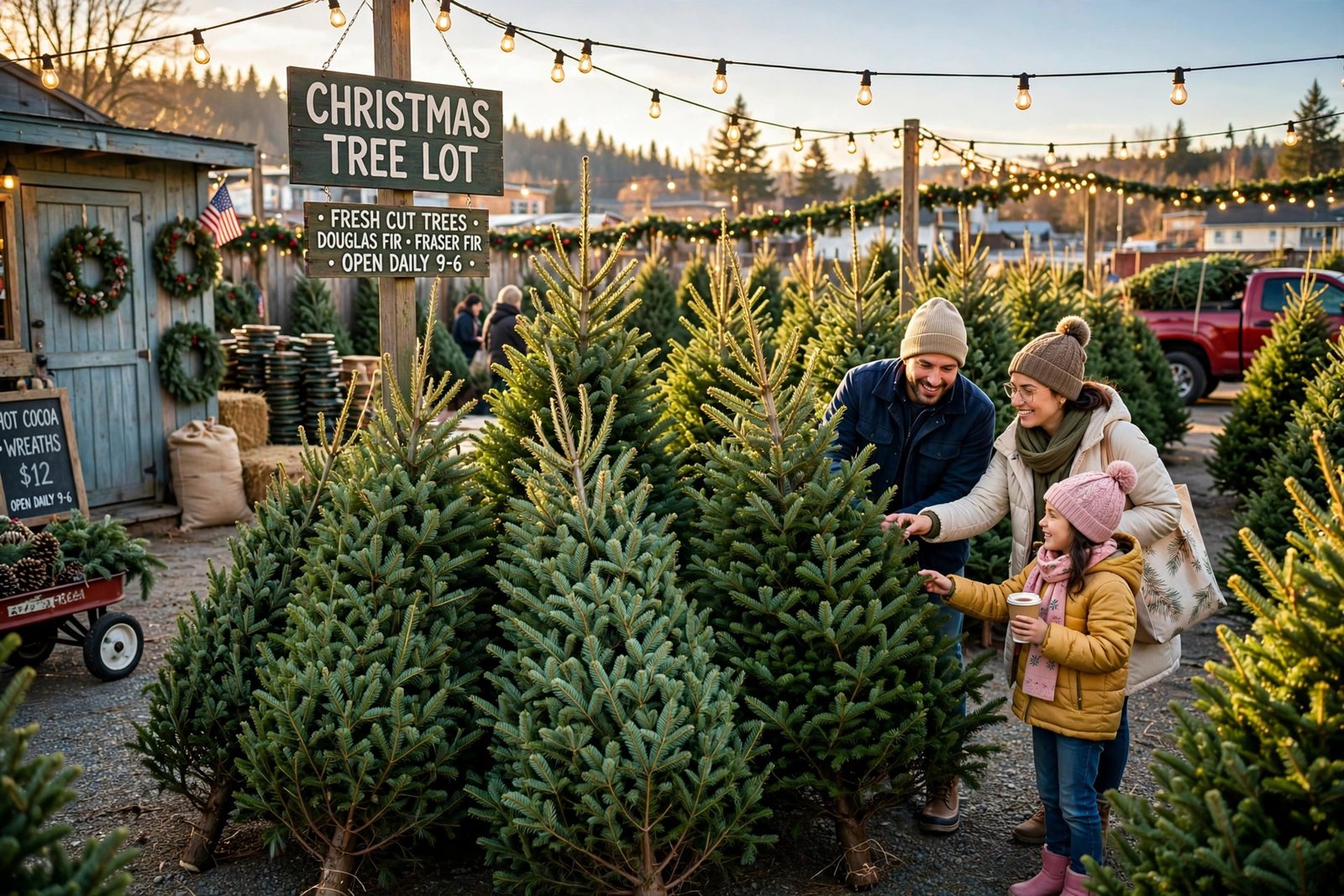
Every year, as November turns toward December, millions of American households face the same cheerful debate: real tree or artificial tree? It sounds like a simple decorating choice, but it touches on tradition, money, allergies, sustainability, and even childhood memory. Some families would never bring a plastic tree into the house. Others would never go back to vacuuming needles in January. Both sides have a point, and the numbers show that America has not settled the question. It has split it.
The real-tree tradition in the United States is older than most people realize, and the artificial tree is older too. Real evergreens have been brought indoors for winter celebrations for centuries, while artificial trees, first made from goose feathers and later from aluminum and plastic, offered a tidy alternative for city apartments and busy families. Today, the market includes both in huge numbers, and the choice often says less about which tree is objectively better and more about how a household celebrates, how much space it has, and what it values most at the holidays.
Here is how the two options compare in 2026, what Americans are actually choosing, and how to pick the right tree for your home.
How Many Trees Americans Buy
The scale of the American Christmas tree market surprises most people. The National Christmas Tree Association has long reported that roughly 25 to 30 million real Christmas trees are sold each year in the United States, a figure that reflects steady demand even as artificial trees have grown in popularity. That range has held for years, with annual ups and downs tied to weather, farm supply, and the economy.
More recent, detailed counts tell a slightly lower story for real trees. A market breakdown drawing on USDA and industry data put real tree sales at 21.6 million in 2023, down from the higher levels of the 1990s, when Americans bought upwards of 35 million real trees a year. The Visual Capitalist breakdown of the United States Christmas tree market notes that the real-tree market remains a roughly 2 billion dollar business even as artificial trees take a larger share. The difference between the broad 25 to 30 million range and the 21.6 million figure for a single year is a reminder that tree sales are estimates, not exact counts, and that different surveys measure different things.
Artificial tree sales are harder to pin down for a simple reason: an artificial tree is bought once and reused for years. Industry estimates often put annual artificial tree sales in the range of 12 to 15 million, though some older industry reports put the number higher in peak years. What matters more than the single-year sales figure is how many households already own one. A survey by the American Christmas Tree Association found that nearly 82 percent of households with a holiday tree use an artificial one, while only about 18 percent use a real tree. That does not mean artificial trees outsell real trees every year. It means most artificial-tree households are not shopping for a tree at all this year, because last year’s tree is still in the attic.
Put together, the picture is clear: real trees dominate annual purchases, artificial trees dominate households that already display a tree, and both traditions are alive and well.
The Case for a Real Tree
Real-tree lovers talk first about scent, and they are not exaggerating. A fresh Fraser fir or Douglas fir fills a room with a pine fragrance that no candle quite reproduces. The scent is tied to memory for many people: childhood living rooms, grandparents’ houses, the first tree in a first apartment. That emotional pull is powerful, and it is why real-tree farms, lots, and choose-and-cut operations remain a beloved December ritual even for families who could easily buy a pre-lit tree online.
There is also variety. More than 35 species of evergreens are grown for Christmas trees in the United States, and each region has its favorites. The Fraser fir, named for Scottish botanist John Fraser, who explored the southern Appalachians in the late 1700s, dominates national sales thanks to its strong branches, soft needles, and excellent needle retention. The North Carolina Christmas Trees Association’s Fraser fir profile notes that the species grows naturally only on the highest peaks of the southern Appalachians and represents the overwhelming majority of trees grown in North Carolina. Douglas fir, Noble fir, and Balsam fir follow, each with its own shape, scent, and needle character. A shopper who learns the differences can pick a tree for heavy ornaments, for a narrow corner, or for a room where scent matters most.
Real trees also support farms. Christmas tree farming is a long game: a Fraser fir can take many years in the field to reach a typical retail height of six to seven feet, with growers visiting and shaping each tree repeatedly during its life. When you buy a real tree, you are buying the end of a multi-year crop, and the money flows to farms, many of them family operations, in states like North Carolina and Oregon. After the holidays, a real tree can be recycled into mulch in many communities, which appeals to buyers who want a tree that returns to the soil rather than to a landfill.
The drawbacks are real too. A fresh tree needs water every day, drops needles, can trigger allergies in sensitive people, and must be disposed of after the season. Prices have risen, with the National Christmas Tree Association’s 2023 survey reporting a median price of about 75 dollars for a real tree. For a large family on a tight budget, that annual cost adds up, especially when ornaments, lights, and a stand are factored in.
The Case for an Artificial Tree
Artificial-tree buyers talk first about convenience, and they have a strong argument. An artificial tree comes out of a box, assembles in minutes, often comes pre-lit, does not need water, does not drop needles, and folds away for next year. For apartment dwellers, for people with allergies, for households with pets that chew on low branches, and for anyone who wants the tree up the weekend after Thanksgiving and down in mid-January without a trip to a recycling lot, that convenience is decisive.
Cost is the second argument, and the math favors artificial trees over time. A real tree at 75 dollars a year costs more after two seasons than a 150 dollar artificial tree, and far more over a decade, even before counting lights and stands. An artificial tree’s upfront price can be higher, especially for a realistic, pre-lit model, but spread across the six to nine years that many artificial trees last, the annual cost drops sharply. For families watching holiday spending, that predictability matters.
Design flexibility is a third draw. Artificial trees come in slim profiles for small rooms, flocked finishes that mimic snow, white and colorful options for modern decor, and sizes from tabletop to towering. A household can choose exactly the height, fullness, and lighting it wants, year after year, without hoping the lot has the right shape left in stock. That consistency is especially appealing to people who decorate early, host large gatherings, or want the same look in photos every year.
The trade-offs deserve honesty. Most artificial trees are made from plastic and metal, and they are not easily recyclable at the end of their life. A tree that is used for only a season or two and then discarded is worse for the environment than a real tree, and even a long-lived artificial tree carries a manufacturing footprint. Storage is another issue: a boxed tree needs attic, garage, or closet space, and pre-lit trees can develop dead light sections that are annoying to repair. For buyers who move often or live in small spaces, that box can become a burden.
Real vs. Artificial: The Environmental Question
The environmental debate is more nuanced than slogans suggest. Real trees are a farm crop, grown on land that would often otherwise be developed or left idle, and they absorb carbon while growing. Farmers plant new seedlings to replace harvested trees, so the supply renews. The main environmental costs are transport, especially for trees shipped long distances, and disposal if a tree ends up in a landfill rather than being mulched or composted.
Artificial trees, by contrast, have a one-time manufacturing impact that must be spread across many years of use to compare favorably. Environmental analyses often cited by tree associations suggest that an artificial tree needs to be reused for many seasons before its footprint drops below that of buying a fresh tree each year. The exact break-even point depends on assumptions about materials, shipping, and disposal, so shoppers should be wary of any single number presented as settled fact. The practical rule is simple: if you buy artificial, buy a good one and keep it for a long time. If you buy real, recycle it properly in January.
There is also a middle path that more families are trying: a potted living tree that can be planted after the holidays, or a smaller real tree for a main room paired with artificial greenery elsewhere. Neither option suits every climate or living situation, and a potted tree needs care and a suitable planting spot, but for households that want the scent of a real tree without the waste, it is worth considering.
How to Choose Your Tree This Year
Start with your space and your schedule. Measure your ceiling height and the width of the spot where the tree will stand, and remember that a tree topper adds height. If your space is narrow, a slim artificial tree or a naturally narrow species like a Fraser fir may fit better than a wide Douglas fir. If you travel over the holidays or will be away for days, an artificial tree removes the worry about a dry tree and a fire risk.
Think about who lives in the house. Allergy sufferers, curious pets, and toddlers who pull at low branches may do better with an artificial tree, or with a real tree kept in a room that can be gated off. Households that love the ritual of picking a tree together, that have a truck or a roof rack, and that enjoy the smell of fresh pine often find that the real-tree trip is part of the holiday itself, not a chore.
Consider your budget over time, not just this December. If you expect to move, downsize, or change your decorating style soon, a real tree avoids a bulky purchase. If you plan to stay put and decorate similarly for years, a quality artificial tree can save money and hassle. Either way, buy lights and a sturdy stand that match your choice: a real tree needs a stand that holds water, while a pre-lit artificial tree needs a reliable power connection and a safe cord layout.
Finally, think about timing. Real-tree lots and farms often open in late November, and the freshest trees sell first. If you buy early, keep the tree watered and away from heat vents and fireplaces. Artificial trees, meanwhile, go on sale early and often sell out in popular sizes before December, so early shoppers get the best selection. There is no wrong week to put up a tree, only a tree that fits your life.
What the Choice Says About American Holidays
The real-versus-artificial debate endures because it is not really about trees. It is about what the holidays mean to a household. A real tree says: we want the smell, the ritual, the farm visit, and the imperfection of a living thing. An artificial tree says: we want ease, consistency, and a tree that looks the same in every family photo. Both are legitimate, and many families switch back and forth over the years as children grow, homes change, and budgets shift.
What has changed is that neither choice is now seen as a compromise. Artificial trees have become far more realistic, with molded branches and varied needle colors that fool guests from across the room. Real trees, meanwhile, are marketed with the same care as any premium product, with farm stories, species guides, and sustainability claims. The Pacific Northwest Christmas Tree Association’s selection guide shows how detailed the real-tree world has become, with profiles for each species and advice on needle retention, scent, and branch strength.
For retailers and farms, the split market means both channels matter. Lots and farms compete on freshness and experience, while online and big-box sellers compete on price, convenience, and pre-lit features. For shoppers, the competition is good news: there has rarely been a better time to find a tree, real or artificial, that fits a home and a budget.
So this year, when the debate starts at your house, skip the argument about which tree is better in the abstract. Ask instead: what do we want December to feel like? The answer will point to the right tree, and whichever you choose, the ornaments, the lights, and the people gathered around it will matter far more than what the branches are made of.
FAQ
Are more Americans using real or artificial trees?
Most households that display a tree use an artificial one, because artificial trees are reused for years. Real trees still dominate annual purchases, with roughly 25 to 30 million sold each year according to the National Christmas Tree Association, though recent detailed counts put 2023 sales at 21.6 million.
Which real Christmas tree species is most popular?
The Fraser fir leads national sales, thanks to its needle retention, sturdy branches, and pleasant scent. Douglas fir and Noble fir are also popular, with Noble fir especially favored in the West for its strong, layered branches.
Is a real or artificial tree better for the environment?
It depends on use and disposal. A real tree that is recycled into mulch compares well, while an artificial tree needs to be reused for many years to offset its manufacturing footprint. The best choice is the tree you will use responsibly: recycle a real tree, or keep an artificial tree for a long time.
How much does a real Christmas tree cost?
The National Christmas Tree Association’s 2023 survey reported a median price of about 75 dollars for a real tree. Prices vary by species, size, region, and whether you buy from a farm, a lot, or a retail store. An up-to-date real-tree guide notes the same median and compares long-term costs with artificial trees.
Related reading
Christmas Movies and When the November Holiday Season Starts
Pumpkin Everything: Fall Baking and the American Autumn
Fall Aesthetic: The Cozy Season in Viral Videos