
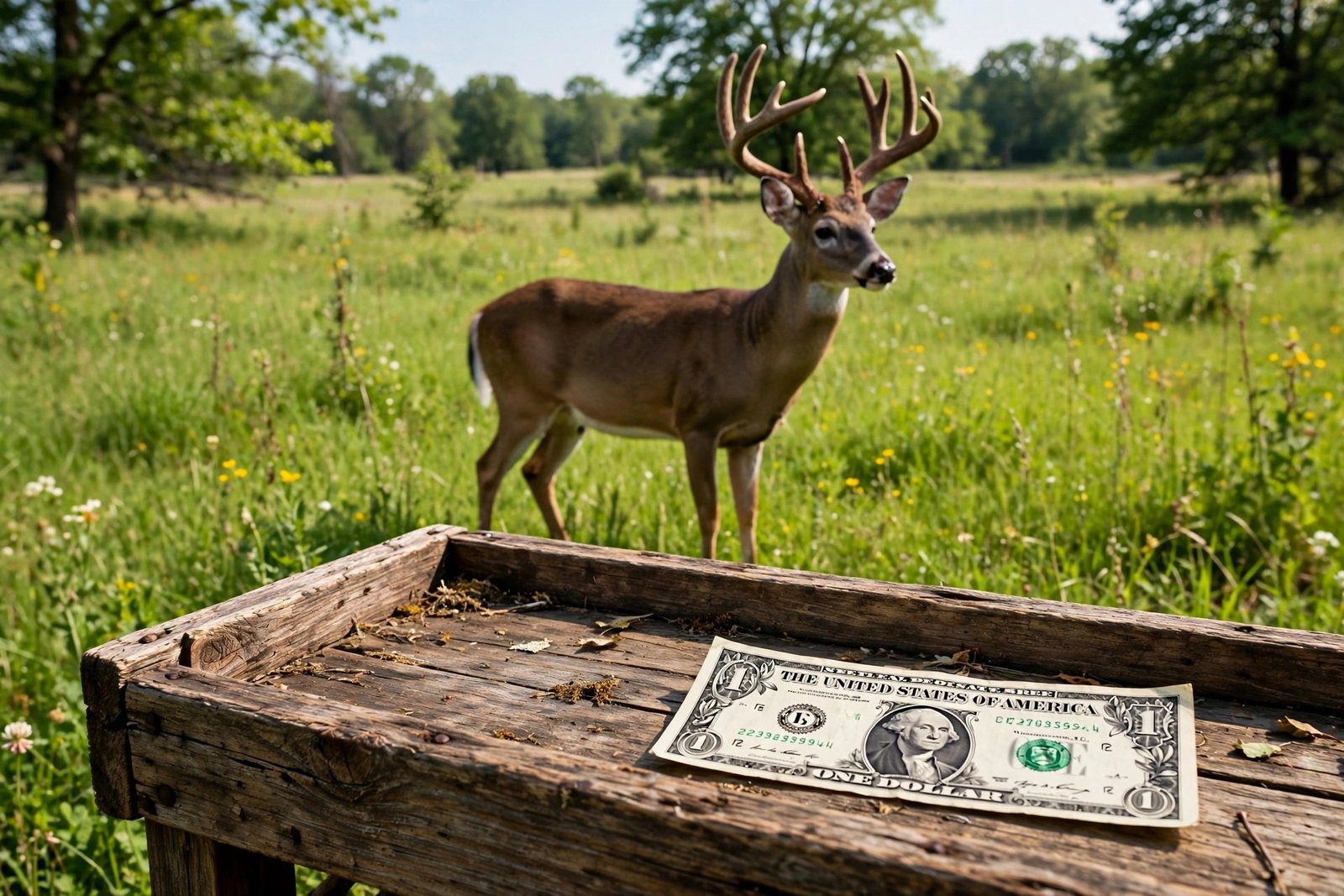
Ask an American how much something costs and you might hear, “Twenty bucks.” Ask how much they make and they might say, “Fifty grand a year — well, sixty thousand bucks.” The word is everywhere in American English, so common that most people never stop to wonder where it came from. A buck is a dollar. Everybody knows that. Almost nobody knows why.
The answer stretches back nearly 300 years, to a time before the United States existed and before the dollar itself was invented. It involves deer hides, frontier traders, poker tables, and a ten-dollar bill with a Roman numeral on it. And like many stories about the origins of slang, the honest version comes with a warning: the leading theory is strong, but the full truth is not entirely settled.
Here is what language historians actually know about why Americans call a dollar a buck — and which of the competing theories holds up.
The Buckskin Theory: A Dollar Was Once a Deer Hide
The most widely accepted explanation starts with buckskin — the hide of a male deer, known as a buck. In the early 1700s, on the American frontier, cash was scarce. European settlers and Native American communities traded in goods that everyone valued, and one of the most valuable and portable goods was the deer hide. Buckskins were durable, useful for clothing and shelter, and easy to carry. They became a standard unit of trade.
According to linguist and lexicographer Grant Barrett, co-host of the radio show A Way with Words, buckskins were commonly used as an element of barter as far back as the 1740s. Traders’ journals from the period list prices in bucks. As Barrett explains, the hides were stacked like paper money, and you would trade a buck for this and a buck for that — one buck meant one deer skin.
The earliest surviving example comes from 1748, when Pennsylvania Dutch pioneer Conrad Weiser wrote in his journal about valuing whiskey at “five bucks.” In some regions, a single buckskin was worth roughly the same as a silver dollar, which helped fix the link between the word and the value of one dollar. By the time the United States adopted the dollar as its official currency with the Coinage Act of 1792, the word buck was already part of the frontier vocabulary. It simply carried over into the cash economy.
The Oxford English Dictionary dates the first printed use of buck to mean a dollar to 1856, but the word had clearly been in spoken use for much longer. By the early 1900s it was everywhere. A 1903 issue of McClure’s magazine quoted a man saying that some gold watches cost “twenty bucks over the counter” — a sentence that would not sound out of place today.
The Poker Theory: Passing the Buck
A second theory comes from the poker table. In the 1800s, poker players used a marker to show whose turn it was to deal or to make the big ante, and that marker was often a knife with a handle made from the horn of a buck. The marker was called the buck, and it was passed from player to player around the table.
This practice gave English the phrase “pass the buck,” first recorded in its literal sense in 1865 and in its figurative sense — shifting responsibility to someone else — by 1912. Some language historians believe the buck knife marker was eventually replaced by a silver dollar, which was also called a buck, and that this helped reinforce the connection between the word and money.
It is a colorful theory, and it explains a famous American phrase. But as Barrett cautions, it is very difficult to prove, and it probably describes a reinforcement of the word’s meaning rather than its origin. The buckskin evidence predates the poker evidence by more than a century.
The Sawbuck Theory: A Ten-Dollar Bill and a Roman Numeral
A third theory points to the ten-dollar bill, once nicknamed a sawbuck because of the large Roman numeral X printed on it. The X reminded people of a sawhorse, also called a sawbuck, used for cutting wood. The idea is that buck is a shortened form of sawbuck.
Most language historians, including Barrett, do not buy this one, mainly because of the timing. The word buck, meaning a dollar, is much older than sawbuck. The ten-dollar bill was not released until 1861, and the evidence for buck as a dollar dates to the decade before that — and the buckskin usage dates to the 1740s. A word cannot be shortened from a term that did not exist yet.
That said, the sawbuck connection left its own mark on American money slang. A ten-dollar bill is still sometimes called a sawbuck, and a five-dollar bill was once called a fin, from the Yiddish word for five. The dollar’s nicknames are a small museum of American history all by themselves.
Why the Buckskin Theory Wins
When language historians weigh the theories, the buckskin explanation wins on the evidence. It has the earliest documentation, the clearest mechanism, and the best fit with what is known about frontier economics. In the 1700s, a deer hide was not just a piece of leather. It was a unit of value that everyone in the trade network understood, from Native American hunters to European merchants to colonial settlers.
There was no fixed exchange rate between one buckskin and one dollar — the value of a hide depended on its thickness and quality, and the dollar did not exist when Weiser wrote about his five bucks of whiskey. But the association was strong enough that when the dollar arrived, the word was waiting for it. The slang stuck because it was already doing the job.
It is worth noting that the Oxford English Dictionary itself calls the origin of buck as a dollar “obscure,” which is the dictionary’s way of saying the evidence is suggestive but not conclusive. The buckskin theory is the best explanation available, and it is the one most linguists accept — but the word’s true origin, like so much slang, may never be proven beyond doubt.
Buck in American Life Today
Today, buck is one of the most versatile words in American English. It is a noun for a dollar, a verb for resisting something, and the root of phrases that cover everything from “buck naked” to “the buck stops here” — the latter famously displayed on President Harry Truman’s desk as a reminder that ultimate responsibility rested with him.
The word also appears in the names of things that have nothing to do with money. A young buck is a spirited young man. To buck the trend is to go against it. To make a fast buck is to earn money quickly, usually with a hint of disapproval. The dollar sense and the deer sense have lived side by side for so long that most speakers never notice the connection.
That is the quiet charm of the word. Every time an American says “twenty bucks,” they are echoing a frontier trader from the 1740s, counting out deer hides for a jug of whiskey, in a country that did not yet exist, using money that had not yet been invented.
Frequently Asked Questions
Why is a dollar called a buck?
The leading theory is that buck comes from buckskin, the hide of a male deer. In the 1700s, buckskins were used as currency in trade between settlers and Native Americans, and one buckskin was roughly equal in value to a dollar. The word carried over into the cash economy.
When was buck first used to mean a dollar?
The earliest surviving written example is from 1748, when pioneer Conrad Weiser recorded whiskey valued at “five bucks.” The Oxford English Dictionary dates the first printed use of buck to mean a dollar to 1856.
Does buck come from sawbuck?
Probably not. Sawbuck was a nickname for the ten-dollar bill, named for the Roman numeral X on it. But buck as a dollar is older than the ten-dollar bill, which was not released until 1861, so the timing does not work.
What does “pass the buck” mean?
It means to shift responsibility to someone else. The phrase comes from poker, where a buckhorn-handled knife — called the buck — was passed around the table to mark the dealer. President Harry Truman popularized the phrase with a sign on his desk reading “The buck stops here.”
Is a buck always exactly one dollar?
In modern American slang, yes — a buck is one US dollar. In the 1700s, a buckskin’s value varied with the quality of the hide, but it was generally understood to be worth about a dollar.
Sources
- Reader’s Digest — Why Is a Dollar Called a Buck? (interview with linguist Grant Barrett)
- Mental Floss — Why Do We Call a Dollar a “Buck”?
- WordSmarts — Why Is a Dollar Called a ‘Buck’?
- Mining.com — 31 Fascinating Facts on the Early History of the U.S. Dollar