
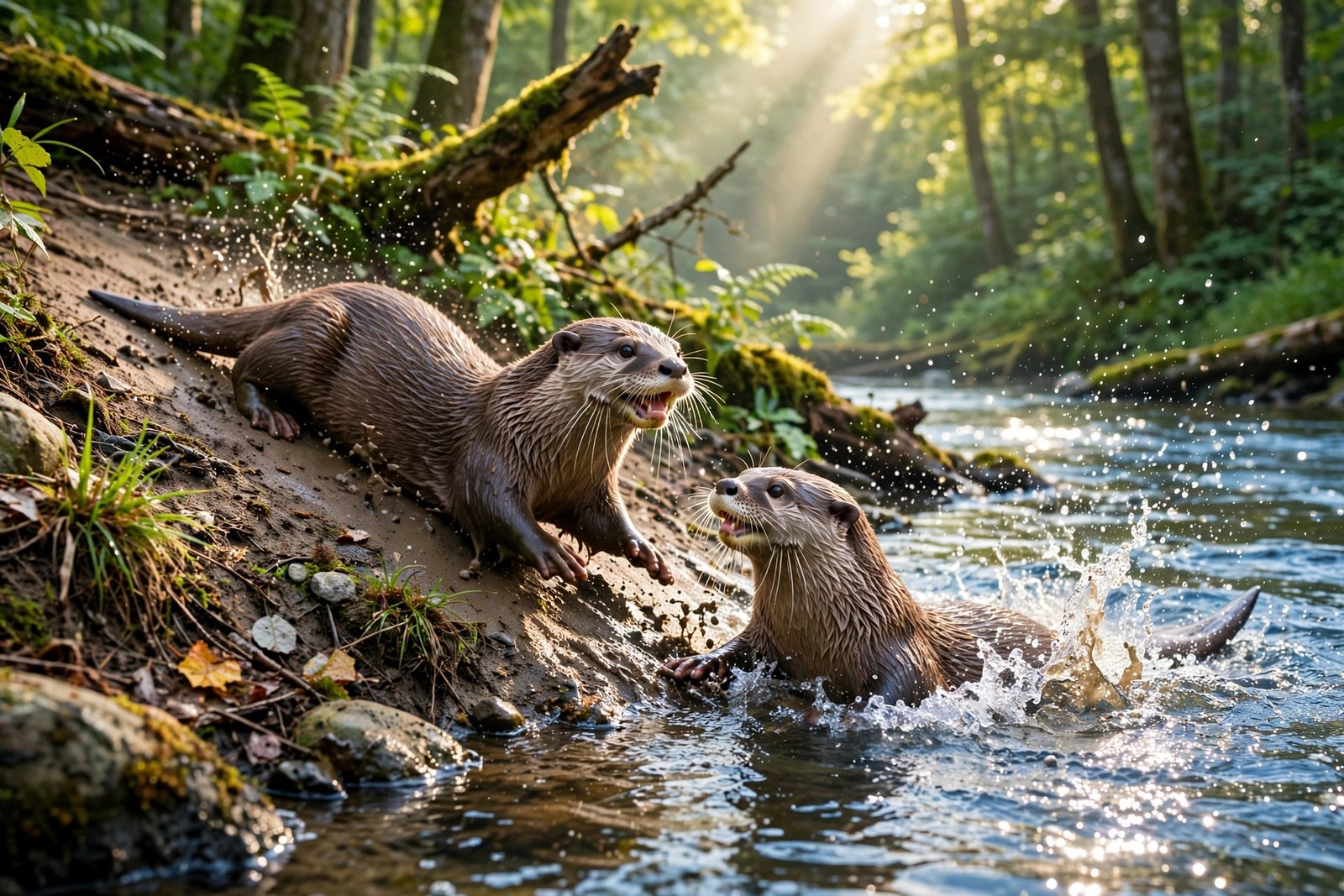
There is a moment, if you are lucky enough to be standing on a riverbank at dawn, when the water seems to laugh. A dark head pops up, then another, and then a sleek brown body slides down a muddy bank and splashes into the current with what can only be described as joy. River otters play. They slide, they chase, they wrestle, they juggle stones. And for a long time in America, you could not see any of it — because the otters were gone.
By the early 1900s, the North American river otter had been trapped, hunted, and poisoned out of much of the United States. In state after state, the rivers were empty. Today, the otters are back — in more than 20 states where they had vanished, through one of the most successful wildlife comebacks in American history. This is the story of how America brought the river otter home.
The Otter That Disappeared
North American river otters once lived in nearly every river, stream, lake, and marsh in the United States and Canada. They are members of the weasel family, superb swimmers with webbed feet, dense waterproof fur, and a body built for the water. An adult river otter weighs 11 to 30 pounds and can be up to four feet long, including the tail. They eat fish, crayfish, frogs, and mussels, and they are among the most playful animals in North America — sliding down muddy and snowy banks, sometimes for no reason anyone can identify except fun.
The otter’s fur was its undoing. In the 1700s and 1800s, otter pelts were valuable, and trappers took them by the thousands. By the late 1800s, the trade had thinned the population badly. Then came the twentieth century’s double blow: water pollution and habitat destruction. Otters are sensitive to polluted water, and as American rivers filled with industrial waste, sewage, and farm runoff, the otters vanished from whole regions. By the 1970s, river otters were gone from at least 11 states entirely and rare in many more. In places like Colorado, Nebraska, and Pennsylvania, a river otter was a creature from the history books.
The Great Otter Comeback
The comeback began with two things: cleaner water and deliberate reintroduction. The Clean Water Act of 1972 started the slow work of cleaning up American rivers, and as the water improved, the habitat came back with it. Then, starting in the 1970s and accelerating through the 1980s and 1990s, state wildlife agencies began moving otters back into the rivers where they had lived.
The reintroductions were a massive, coordinated effort. More than 4,000 otters were trapped in states where they were still abundant — Louisiana, Oregon, Washington, and others — and released in states where they had disappeared, including Colorado, Nebraska, Pennsylvania, New York, Kentucky, and Missouri. The otters were fitted with radio transmitters, tracked by biologists, and monitored as they settled into their new homes. And they thrived. Otters breed quickly, adapt to a wide range of habitats, and eat whatever the river offers. Within a decade or two, reintroduced populations were growing on their own.
Pennsylvania is one of the great success stories. The state reintroduced otters in the 1980s and 1990s, and today they live in rivers across the state. Colorado reintroduced otters in the 1970s and 1980s, and they now swim in the Colorado River and its tributaries. Missouri, which had lost its otters entirely, brought back more than 800 animals between 1982 and 1992, and the population is now so healthy that the state holds a regulated trapping season. In total, river otters have been restored to more than 20 states, and they now live in every state except, notably, a few where reintroduction is still underway or the habitat has not recovered.
Why Otters Matter to a River
Otters are more than a cute success story. They are an indicator species — a living measure of a river’s health. Because otters sit at the top of the aquatic food chain and are sensitive to pollution, their presence means the water is clean enough to support fish, crayfish, and the whole web of life beneath them. A river with otters is a river that works. A river without them is a river in trouble.
Otters also shape the rivers they live in. They eat fish, including slow and sick ones, which can keep fish populations healthier. Their dens — called holts — are dug into riverbanks and used by other animals. Their latrines, the communal spots where otters leave droppings, are communication hubs that mark territory and carry information between otter families. And their play is not just play: sliding and wrestling help young otters learn to swim, hunt, and survive.
The otter’s return is also a sign of something larger. The same laws and programs that brought back the otter — the Clean Water Act, state reintroduction programs, the Endangered Species Act — also helped bring back bald eagles, peregrine falcons, gray wolves, and other animals that were once in danger of disappearing. The otter is part of a generation of comebacks, and it is one of the most complete.
Otters Around the World — and in American Culture
The North American river otter is one of 13 otter species worldwide, and it is the only one native to North America. Its cousins include the sea otter of the Pacific coast, which is larger and spends its whole life in the ocean, and the giant otter of the Amazon, which can grow to six feet long. The river otter is the most widespread of them all, and the most adaptable — it lives in rivers, lakes, marshes, and coastal waters from Alaska to Florida.
Otters have charmed Americans for generations. They appear in Native American stories as clever, playful tricksters. They starred in the beloved 1969 book and film “Ring of Bright Water,” about a man who adopts an otter in Scotland. They are a favorite at zoos and aquariums, where their play draws crowds. And in recent years, otter videos — sliding, juggling, holding hands — have become some of the most shared animal clips on the internet. The otter’s comeback is a conservation success, but it is also a cultural one: America loves otters, and it is good to have them back in the rivers where they belong.
Where to See River Otters
Otters are most active at dawn and dusk, and the best way to see one is to find a clean river or marsh and sit quietly. Look for slides — smooth, muddy chutes on the bank where otters have been sliding into the water. Look for tracks in the mud: five toes, webbed feet, and a tail drag. Listen for chirps and chuckles, the sounds otters make to each other. And be patient. Otters are shy around people, and they will vanish at the first loud noise.
Good places to look include the rivers of the Pacific Northwest, where otters never left, and the reintroduction success stories of the East and Midwest — the rivers of Pennsylvania, the streams of the Ozarks, and the marshes of the Southeast. In winter, otters are easier to spot against the snow, and their slides become toboggan runs down snowy banks. In summer, they are harder to find but more playful, with pups learning to swim in the shallows.
If you do see one, keep your distance and keep quiet. Otters are wild animals, and a mother with pups will not tolerate a close approach. Watch from the bank, use binoculars, and let the otters do what otters do: swim, slide, and play, in a river that is theirs again.
Frequently Asked Questions
Are river otters endangered?
No. North American river otters are listed as a species of least concern, and their population is stable or growing across most of their range. They were once gone from many states, but reintroduction programs have restored them to more than 20 states.
Why did river otters disappear from so many states?
Over-trapping for fur in the 1700s and 1800s, followed by water pollution and habitat loss in the 1900s. Otters are sensitive to polluted water, and as American rivers degraded, the otters vanished from whole regions.
How were river otters brought back?
State wildlife agencies trapped more than 4,000 otters in states where they were abundant and released them in states where they had disappeared, starting in the 1970s. Cleaner water under the Clean Water Act made the reintroductions possible.
What do river otters eat?
Mostly fish, along with crayfish, frogs, mussels, and other aquatic animals. They are skilled hunters that can stay underwater for several minutes and catch fish with their paws.
Do otters really play?
Yes. River otters are famous for sliding down muddy and snowy banks, wrestling, chasing each other, and juggling stones. Biologists believe play helps young otters learn to swim and hunt.
Where can I see river otters in the wild?
Look for them at dawn and dusk along clean rivers, streams, and marshes. Good spots include the Pacific Northwest, Pennsylvania’s rivers, the Ozarks, and the Southeast. Look for slides on muddy banks and listen for chirps.
Related Reading
- Assateague’s Wild Ponies and the Famous Pony Swim
- Florida Manatees: Where to See Them in Winter
- Whooping Cranes: America’s Tallest Bird Makes a Comeback
Sources: Wikipedia: North American river otter; U.S. Fish and Wildlife Service: North American River Otter