
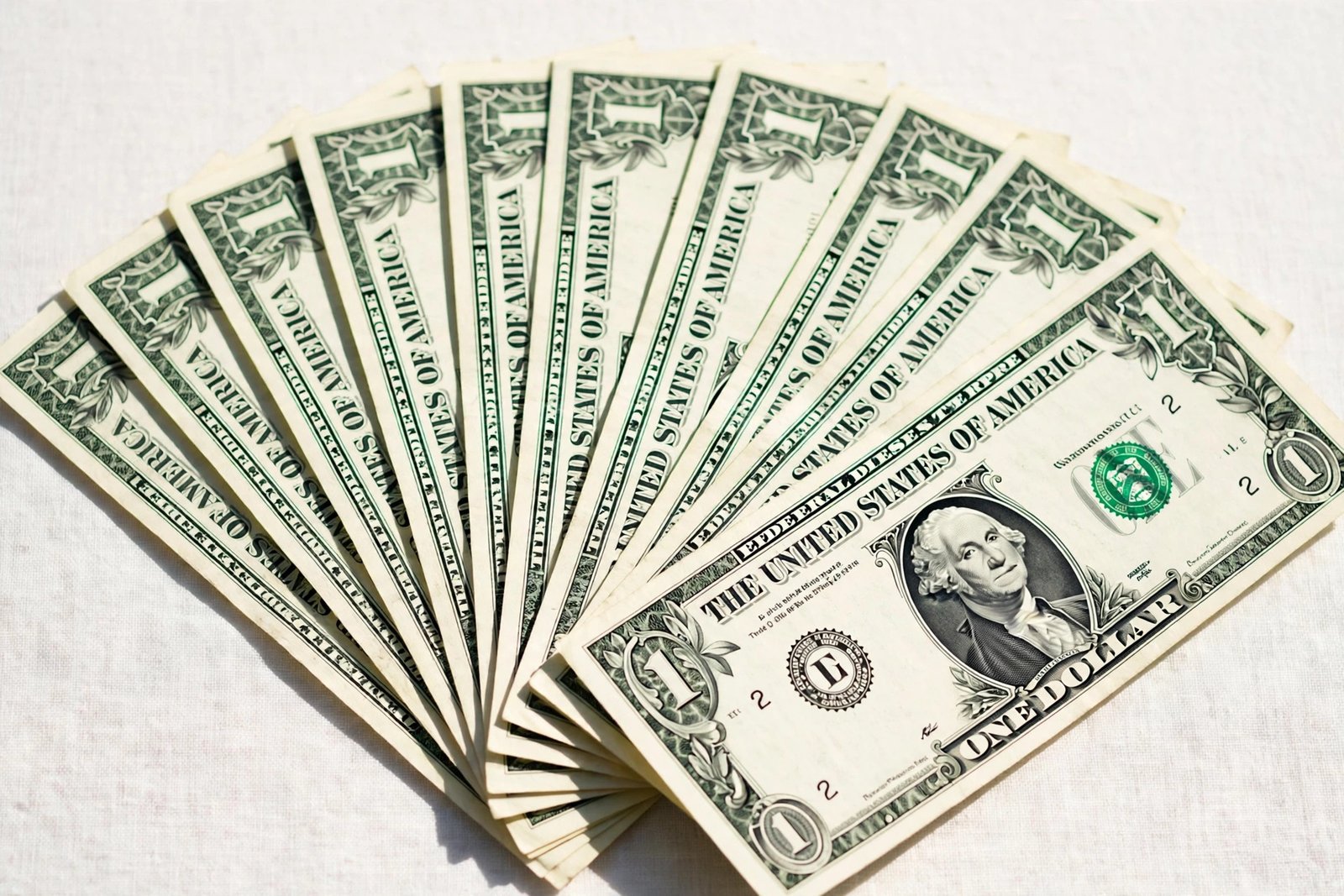
Pull a dollar bill from your wallet and look at it for a moment. The portrait, the seals, the fine lines of engraving, and above all, the color. American paper money is green, and it has been green for so long that most people never stop to ask why. Other countries print banknotes in blue, red, purple, orange, and every shade in between, often changing colors by denomination to help people tell bills apart at a glance. The United States, by contrast, stuck with green for more than a century and a half, through wars, depressions, redesigns, and the rise of digital payments.
The answer is not a single decision by a single person. It is a story that runs through the Civil War, the invention of photography, the chemistry of ink, and the psychology of trust. It involves a nickname that entered everyday language, a government printing office that admitted it did not know the full original reason, and a 1929 redesign that could have changed everything and instead kept green on purpose. Here is why American money is green, and why it is likely to stay that way.
Before Green: A Mess of Private Banknotes
To understand why green mattered, it helps to picture American money before the Civil War. There was no single national paper currency. Instead, hundreds of state-chartered banks issued their own notes, in different sizes, designs, and colors, with varying degrees of reliability. A merchant in one state might not recognize, or trust, a note from a bank in another state, and counterfeiting was rampant. Paper money was useful, but it was chaotic.
The federal government had experimented with paper money before, most famously with Continental currency during the Revolutionary War, but that experiment ended badly. So much Continental paper was printed to fund the war that it lost value dramatically, giving rise to the phrase not worth a Continental. For decades afterward, the federal government was wary of issuing paper money directly, leaving the field to banks and, during crises, to Treasury notes of limited kinds.
By the mid-1800s, printing technology was changing the stakes. Photography was new, and early cameras saw the world in black and white. That created both a threat and an opportunity for banknote printers. A counterfeiter who could photograph a note could reproduce its black-and-white design, but color features would lose their distinctiveness in a photograph. Printers began experimenting with colored tints as a security feature, reasoning that a note with subtle color variations would be harder to copy faithfully than a purely black-and-white note.
That reasoning set the stage for green. The challenge was finding a colored ink that could not simply be washed off a genuine note, leaving the black design to be photographed and reprinted with fake color added later. The solution, according to the Bureau of Engraving and Printing’s own history, was a green ink that could not be removed without damaging the black ink underneath. The patent rights to such an ink were purchased by Tracy R. Edson, who later helped found the American Bank Note Company, one of the firms that printed America’s first federal paper money.
The Civil War and the Birth of the Greenback
The decisive moment came in 1861, when the Civil War created an urgent need for money to pay troops and buy supplies. Congress authorized the Treasury to issue Demand Notes, so called because they were redeemable on demand for gold coins at Treasury facilities. The following year, the government introduced United States Notes, which were established as legal currency without gold backing. Both series featured backs printed in green ink, and the public quickly gave them a nickname that stuck: greenbacks.
The nickname was more than slang. It became a political term, a cultural shorthand, and eventually a synonym for money itself. People talked about greenbacks the way later generations would talk about bucks or cash. The green back was the most visible feature of the new federal notes, and in a country where most paper money had been issued by private banks, that green back signaled something new: a note backed by the federal government, uniform across states, and recognizable at a glance.
Historians debate some details of the green ink’s origin, including a Canadian connection. Some accounts credit Dr. Thomas Sterry Hunt, a professor in Quebec, with inventing a green anti-counterfeiting ink in 1857, patented on his behalf by a Montreal chemist. Others emphasize the American Bank Note Company’s patented green ink and its resistance to removal. What is not in doubt is the timing and the effect: green ink arrived at the moment when the federal government needed a secure, uniform currency, and it proved effective enough to keep.
The Federal Reserve Bank of New York’s history of the greenback summarizes the Bureau of Engraving and Printing’s position carefully. The Bureau states that no definite explanation can be made for the original choice of green, but it offers the photography and ink-removal explanation as the best-supported account. That honesty matters. The greenback story is not a tidy myth with a single inventor and a single date. It is a practical solution that worked, adopted at a moment of crisis, and then kept because it kept working.
Why Green Survived the 1929 Redesign
If green was a Civil War expedient, why did it survive into the modern era? The best chance to change it came in the late 1920s, when the Treasury redesigned American currency to a smaller, standardized size. Before 1929, American banknotes were larger, roughly the size of a modern check, and came in many designs. The redesign shrank all denominations to the size we know today, standardized portraits and layouts, and cut production costs.
A redesign of that scale would have been a natural moment to introduce color-coded denominations, as many other countries later did. The Treasury considered the question and kept green, for three reasons the Bureau of Engraving and Printing stated explicitly: pigment of that color was readily available in large quantities, the color was relatively high in its resistance to chemical and physical changes, and green was psychologically identified with the strong and stable credit of the government.
Each reason deserves unpacking. Availability mattered because the government prints billions of notes, and a pigment that is scarce or variable would create supply and consistency problems. Resistance to chemical and physical change mattered because banknotes are handled constantly, folded, washed accidentally, exposed to sunlight, and passed through machines. A color that fades quickly or reacts to chemicals would make notes look worn and untrustworthy, and would make counterfeiting easier. Psychological identification mattered most of all, because by 1929, Americans had associated green with federal money for nearly seventy years. Changing the color would have risked confusing the public and undermining confidence in the new, smaller notes at the very moment the government wanted them accepted without question.
The decision also reflected a broader American approach to currency design. While many countries use bright, denomination-specific colors to help users, especially those with visual impairments, distinguish bills quickly, the United States has traditionally prioritized uniformity and familiarity. All denominations share the same size and the same dominant green-and-black palette, with portraits and numerals doing the work of distinguishing values. That choice has trade-offs, and it has drawn criticism from accessibility advocates, but it reflects a deep preference for continuity.
What Green Actually Is: Ink, Paper, and Printing
American banknotes are not printed on ordinary paper, and their green is not a single flat color. The material is a blend of cotton and linen, typically described as about 75 percent cotton and 25 percent linen, which gives notes their distinctive feel and durability. The green ink itself has changed formulation over time, from early mineral-based pigments to modern inks designed for high-speed intaglio printing, but the hue has remained recognizably the same family of dark green.
The printing process matters to the color story. Intaglio printing presses ink into engraved plates under enormous pressure, creating raised lines that can be felt with a fingertip. That tactile quality, combined with the green tint, made early notes harder to photograph and harder to reproduce with ordinary printing methods. Modern notes add many more security features, including watermarks, security threads, microprinting, and color-shifting ink, but the green base remains the visual anchor that ties a modern 100 dollar bill to a Civil War greenback.
Today, the Bureau of Engraving and Printing, a division of the Treasury Department, prints currency at facilities in Washington, D.C., and Fort Worth, Texas. The process is highly controlled, from paper production to ink mixing to final inspection, and the green color is specified precisely to ensure consistency across billions of notes. A note printed in one facility must match a note printed in the other, because any visible difference would undermine trust and create opportunities for counterfeiters.
As History Facts explains in its account of the greenback era, green endured even as the Bureau took over printing from private firms in 1877 and as the Federal Reserve System introduced Federal Reserve Notes in 1914. Each institutional change could have prompted a color change. None did, because green had become inseparable from the idea of American money.
The Slow Arrival of Color
Look closely at a modern American banknote and you will see that green is no longer alone. Beginning in the early 2000s, the Treasury introduced subtle background colors to higher denominations as an additional security feature and as an aid to distinguishing bills. The 20 dollar bill gained peach shading, the 5 dollar bill gained purple and gray tones, and the 10 dollar bill gained orange, yellow, and red accents. The 100 dollar bill, redesigned in 2013, includes a blue security ribbon and other color elements.
These additions are deliberate and restrained. They add complexity for counterfeiters, because a note with multiple colors and subtle gradients is harder to reproduce than a two-color note, and they help users tell denominations apart without breaking the overall green identity. The base color, the portrait style, and the size remain consistent, so a person who learned to recognize American money decades ago can still recognize it today.
The slow, cautious approach to color reflects a lesson learned from the greenback era: currency design is about trust as much as aesthetics. A radical redesign might look modern, but if it confuses the public, delays acceptance by merchants and banks, or creates a window for counterfeiters to exploit uncertainty, the cost outweighs the benefit. The Treasury has therefore changed American money incrementally, adding features while preserving the familiar green core.
Why Other Countries Chose Differently
It is worth asking why the United States kept green while so many other countries embraced multicolored money. Part of the answer is timing. Countries that redesigned currencies after World War II could start fresh with color-coded systems, while the United States, with a dollar already in global circulation as a reserve currency, faced far higher switching costs.
Another part is culture. In American English, green is the color of money in a way that has entered idioms, songs, and everyday speech. People talk about the green stuff, about going green in a financial sense, and about greenbacks, even if they have never seen a Civil War note.
Green in the Age of Digital Payments
Today, most American transactions are digital, and physical cash accounts for a shrinking share of payments. Yet the government still prints billions of notes each year, and the dollar remains the world’s most widely used reserve currency.
In that context, green serves a different function than it did in 1861. It no longer needs to defeat black-and-white photography, because counterfeiters now use scanners, printers, and digital tools. Modern security relies on watermarks, threads, microprinting, and color-shifting ink, not on green alone. What green provides now is instant recognition. In a wallet, in a cash register, in a photo, or in a film, a green bill reads immediately as American money, and that recognition has value for a currency used around the world.
Will American money ever change color dramatically? Probably not soon, and certainly not all at once. The Treasury’s pattern is incremental: keep the green base, add subtle colors and security features, and preserve the size and overall look that billions of people recognize. A future redesign might add more color, improve accessibility with tactile features or larger numerals, or introduce new materials, but a wholesale abandonment of green would break a link to history that the government has deliberately preserved for more than 160 years.
So the next time you hand over a green bill, remember what it carries. It carries a Civil War emergency, a chemistry experiment in anti-counterfeiting ink, a 1929 decision to value stability over novelty, and a nickname that became part of the language. It is not green because green means money in nature. It is green because, at a moment when America needed money people could trust, green was the color that could not be easily faked, and America never found a good reason to let it go.
FAQ
Why is American money green?
American money is green because Civil War-era federal notes were printed with green ink on their backs, earning the nickname greenbacks. The ink was believed to deter counterfeiting, because early cameras saw only in black and white and the green ink could not be removed without damaging the black design.
Who decided to keep money green in 1929?
When small-sized notes were introduced in 1929, the Bureau of Engraving and Printing kept green because the pigment was readily available, resistant to chemical and physical change, and psychologically identified with the strong and stable credit of the government.
Is American money printed on paper?
No, not ordinary paper. United States banknotes are printed on a blend of cotton and linen, which gives them durability and a distinctive feel. The green ink is applied through intaglio printing, which creates raised lines that can be felt.
Do modern dollar bills have other colors?
Yes. Modern redesigns add subtle background colors, such as peach on the 20 dollar bill and purple and gray on the 5 dollar bill, as security features. The Mental Floss history of green currency notes that the green base was kept even as these colors were added.
Related reading
Why Americans Drive on the Right Side of the Road
Why Washington, D.C. Isn’t a State, Explained
GPS: The American Satellite System That Powers the World