
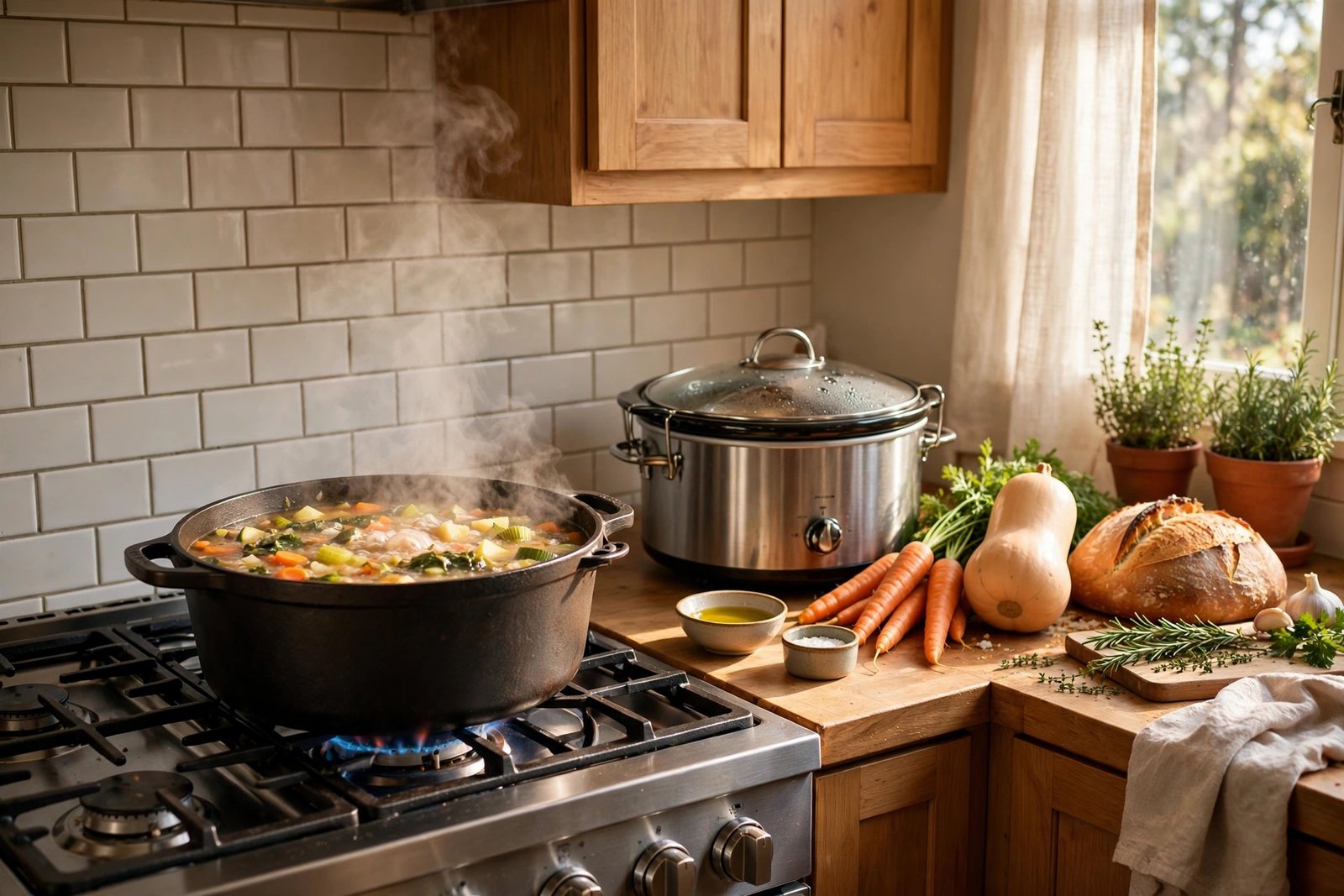
There is a moment every November when the kitchen changes. The salads and grilled dinners of summer give way to something slower: a pot on the stove, a slow cooker on the counter, and a smell that fills the house for hours before dinner. Americans call it soup season, and it is less a trend than a rhythm. When the clocks fall back, the evenings darken early, and the first genuinely chilly night arrives, soup becomes the default answer to the question of what is for dinner. It is practical, forgiving, and deeply comforting, and it has been that way for as long as Americans have cooked at home.
Soup season is not really about a single recipe. It is about a way of cooking that fits November life. The month is busy: school schedules, holiday planning, shorter days, and, toward the end, Thanksgiving itself. A pot of soup asks little and gives a lot. It can simmer while you work, it feeds a crowd or a single person for days, and it turns humble ingredients into something that tastes like care. That is why soup shows up in November in every kind of American kitchen, from the apartment dweller with one pot to the large family with a freezer full of leftovers.
Why November is soup’s month
November is when home cooking picks up in earnest. The clocks go back on the first of the month, it is dark by dinnertime, and the food people want is warm and filling. Seasonal produce points the same way: sweet potatoes, potatoes, Brussels sprouts, carrots, squash, pumpkin, cauliflower, cabbage, mushrooms, onions, and kale are all in season, and nearly all of them belong in a soup pot. Apples, pears, and cranberries round out the month’s flavors, and even they find their way into autumn soups and sides. Soup is the easiest way to use the season’s harvest without a complicated recipe or an expensive shopping list.
There is also a psychological reason soup fits November. Cold weather makes warm food more appealing in a direct, physical way, and the slow pace of soup-making matches the slower pace many people want as the year winds down. A soup that simmers for hours gives the cook something to tend without demanding constant attention, and the smell of it cooking becomes part of the evening itself. In a month when daylight is scarce, a pot on the stove is a small, reliable source of warmth and light.
The slow cooker changed everything
The modern slow cooker has its own American story, and it is older than most people realize. The appliance began life as a bean cooker: electrical engineer Irving Naxon built the Naxon Beanery All-Purpose Cooker, inspired by his mother’s stories of cholent, a Jewish Sabbath stew left to cook slowly in a town bakery’s oven. The idea was simple and powerful: food that cooks gently over hours, without supervision, and tastes better for the wait. That idea became the slow cooker, and the slow cooker became the backbone of soup season for busy households.
The appeal is obvious for November schedules. A slow cooker dinner can be assembled in the morning and ready when everyone gets home, with no last-minute cooking. The guidance that experienced slow cooker users pass along is practical: put vegetables on the bottom and around the sides, because vegetables cook more slowly than many people expect, and fill the cooker no less than half full and no more than two-thirds full. Potatoes deserve special attention: russets break down and thicken a soup on their own, while reds and Yukon Golds hold their shape and give the finished pot something to chew. Knowing which potato does what is the difference between a soup that is velvety and one that is merely starchy.
The soups Americans return to
Every family has its own soup canon, but certain bowls appear again and again across the country. Chicken noodle and chicken and rice soups are the classic comfort soups, the ones people make when someone is sick or the weather turns. Tomato soup, paired with grilled cheese, is a childhood favorite that never really leaves the menu. Potato soup, especially from a slow cooker, is a November staple, creamy and filling and easy to scale up for a crowd. Chili, technically a stew to purists, functions as soup season’s hearty anchor, especially on weekends when there is time to let it simmer and taste better the next day.
Then there are the regional and family soups that make the season personal: Italian wedding soup with tiny meatballs and spinach, matzo ball soup with fluffy dumplings floating in golden broth, Greek lemon chicken soup brightened with fresh lemon juice, borscht made from beets and cabbage, and clam chowder in New England, where the debate over cream versus tomato base is a matter of local pride. The point is not that any one soup is the best. It is that soup is a format, not a recipe, and the format adapts to whatever a household likes, whatever is in the pantry, and whatever the season provides.
Soup as a social food
Soup is also one of the most generous foods Americans cook. A pot makes more than a single meal, and the extra portions are easy to share: dropped off for a neighbor, frozen for a busy week, or served to unexpected guests without panic. Soup freezes well, especially brothy soups, though creamy soups need more care, since dairy can separate when frozen and reheated. Experienced cooks often freeze the base and add cream fresh when serving, or they choose brothy recipes specifically for the freezer. Either way, a freezer stocked with soup is a form of insurance against the busiest weeks of November and December.
Soup also anchors gatherings that are not quite dinner parties. A soup night, where friends bring toppings or bread and everyone serves themselves from a big pot, is low-pressure hosting at its best. No courses, no timing stress, no carving. The same logic makes soup a natural choice for church suppers, school fundraisers, and community meals. It scales gracefully, it stays warm, and it welcomes dietary differences: a vegetarian soup, a gluten-free soup, and a hearty meat soup can sit side by side without anyone feeling like an afterthought.
How to build a better pot
Good soup follows a few principles that work no matter the recipe. Start with aromatics: onion, carrot, and celery, cooked gently until soft, build a base that most soups depend on. Brown meat before adding liquid when the recipe calls for it, because browning adds flavor that simmering alone cannot create. Use stock rather than water when you can, and season gradually, tasting as you go, because a soup that simmers for hours concentrates its flavors and its salt. Add dairy at the end, not the beginning, to avoid curdling, and add delicate ingredients such as fresh herbs, lemon juice, or tender greens in the last minutes so they stay bright.
Leftovers deserve the same care as the first serving. Cool soup quickly, store it in shallow containers, and refrigerate it promptly. Most soups keep well for several days in the refrigerator and for months in the freezer, and many taste better on the second day, after the flavors have had time to meld. When reheating, bring the soup to a gentle simmer rather than a hard boil, and adjust the seasoning again, because cold storage can mute flavors. A squeeze of lemon, a handful of fresh herbs, or a drizzle of good olive oil can revive a reheated pot completely.
Soup season is a state of mind
In the end, soup season is less about cooking technique than about a feeling. It is the feeling of coming inside from the cold to a house that smells like dinner, of sitting down with a warm bowl when the evening is dark, of having enough left over to share or to save. November gives that feeling a natural home, between the last warmth of fall and the full rush of the holidays. The slow cooker on the counter, the pot on the stove, and the freezer full of leftovers are all part of the same quiet ritual: take simple ingredients, give them time, and let them take care of you.
So dig out the big pot, pick a soup that sounds like comfort to you, and let it simmer. Soup season has started, and it will be here until spring.
Sources and further reading
Seasonal November cooking ideas, including soups and make-ahead dishes, are collected here: What to Eat in November: Cozy Dinners, Thanksgiving Favorites, and Make-Ahead Recipes. A celebration of the season’s best soups is available here: 19 Soup Recipes That Make Me Glad It’s Finally Soup Season.
Related reading
American Potluck: History, Rules, and Classic Dishes · November Seasonal Produce Guide for the USA · How Thanksgiving Became a National Holiday in America
Frequently asked questions
When is soup season? Soup season is generally considered to run from early fall through spring, with November as its peak month, when cold evenings and seasonal produce make soup the natural choice.
Where did the slow cooker come from? The slow cooker began as the Naxon Beanery All-Purpose Cooker, built by electrical engineer Irving Naxon and inspired by cholent, a slow-cooked Jewish Sabbath stew.
Should vegetables go on the bottom of a slow cooker? Yes. Extension guidance adapted from the USDA advises putting vegetables on the bottom and around the sides, since they cook more slowly than many people expect.
Do soups taste better the next day? Many do, because flavors meld overnight. Reheat gently, taste again, and brighten the pot with fresh herbs or lemon if needed.
Can you freeze soup? Most brothy soups freeze well for months. Creamy soups can separate when frozen, so freeze the base and add cream fresh when serving.