
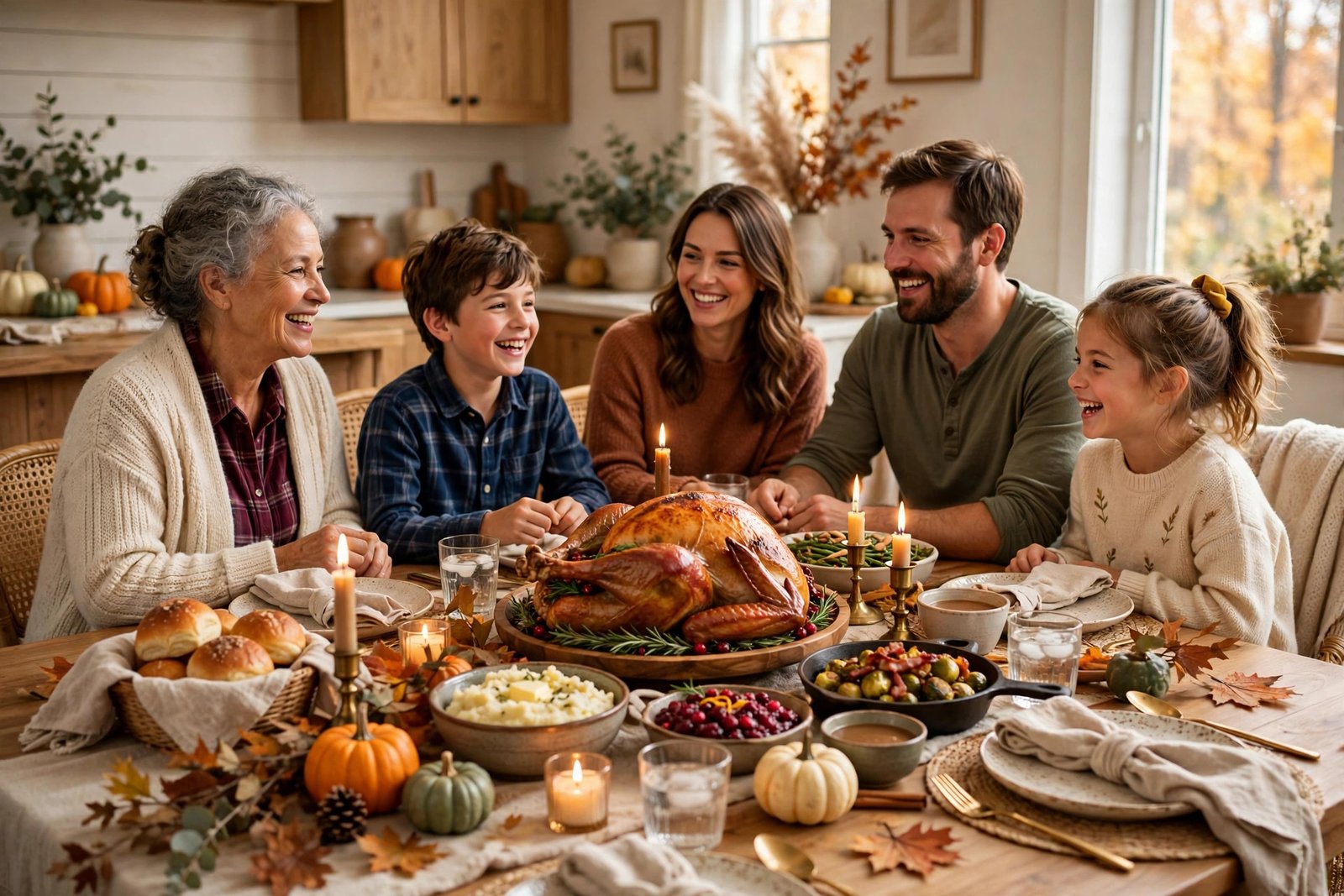
Every November, Americans gather for Thanksgiving without thinking much about how the holiday got its date. Turkey, family, football, and gratitude feel timeless, as if Thanksgiving had always been there. In fact, the holiday Americans celebrate on the fourth Thursday of November is the product of a long political campaign, a Civil War proclamation, and a twentieth-century fight over the calendar. The harvest feast at Plymouth in 1621 is part of the story, but it is not the reason Thanksgiving falls when it does. That reason is Abraham Lincoln, Sarah Josepha Hale, and a Congress that finally settled the date in 1941.
The distinction matters, because the two stories are often blurred together. The 1621 gathering at Plymouth was a harvest celebration, not a religious day of thanksgiving in the sense the colonists understood the term. The colonists’ first recorded religious Thanksgiving Day in Plymouth came in 1623, after rain ended a two-month drought. For more than a century afterward, days of thanksgiving in America were occasional and local: declared by a colony, a state, or a president for a specific occasion, on different dates in different places. There was no single national Thanksgiving, and no fixed Thursday, until the nineteenth century changed that.
Washington’s one-time proclamation
The first national Thanksgiving under the new Constitution came from George Washington. On October 3, 1789, Washington issued a proclamation naming Thursday, November 26, 1789, as an official holiday of sincere and humble thanks. It was a one-time observance, not an annual holiday, and it set a precedent rather than a calendar. Later presidents issued thanksgiving proclamations from time to time, but the dates and even the months varied, and the practice was not consistent. Thanksgiving remained a patchwork: celebrated in some states and not others, on different days, with different customs.
That patchwork frustrated one determined campaigner more than anyone else. Sarah Josepha Hale, editor of Godey’s Lady’s Book and author of Mary Had a Little Lamb, believed the country needed a single, unified day of thanksgiving, celebrated by all states on the same day. She argued that a shared holiday could help ease the growing tensions between North and South, and she pursued the idea for decades, writing letters to presidents and politicians and publishing editorials advocating a national day. Her campaign lasted 36 years, and for most of that time it went nowhere.
Lincoln’s proclamation in the middle of war
The breakthrough came in the middle of the Civil War. On September 28, 1863, Hale wrote directly to President Abraham Lincoln, asking him to use his powers to create the holiday. Days later, Lincoln acted. On October 3, 1863, he issued Presidential Proclamation 106, inviting Americans in every part of the United States, and also those at sea and in foreign lands, to set apart and observe the last Thursday of November next as a day of Thanksgiving and Praise. The proclamation was drafted by Secretary of State William Seward, and it spoke directly to a nation at war: it gave thanks for fruitful fields and healthful skies even in a year of bloodshed, and it asked Americans to commend to tender care all those who had become widows, orphans, mourners, or sufferers in the civil strife, and to pray that the wounds of the nation might be healed.
The timing mattered. The proclamation came just months after the Battle of Gettysburg, which had cost more than 50,000 American casualties over three days in July 1863. Lincoln’s proclamation was one of nine similar proclamations he issued during the Civil War, but the October 1863 proclamation was the first time a president had singled out a specific date, the last Thursday in November, for a holiday specifically called Thanksgiving. From that year forward, every president has issued an annual Thanksgiving proclamation, and Thanksgiving has been observed annually in the United States. The National Park Service calls the 1863 proclamation the beginning of the national holiday of Thanksgiving Day, and the National Archives preserves the engrossed proclamation as part of the General Records of the United States Government.
The turkey pardon tradition
One beloved Thanksgiving custom is often traced to Lincoln as well, though the details are softer than the proclamation itself. According to the White House Historical Society, Lincoln began the tradition of pardoning a turkey in response to the pleas of his son Tad, who had befriended a turkey intended for the table. The modern, formalized turkey pardon ceremony at the White House developed much later, but the story captures something real about how Thanksgiving became a family holiday as well as a national one. By the late nineteenth century, Thanksgiving was firmly established as a domestic celebration: a big meal, a gathering of family, and, increasingly, a day for football and community events.
The holiday’s meaning also evolved. The early proclamations were religious in tone, calling for prayer and humility. Over time, the religious emphasis faded for many families, while the themes of gratitude, homecoming, and generosity remained. Immigrants adopted the holiday, regional dishes joined the table, and Thanksgiving became one of the few American holidays celebrated in nearly every household regardless of background. That universality was exactly what Hale had hoped for: a day that belonged to the whole country at the same time.
Franksgiving: Roosevelt moves the date
The date itself was not settled until the twentieth century gave it a shake. In 1939, President Franklin D. Roosevelt moved Thanksgiving to the third Thursday of November, hoping to lengthen the Christmas shopping season and boost an economy still recovering from the Depression. The move set off a national debate, and critics mocked the earlier date as Franksgiving. Some states followed the new date, others stuck with the old one, and for two years the country once again celebrated Thanksgiving on different days. The confusion proved Hale’s original point: a national holiday only works if everyone agrees on the day.
Congress settled the matter in 1941. A joint resolution passed by Congress and approved by Roosevelt established the fourth Thursday in November as Thanksgiving Day, and the House Joint Resolution making the last Thursday in November a legal holiday was signed on December 26, 1941, days after the United States entered World War II. Since then, the date has been fixed: the fourth Thursday of November, every year, without exception. In 2026, that means Thursday, November 26, the same week as the Macy’s Thanksgiving Day Parade and the start of the holiday shopping season that Roosevelt was thinking about in 1939.
Why the history still matters
Knowing how Thanksgiving became a national holiday changes how the day feels. It is not simply an old harvest festival that survived unchanged. It is a holiday that was argued for, proclaimed in wartime, and legislated after a public fight about shopping. Its central idea, that a divided country should pause on the same day to give thanks, was a deliberate political choice, made by a president trying to hold a nation together and by a magazine editor who spent 36 years writing letters about it. That history does not diminish the holiday. It explains why it feels so American: it was built, like much of the country, out of disagreement, compromise, and a stubborn belief that shared rituals matter.
This November, when the table is set and the parade is on, the date on the calendar carries that history with it. The fourth Thursday is not an accident of tradition. It is the result of Washington’s precedent, Hale’s persistence, Lincoln’s wartime proclamation, and Congress’s final fix. Thanksgiving became a national holiday because people worked, for decades, to make it one.
The holiday’s place in American schools also helped cement it. Generations of schoolchildren learned the story of Thanksgiving through pageants, lessons, and the famous story of the 1621 feast, even as historians later added nuance about what that feast was and was not. The classroom version simplified a complex history, but it also passed the holiday’s core idea from one generation to the next: that gratitude is worth a national pause. Today, teachers and museums present a fuller picture, including the Wampanoag perspective and the long campaign for a national date, and that fuller picture makes the holiday richer rather than smaller.
Sources and further reading
The National Archives tells the full story of the proclamations: The National Archives Celebrates Thanksgiving. The National Park Service covers Lincoln’s proclamation and Hale’s campaign: Lincoln and Thanksgiving. Pilgrim Hall Museum documents the 1621 harvest celebration itself: The First Thanksgiving, Pilgrim Hall Museum.
Related reading
November Is Native American Heritage Month · American Potluck: History, Rules, and Classic Dishes · November Seasonal Produce Guide for the USA
Frequently asked questions
When did Thanksgiving become a national holiday? Abraham Lincoln’s proclamation of October 3, 1863, set the last Thursday of November as a national day of Thanksgiving, and Congress fixed the fourth Thursday in November by law in 1941.
Who campaigned for a national Thanksgiving? Sarah Josepha Hale, editor of Godey’s Lady’s Book, campaigned for 36 years and wrote directly to Lincoln on September 28, 1863.
Was the 1621 Plymouth feast the first Thanksgiving? The 1621 gathering was a harvest celebration, not a religious day of thanksgiving in the colonists’ sense. The first recorded religious Thanksgiving Day in Plymouth came in 1623, after a drought ended.
What was Franksgiving? In 1939, Franklin D. Roosevelt moved Thanksgiving to the third Thursday of November to lengthen the Christmas shopping season. The move caused confusion and was reversed by Congress in 1941.
When is Thanksgiving in 2026? Thursday, November 26, 2026, the fourth Thursday of November.