
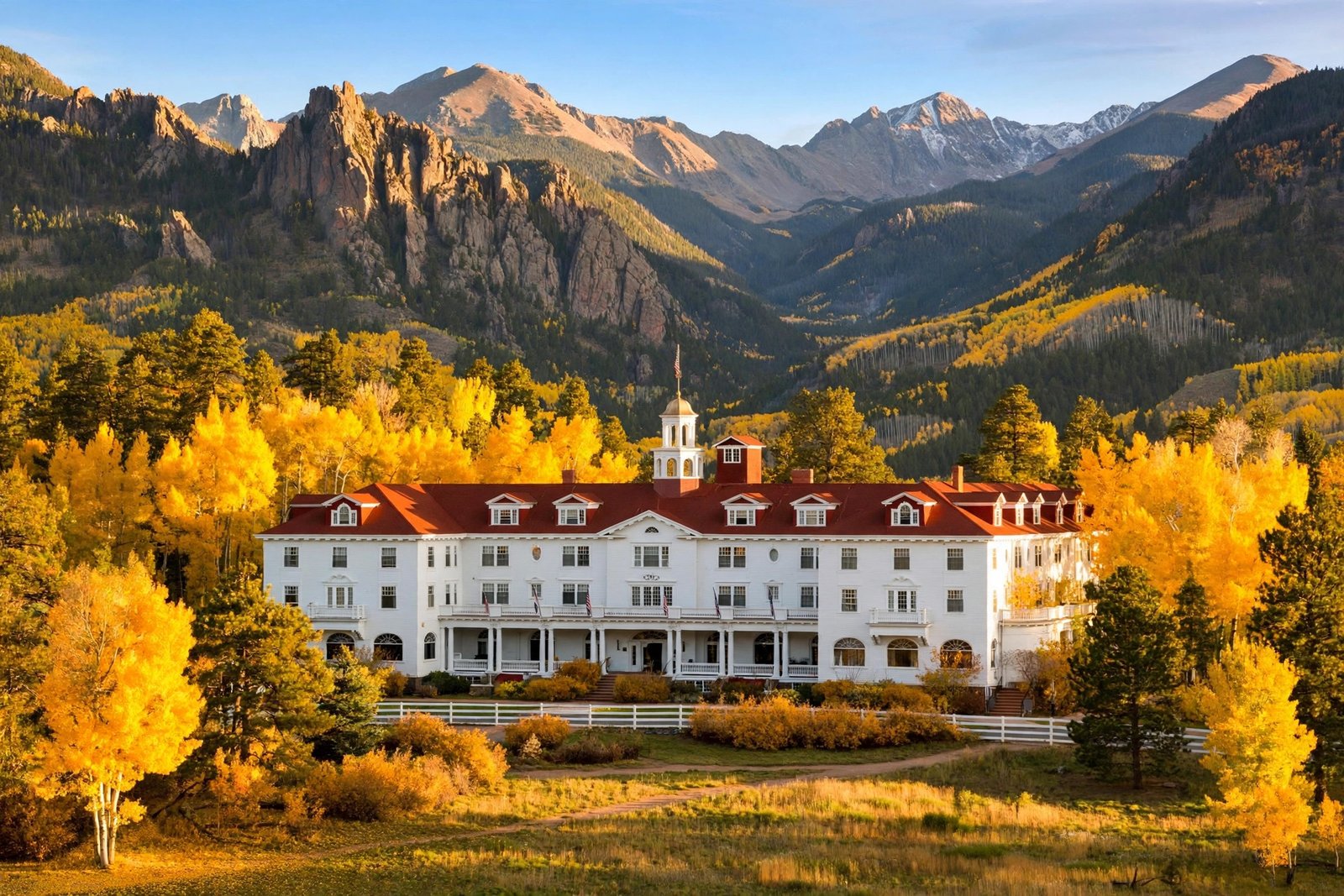
High on a hillside above Estes Park, Colorado, with the Rocky Mountains rising behind it, stands a grand white hotel that looks like it belongs on a postcard — and on a list of America’s most haunted places. The Stanley Hotel, opened on July 4, 1909, has spent more than a century collecting ghost stories, welcoming presidents and performers, and inspiring one of the most famous horror novels ever written. It is a working resort, a historic landmark, and a pilgrimage site for horror fans, all at once. The real story behind it is stranger, and in some ways more interesting, than any single ghost tale.
To understand the Stanley, you have to separate three threads that are often tangled together: the true history of the man who built it, the documented incident that gave Room 217 its reputation, and the night in 1974 when Stephen King stayed there and dreamed up The Shining. Each thread is real. None of them, on its own, explains why the hotel still fascinates visitors today. Together, they explain how a mountain resort became a legend.
A Hotel Built by a Man Who Came to the Mountains to Heal
The Stanley Hotel was built by Freelan Oscar Stanley, known as F.O. Stanley, an inventor and automobile pioneer best known for the Stanley Steamer car, built with his twin brother Francis through the Stanley Motor Carriage Company. In 1903, Stanley arrived in Estes Park hoping the mountain air would improve his health after a tuberculosis diagnosis. The story, as told by the hotel and local histories, is that the high, dry air helped him recover, and he fell in love with the landscape. He returned year after year, and eventually decided to build a luxury retreat that would bring a touch of East Coast elegance to the Rocky Mountains.
The hotel that opened on July 4, 1909, was designed in Colonial Revival style, with a grand lobby, sweeping views, and the kind of polished hospitality that appealed to wealthy eastern visitors and health-seekers alike. Stanley and his wife Flora were hands-on owners in the early years. Flora, an accomplished pianist, was closely associated with the hotel’s music room and concert hall, a building she championed and where performances became part of the resort’s social life. The hotel quickly became a centerpiece of the growing Estes Park community, anchoring tourism in a town that sits at the gateway to what is now Rocky Mountain National Park.
The Stanley’s historic significance is not just folklore. The hotel was listed on the National Register of Historic Places on May 26, 1977, recognizing its architecture and its role in Colorado’s resort history. It remains a full-service resort today, with original rooms, restaurants, event spaces, and guided tours. Guests can stay in the main hotel, explore the grounds, and look out over the same mountain views that drew F.O. Stanley more than a century ago. That continuity — a real, operating hotel, not a ruin or a museum — is part of why its stories feel so alive.
Room 217 and the 1911 Explosion
The most famous room in the Stanley is Room 217, and its reputation begins with a real, documented accident. On June 25, 1911, the hotel suffered a power outage after a storm and flooding, and staff prepared gas-powered lanterns to give guests light. Head chambermaid Elizabeth Wilson entered Room 217 to light a lantern, unaware that gas had leaked into the room. When she lit a match, an explosion tore through the room.
Wilson survived the explosion, though she was seriously injured, with contemporary and later accounts describing broken ankles and a dramatic blast that damaged the room and the floor below. She recovered and, according to hotel histories, returned to work at the Stanley. She did not die in the explosion, and no death in Room 217 is part of the documented record. That fact matters, because the ghost story that grew up around Wilson is gentler than most hauntings: guests report waking to find their clothes folded, their suitcases unpacked and tidied, and their rooms neater than they left them, as if a meticulous head housekeeper were still making her rounds.
Other versions of the Room 217 story add a mischievous detail: unmarried couples, the tale goes, sometimes feel a cold presence between them in bed, as if Wilson disapproved. Whether visitors believe that detail or enjoy it as tour-guide folklore, it fits the character of the legend — a domestic, watchful spirit rather than a menacing one. Room 217 is now one of the most requested rooms in the hotel, and guests who book it often do so precisely because of its history, hoping for a quiet, unexplained tidying rather than a fright.
The Night Stephen King Stayed and Dreamed The Shining
More than six decades after the hotel opened, a single overnight stay changed its place in popular culture forever. In the fall of 1974, horror writer Stephen King and his wife Tabitha were living briefly in Boulder, Colorado, when locals suggested a resort hotel in Estes Park, about an hour’s drive north. The Kings arrived at the Stanley just as the season was ending and other guests were checking out, because the hotel was preparing to close for the winter. According to King’s own retellings, they were the only guests that night.
The details King has shared in interviews have varied slightly over the years, which is part of why the story feels so mythic. He has described roaming the empty halls after Tabitha went to bed, drinking at the bar, and wandering a hotel where chairs stood on tables in the dining room and recorded orchestral music played to an empty room. That night, he dreamed of his young son running through the corridors while being chased by a fire hose. He woke up, and by his own account, he knew he had a book. The novel he went on to write was The Shining, published in 1977, about the fictional Overlook Hotel, an isolated mountain resort with a sinister past.
It is important to be clear about what King did and did not do at the Stanley. He did not write The Shining there, and the 1980 film directed by Stanley Kubrick was not filmed at the Stanley as its main location, though the hotel has been associated with the story ever since, and a later television miniseries did use the property. What the Stanley gave King was the seed: an empty grand hotel, a sense of isolation, and an atmosphere that felt, in his words, like the perfect setting for a ghost story. That seed grew into one of the most celebrated horror novels of the twentieth century, and the Stanley has been linked to the Overlook ever since.
The Ghosts Guests Report: Flora, F.O., and the Fourth Floor
Beyond Room 217, the Stanley’s ghost lore fills the whole building. The founders themselves are said to linger. F.O. Stanley is reported in the lobby, the billiard room, and the bar — the public spaces he loved in life. Flora Stanley is associated with the piano in the concert hall and ballroom, where guests and staff report hearing faint piano music when no one is playing. For a hotel built around music and hospitality, those are fitting hauntings: the owners, still overseeing their house.
The fourth floor has its own reputation, as the most active part of the hotel in many guest accounts. Visitors and housekeeping staff report hearing children’s laughter, footsteps in empty hallways, and the sound of a party in the ballroom when the room is dark and empty. Room 418 is often mentioned alongside the fourth floor in these reports. Some guides also mention a former employee named Paul, said to enforce a long-ago curfew, and a spirit called Lucy, said to be associated with the concert hall. The Lucy story, it should be noted, has no confirmed historical record and is best understood as local folklore rather than documented history, a reminder that not every Stanley tale carries the same weight.
What is striking about the Stanley’s ghost stories, compared with many haunted hotels, is how few of them involve violence or tragedy inside the building itself. No confirmed death is tied to the hotel building in the documented record, and the 1911 explosion injured but did not kill Elizabeth Wilson. The haunting, if that is the word, is largely made of sounds, tidied rooms, cold spots, flickering lights, and the feeling of being watched in a grand old building. That gentleness may be why the hotel can embrace its haunted reputation so openly, offering daytime history tours and nighttime ghost tours without turning the property into a horror attraction alone.
From Literary Landmark to Modern Haunted Destination
After The Shining, the Stanley’s fame grew in waves. Horror fans began making pilgrimages to Estes Park to see the hotel that inspired the Overlook. Television programs about haunted places featured the property, ghost tours became a regular offering, and themed events like costume balls drew visitors who wanted to celebrate the hotel’s spooky side. The hotel leaned into that identity while keeping its historic resort character intact, a balance that few haunted locations manage as successfully.
Today, visitors can choose how they experience the Stanley. A history tour focuses on F.O. and Flora Stanley, the architecture, and the resort’s role in Estes Park. A nighttime tour leans into the ghost stories, the concert hall, and the employee areas that are otherwise off-limits. Guests can book Room 217 or a fourth-floor room if they want the full experience, or they can simply enjoy the views, the restaurants, and the mountain air that first brought F.O. Stanley here. The hotel also hosts weddings, conferences, and seasonal events, which means on any given weekend the lobby may hold both ghost hunters and wedding parties, an odd and very Stanley combination.
That mix is worth appreciating. The Stanley is not a haunted house attraction pretending to be a hotel. It is a hotel that happens to have a haunted reputation, built on real history, a real accident, and a real night that changed American horror fiction. Visitors who arrive expecting only jump scares may be surprised by how beautiful and calm the property feels in daylight. Visitors who arrive for the history may be surprised by how seriously the ghost stories are taken after dark. Both experiences are part of the same place.
Planning a Visit: What to Know Before You Go
If you plan a trip to the Stanley, a few practical points help. The hotel sits at 333 Wonderview Avenue in Estes Park, Colorado, on a hillside above the town, close to the entrance to Rocky Mountain National Park. That location makes it an excellent base for hiking, wildlife viewing, and exploring Estes Park’s shops and restaurants, whether or not you care about ghosts. Book well in advance for popular rooms and tour times, especially in October, when fall colors, Halloween interest, and horror fans converge on the town.
Consider what kind of stay you want. If you are curious about the ghost stories, a guided tour is a better introduction than wandering restricted areas on your own, and the hotel’s own tours are the most reliable way to hear the history alongside the lore. If you stay overnight, remember that the Stanley is an old building, and old buildings creak, settle, and carry sound in ways that can feel mysterious even without a ghost. That is part of the charm, and part of why so many guests leave with a story, whether they arrived as believers or skeptics.
Above all, visit with the real history in mind. F.O. Stanley came to Estes Park sick and found a place that gave him more years and a new purpose. Elizabeth Wilson survived a frightening accident and went back to work. Stephen King spent one strange night in an empty hotel and left with an idea that became a classic. Those are human stories, not just ghost stories, and they are the reason the Stanley still matters more than a century after it opened. The hotel endures because its past is still present, in its architecture, its music, its mountain light, and, if you believe the guests who swear by it, in the quiet footsteps in its halls.
Frequently Asked Questions
Did Stephen King write The Shining at the Stanley Hotel?
No. King stayed at the Stanley for one night in the fall of 1974, when the hotel was nearly empty and closing for the season, and dreamed up the core idea for The Shining that night. He wrote the novel afterward, and it was published in 1977. The Stanley inspired the fictional Overlook Hotel, but the book was not written there.
What happened in Room 217 in 1911?
On June 25, 1911, a gas leak in Room 217 caused an explosion when head chambermaid Elizabeth Wilson lit a lantern during a power outage. Wilson survived with serious injuries, including broken ankles, and later returned to work at the hotel. Guests now associate the room with reports of tidied clothes and unpacked luggage, attributed in folklore to Wilson.
Is the Stanley Hotel really haunted?
That depends on what you mean by haunted. The hotel has a long record of guest and staff reports — piano music with no pianist, children’s laughter on the fourth floor, apparitions of the founders, and unexplained tidying in Room 217 — but these are anecdotal reports, not scientifically verified events. The documented history behind the stories, including the 1911 explosion and King’s 1974 stay, is real, while the ghostly explanations remain a matter of belief and folklore.
Can you stay at the Stanley Hotel today?
Yes. The Stanley is a full-service, operating resort in Estes Park, Colorado. Guests can book rooms, including Room 217, dine at its restaurants, and join daytime history tours or nighttime ghost tours. It is also listed on the National Register of Historic Places.
Related reading
- Front-Yard Halloween Decorating Arms Race
- Road-Trip Gas Station Snack Culture: Buc-ee’s
- Salem, Massachusetts in October: Halloween Crowds
Sources: The Stanley Hotel history and National Register listing, Coloradoan on the Stanley Hotel’s eerie history, and The Stanley Hotel haunting: history and legends.