
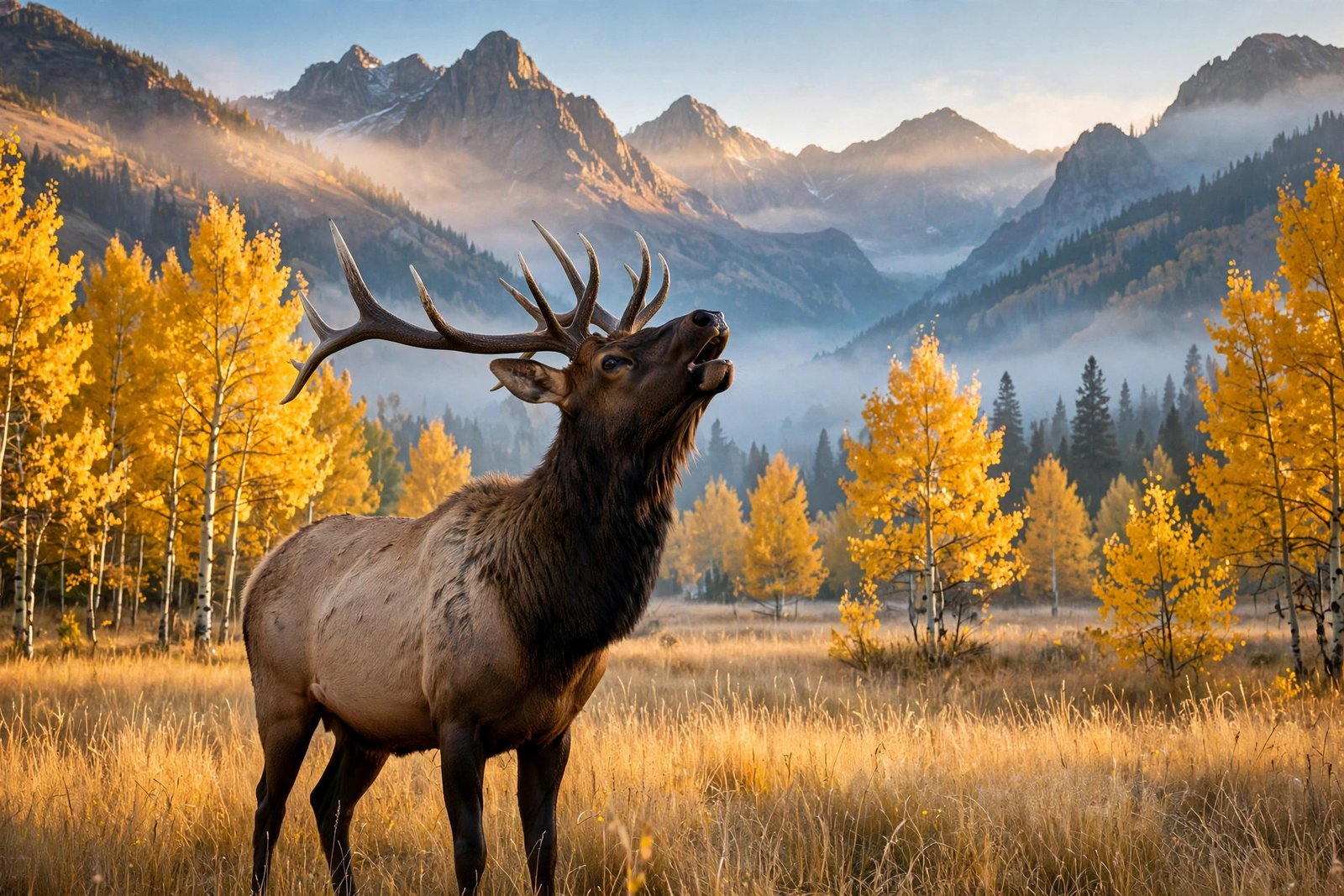
There is a sound in the American mountains in autumn that stops people in their tracks. It starts low in the chest, rises into a high, trembling whistle, and then trails off across a valley like a question nobody answers. That is a bull elk bugling, and for a few weeks every fall it turns ordinary meadows into open-air theaters. If you have never heard it in person, it is hard to describe without sounding like you are exaggerating. The animal making the noise can be enormous, yet the call sounds almost delicate, even eerie, as it carries through cold morning air.
The elk rut, the annual mating season, is one of the most accessible wildlife spectacles in the United States. You do not need a backcountry permit or a long hike to witness it. In several famous places, elk gather in open valleys, along park roads, and even on village lawns, where patient visitors can watch and listen from a safe distance. This guide explains what the rut is, when it peaks, and where to hear bugling elk, from Rocky Mountain National Park in Colorado to the rolling hills of Pennsylvania elk country, with Yellowstone in between.
What Is the Elk Rut, and Why Do Bulls Bugle?
The rut is the elk breeding season. During late summer and autumn, mature bulls that spent much of the warmer months apart begin to gather cows into groups, often called harems, and defend them from rival bulls. The contest is part voice, part display, and occasionally part physical clash. A bull will raise his head, show off his antlers, thrash brush, roll in muddy wallows, and bugle again and again. The bugle is both an advertisement and a warning: it tells cows where he is, and it tells other bulls that he is ready to defend his place.
To a human ear, the bugle is surprising. Many first-time listeners expect a deep roar, something that matches the size of the animal. Instead, the call often begins with low grunts, climbs to a clear, flute-like note, and ends with a series of chuckles or grunts. That strange combination is exactly why it is so memorable. On a still morning, when mist sits low over a meadow and the first light touches the trees, a bugle can feel like it comes from everywhere at once. Bulls answer each other across valleys, and for a few minutes the whole landscape seems to be talking.
When Is Elk Rut Season in the USA?
Across most of the United States, the elk rut runs from mid-September into mid-October, with some activity stretching into early November in certain areas. The peak window is often described as mid-September to mid-October, and that is the safest general rule for planning a trip. Within that window, timing still matters. Early in the season, bulls are warming up. By late September, activity is usually at its most intense. By late October, the chorus fades, though elk remain visible in many of the same valleys.
Dawn and dusk are the best times of day. Elk are most active in the first hours after sunrise and the last hours before dark, when the air is cool and the light is soft. Midday visits can still produce sightings, especially on cool, overcast days, but the odds of hearing sustained bugling are lower when the sun is high and the herd is resting. If you can only make one outing, plan to be in place before sunrise, settled quietly, and ready to wait. Wildlife watching rewards patience far more than rushing from spot to spot.
Rocky Mountain National Park, Colorado: The Classic Rut Trip
For many visitors, Rocky Mountain National Park is the first place that comes to mind when they think of hearing elk bugle, and for good reason. In September and October, elk herds gather in lower-elevation meadows for the mating season, and the park is famous for its autumn combination of golden aspen, crisp air, and echoing bugles. Popular viewing areas include Moraine Park, Horseshoe Park, Upper Beaver Meadows, and Kawuneeche Valley on the west side of the park. These broad, open valleys give bulls room to display and give visitors clear sightlines from roads, pullouts, and designated trails.
Moraine Park is often the busiest and most rewarding starting point. Its wide meadow floor, framed by mountains, is a natural stage for the rut. Arrive early, park only where parking is permitted, and watch from the roadside or an established viewing area rather than walking into the meadow. Horseshoe Park offers a similar experience, with open ground and good dawn light, while Kawuneeche Valley on the quieter west side can feel more spacious if the east side is crowded. The Cub Lake Trail near Moraine Park is another favorite for walkers, because its early stretch runs along the edge of elk country and offers chances to hear bugling without leaving the trail.
The National Park Service asks visitors to stay back at least 75 feet from elk, roughly two school bus lengths, and to treat that distance as a minimum rather than a target. During the rut, the park also closes certain meadow areas to foot travel from 5 p.m. to 10 a.m. daily from September 1 through October 31, including areas in Horseshoe Park, Moraine Park, Upper Beaver Meadows, Harbison Meadow, and Holzwarth Meadow. Visitors must stay on designated roads or established trails during those hours. Artificial elk calls, spotlights, and vehicle headlights used to spot wildlife are prohibited. These rules protect both people and elk, and they make viewing better for everyone by keeping the herd calm and visible.
Estes Park, the gateway town on the east side of the park, is part of the experience too. Elk wander through town in autumn, graze on lawns, and sometimes bugle within earshot of cafes and sidewalks. That closeness can be thrilling, but it also calls for extra care. Never approach an elk for a photo, never block its path, and never assume a calm-looking animal will stay calm. If an elk lifts its head and stares, pins its ears, or stomps the ground, you are too close. Back away slowly and give it room to move on.
Yellowstone National Park: Bugling in Mammoth Hot Springs
Yellowstone offers a very different kind of elk rut experience. At Mammoth Hot Springs, near the park’s north entrance, elk live year-round, and in autumn the village itself becomes a rutting ground. Bulls gather harems on the grassy lawns around historic buildings, bugle between structures, and spar in full view of visitors walking to the visitor center or a lodge. It is one of the few places in the national park system where a major wildlife spectacle unfolds in the middle of a developed area, and that makes it both unforgettable and demanding of good manners.
The elk rut in Yellowstone generally runs from September into mid-October, with Mammoth Hot Springs described as the center of the action. For visitors who want a quieter setting, Swan Lake Flats, Lamar Valley, and the Madison Valley offer open meadows where elk gather away from buildings and crowds. Lamar Valley in particular rewards early risers, with wide views, cold morning light, and sound that carries for a long way across the valley floor. Wherever you watch, the park rule is clear: stay at least 25 yards from elk and other wildlife, and farther if the animal notices you. Bulls during the rut can be highly aggressive and may charge people or vehicles, so distance is not optional.
Pennsylvania Elk Country: Benezette and Winslow Hill
You do not have to travel west to hear wild elk bugle. Pennsylvania’s elk country, centered on the small community of Benezette in the north-central part of the state, offers one of the most surprising wildlife experiences in the East. Elk were once gone from Pennsylvania, but a reintroduced herd now roams the region, and every autumn the hills around Benezette fill with the sound of bugling bulls. For many eastern visitors, it is a revelation: a wild elk rut within driving distance, without a flight to the Rockies.
Start at the Elk Country Visitor Center in Benezette. The center sits at the heart of Pennsylvania’s elk range and offers exhibits on elk history and conservation, trails to viewing areas, and a base for planning the rest of your drive. From there, Winslow Hill is the classic next stop. The Pennsylvania Game Commission maintains viewing areas along Winslow Hill Road, with off-road parking, pavilions, and overlooks above managed fields where elk gather. Woodring Farm and Dents Run are nearby viewing areas along the same route, and Route 555 runs through the heart of elk country, with additional viewing spots such as Hicks Run. A slow drive along this loop, at dawn or dusk, is the heart of a Pennsylvania elk trip.
The Pennsylvania bugling season generally runs from mid-September into early to mid-October, with September often named as the top month. As in the West, dawn and dusk are the best times, and elk are most likely to be in open fields during those hours. Visitors are advised to remain well back from elk, with guidance in Pennsylvania commonly recommending about 100 yards, and never to leave designated viewing areas to get closer. Do not feed elk, do not use calls to attract them, and do not block roads while watching. The herd is wild and free-roaming, so sightings are never guaranteed, but that uncertainty is part of what makes a successful morning feel earned.
More Places to Hear Bugling Elk
Beyond the big three, several other American landscapes offer strong rut experiences. The Jackson Hole and Grand Teton area in Wyoming, the Cataloochee Valley in Great Smoky Mountains National Park, and the Jemez Mountains in New Mexico all have autumn elk activity, though access, timing, and viewing conditions vary from year to year. State wildlife areas and national forests across the West also hold elk, and local wildlife agencies often publish viewing guidance for their own regions. Wherever you go, the same principles apply: open meadows at dawn and dusk, quiet observation, and generous distance.
How to Watch Elk Safely and Respectfully
Safety during the rut is not complicated, but it does require discipline. Bulls are at their most aggressive and unpredictable in autumn, and cows with calves can also be defensive. Keep at least 75 feet from elk in Rocky Mountain National Park, at least 25 yards in Yellowstone, and even farther in Pennsylvania viewing guidance, and increase that distance whenever an animal reacts to you. If an elk stops grazing, stares, changes direction, or moves toward you, you are too close. Back away slowly, move toward a vehicle or building if one is nearby, and do not run or shout.
Use binoculars or a camera with a zoom lens instead of your feet to get closer. That simple choice protects you and keeps the herd relaxed, which in turn keeps elk visible for longer. Stay on roads, trails, and designated viewing areas, park only where parking is allowed, and turn off car lights and engines when you stop to watch. Never feed wildlife, never use artificial calls or lights to attract elk, and never place yourself between a bull and his cows. A good photo is never worth a charge, and a calm herd is a far better sight than a stressed one.
Planning Your Elk Rut Trip
A little planning turns a hopeful drive into a real wildlife outing. Check park alerts, timed-entry requirements, road conditions, and seasonal closures before you go, because rules and access can change from year to year. In Rocky Mountain National Park, timed-entry reservations have applied during peak season in recent years, so confirm current requirements early. In Yellowstone, some roads and services begin to scale back in autumn, so confirm what will be open during your visit. In Pennsylvania, check visitor center hours and viewing area conditions before a long drive.
Pack for cold mornings and changing weather. Layers, waterproof shoes, binoculars, water, snacks, and a fully charged phone are essentials. Bring a paper map or downloaded offline map for rural areas where cell service is patchy, especially around Benezette. If you are traveling with children, talk through the safety rules before you arrive: stay quiet, stay back, stay on the path, and let the elk come to you with their sound rather than the other way around. Children who understand why distance matters often become the best wildlife watchers in the group.
Frequently Asked Questions
When is the best time to hear elk bugling?
Mid-September to mid-October is the peak window in most places, with dawn and dusk offering the best chances. Late September is often described as a sweet spot, when activity is intense and autumn color is at its best. Bugling can continue into early November in some areas, but the chorus fades as the rut winds down.
Where is the easiest place to hear bugling elk?
Rocky Mountain National Park, Yellowstone’s Mammoth Hot Springs, and Pennsylvania’s Benezette area are among the most reliable places for first-time visitors, because elk gather in open, accessible areas. Moraine Park in Colorado, the lawns at Mammoth Hot Springs, and Winslow Hill near Benezette are all good starting points. No location can guarantee a bugle on a given morning.
How far should I stay from elk during the rut?
Stay at least 75 feet from elk in Rocky Mountain National Park and at least 25 yards in Yellowstone, and follow Pennsylvania viewing guidance to remain well back, commonly about 100 yards, from viewing areas. Treat those distances as minimums. If an elk reacts to you, increase your distance right away.
Can I use an elk call to attract a bull for a photo?
No. Using artificial calls, spotlights, or vehicle headlights to attract or spot wildlife is prohibited in Rocky Mountain National Park and discouraged in wildlife viewing areas generally. It stresses animals, changes their behavior, and can put you and others at risk. Watch quietly from a designated area instead.
Related reading
- Florida Manatees: Where to See Them in Winter
- Assateague and Chincoteague Wild Ponies and the Pony Swim
- How National Parks Power Their Gateway Towns
For official guidance before your trip, see the National Park Service guide to watching elk in Rocky Mountain National Park, the park’s announcement on annual elk rut meadow closures, Yellowstone elk safety guidance, and a guide to Pennsylvania elk bugling season and Benezette viewing areas.