
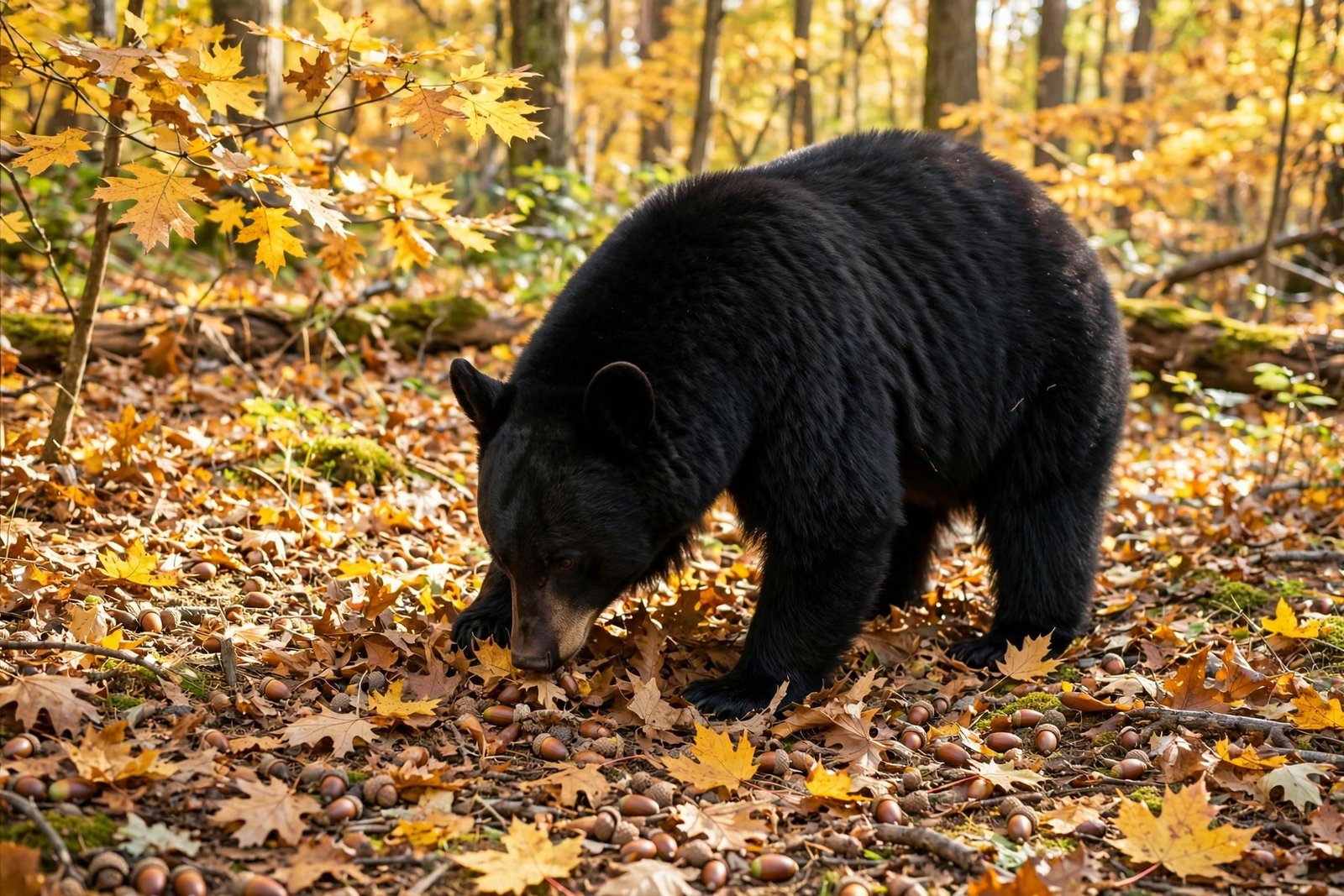
November is a turning point for black bears in America. The frantic feeding of autumn is winding down, the days are shorter and colder, and many bears are slipping into their winter dens. If you live in bear country, hike in the mountains, or simply love wildlife, this is the month when understanding bears matters most. A bear seen in November is not necessarily a problem bear. It may simply be a bear finishing its most important job of the year: getting ready for winter.
Black bears are the most widespread bear species in North America, found from Florida to Alaska and across much of the United States. They are generally shy around people, and most encounters end with the bear moving away. But autumn changes their behavior. Driven by an ancient biological urge to eat, they become bolder, more active, and more likely to wander near homes, campgrounds, and orchards in search of calories. Knowing why helps you stay safe and helps bears stay wild.
This guide explains hyperphagia, denning, what to do if you see a late-season bear, and how households in bear country can prepare for winter.
Hyperphagia: the autumn feeding frenzy
Hyperphagia is the technical term for the intense feeding period bears go through in fall. The National Park Service explains that during the fall months, bears eat and drink nearly nonstop because they need to put on weight to prepare for winter and hibernation. You can read that guidance at https://www.nps.gov/articles/bears-winter.htm.
In practical terms, hyperphagia means a bear’s whole day revolves around food. Bears may forage for many hours, covering long distances to find acorns, berries, nuts, fallen fruit, and other high-calorie natural foods. Virginia wildlife officials note that black bears may spend up to 20 hours a day foraging in fall, sometimes traveling long distances to find foods such as acorns, soft mast, or harvested crop fields. See https://dwr.virginia.gov/media/press-release/black-bear-fall-feeding-frenzy/.
The fat built during this period is not just extra weight. It is fuel. During winter, when food is scarce and bears are denning, their bodies draw on stored fat for energy. A bear that enters winter lean faces a much harder season, especially a mother bear who must nurse cubs in the den. That is why autumn bears seem so single-minded. Every calorie counts.
Natural food availability shapes the whole season. In a good mast year, when acorns and berries are plentiful, bears may stay in the woods and away from people. In a poor mast year, bears are more likely to wander into neighborhoods, campgrounds, and farms looking for alternatives. That is why bear sightings can spike in some autumns even when the bear population itself has not changed much.
From feeding frenzy to denning
As autumn deepens, bears begin to shift from eating to denning. The timing varies by location, weather, food supply, and the individual bear. In northern states, bears may den earlier, while in southern states with milder winters, some bears may den later, den for shorter periods, or in some cases remain somewhat active through winter. The National Park Service notes that the length of denning depends on location and can vary from a few days or weeks to a few months or more.
Montana wildlife officials explain that by December, most bears in that state have begun to hibernate, after preparing through August to November by overeating and gaining weight. You can read more at https://fwp.mt.gov/homepage/news/2025/dec/1217-bear-hibernation. That timeline is a reminder that November is a transition month, not a single moment. Some bears are still feeding heavily in early November, while others are already settling in.
Denning itself is a remarkable feat. Bears make dens in hollow trees or logs, under the root mass of a tree, in rock crevices, or even high in a tree in warmer climates, according to the National Park Service. Some bears dig their own dens, gathering soft vegetation such as pine needles or grasses for insulating bedding. Dens usually have an entrance, a short tunnel, and a chamber that traps body heat.
During denning, a bear’s body temperature, pulse rate, and respiration drop. The bear does not eat, drink, or pass waste for much of the winter, living off stored fat. Black bears are not as deeply out as some people imagine. They are in a state often called torpor, lighter than true hibernation in some definitions, and they can wake and move if disturbed. That is one reason wildlife agencies urge people never to approach or disturb a den.
Pregnant females den for the duration of winter so they can give birth to cubs in the den, most likely within the first two months of hibernation, according to the National Park Service. The family remains in the den through winter while the mother rests and the cubs nurse and grow. In spring, when snow begins to melt, the bears emerge in search of food again.
Where and when bears den
There is no single denning date for America. Elevation, latitude, weather, and food all matter. In mountainous northern regions, cold and snow push bears into dens earlier. In coastal or southern regions, mild weather and lingering food sources can delay denning. A bear in Florida faces a very different winter than a bear in Montana, and their behavior reflects that.
Den sites also vary. Black bears often use natural cavities, hollow logs, brush piles, and spaces under uprooted trees. In some areas they may use rock shelters or culverts. Occasionally, a bear may choose a spot uncomfortably close to people, such as under a porch, in an outbuilding, or in a crawl space. Virginia wildlife officials advise securing outside buildings, openings under porches or houses, and recreational vehicles to prevent a sleepy bear from using these areas as a potential den site.
If you think a bear may be denning on your property, do not investigate closely or try to move it. Contact your state wildlife agency for guidance. Disturbing a denning bear, especially a mother with cubs, can be dangerous for both people and bears.
What to do if you see a late-season bear
Seeing a bear in November can be startling, but the same calm rules apply as in any season. Do not approach the bear, do not feed it, and do not try to photograph it up close. Give it space and a clear escape route. Most black bears want to avoid people and will leave on their own if they are not cornered or attracted by food.
If you encounter a bear on a trail, stay calm, make yourself look larger, speak in a firm voice, and back away slowly without running. Running can trigger a chase response. If you are in a vehicle or near a building, move inside or stay in the vehicle and let the bear pass. Never get between a mother and her cubs.
Do not feed bears, even unintentionally. The National Park Service warns that bears that eat human food can lose their preference for natural food sources and their fear of humans. A bear that learns to associate people with food becomes a problem bear, and problem bears are far more likely to be involved in conflicts that end badly for the bear. Keeping a clean campsite and a secure yard is one of the kindest things you can do for wildlife.
For hikers and campers, standard bear safety still applies in late autumn. Store food exactly as the land manager requires, cook away from tents, and never keep food or scented items inside a tent. Carry bear spray where it is allowed and know how to use it before you need it. Bear spray is a deterrent for a charging bear, not a repellent to spray on gear or skin.
If a black bear approaches aggressively or attacks, wildlife guidance differs from grizzly guidance. The National Park Service advises escaping to a car or building if possible, or fighting back and aiming for the face if escape is not possible. Do not play dead with a black bear. If you are unsure what species you are dealing with, the safest general rule is to give space, avoid running, and follow local agency guidance for your area.
How people in bear country prepare for winter
Preparing for bear winter is mostly about removing temptations. Bears are opportunists in autumn, and a single easy meal can teach them to return again and again. The most effective steps are simple, but they need to be consistent across a neighborhood, not just one yard.
Secure your trash. Use bear-resistant containers where available, keep bins in a garage or sturdy shed until collection morning, and clean bins regularly to reduce odors. Do not leave trash bags out overnight. If your community does not have bear-resistant bins, ask your local waste service or wildlife agency about options.
Take down bird feeders until bears den for winter. Bird seed is high in calories and easy for a bear to find. Wildlife agencies repeatedly list bird feeders as a top attractant in fall. You can put feeders back up once bears are denning in your area, but check local guidance for timing, since denning dates vary.
Secure pet food, livestock feed, compost, and fallen fruit. Feed pets indoors or bring bowls inside promptly. Store livestock feed in a secure building. Pick up fallen fruit from orchards and gardens. Clean grills after use, since grease and food residue attract bears. If you compost, avoid meat, dairy, and oily foods, and use a secure compost system.
Check your property for den opportunities. Close openings under porches, decks, and sheds. Secure outbuildings and recreational vehicles. If you have a crawl space, make sure it is closed and sturdy. These steps protect both your home and any bear looking for a winter shelter in the wrong place.
Talk to neighbors. Bear safety works best when a whole street or community follows the same habits. One unsecured trash bin can draw a bear into a neighborhood where everyone else is doing everything right. Community programs, local wildlife agencies, and BearWise resources offer practical checklists for households and neighborhoods.
Why November bears deserve patience
It is easy to see a bear in a yard in November and assume something is wrong. Often, nothing is wrong. The bear is simply finishing its autumn work, or it has been drawn by a food source it cannot resist. Patience, distance, and good food storage usually solve the problem without drama.
Bears also play an important ecological role. By eating berries and nuts and moving through forests, they help disperse seeds. By turning over logs and soil while foraging, they shape forest floors. They are part of the American landscape, from Appalachian forests to Rocky Mountain valleys, and learning to live alongside them is part of living in bear country.
November is a good month to reset habits before winter. Secure the trash, take down the feeders, check the porch, and enjoy wildlife from a respectful distance. When spring comes and bears emerge lean and hungry from their dens, those same habits will matter all over again.
Frequently Asked Questions
Are black bears still active in November?
Yes, many are. November is a transition month. Some bears are still feeding heavily, while others are entering dens, depending on location, weather, and food supply.
What is hyperphagia?
Hyperphagia is the autumn feeding period when bears eat nearly nonstop to build fat reserves for winter denning. Bears may forage for many hours a day during this time.
Where do black bears den?
In hollow trees or logs, under tree roots, in rock crevices, in dug dens with bedding, and sometimes in sheltered spots near people, which is why securing buildings matters.
What should I do if I see a bear in my yard?
Stay inside or move to safety, do not approach or feed it, give it space to leave, and remove food attractants such as trash, pet food, and bird feeders.
Should I take down bird feeders in fall?
Yes, wildlife agencies advise taking down bird feeders until bears den for winter, since bird seed is a strong attractant in autumn.
Do black bears truly hibernate?
Black bears enter a winter sleep often called torpor, with lowered body temperature and heart rate, but they can wake if disturbed. In mild southern climates, some bears may stay somewhat active.