
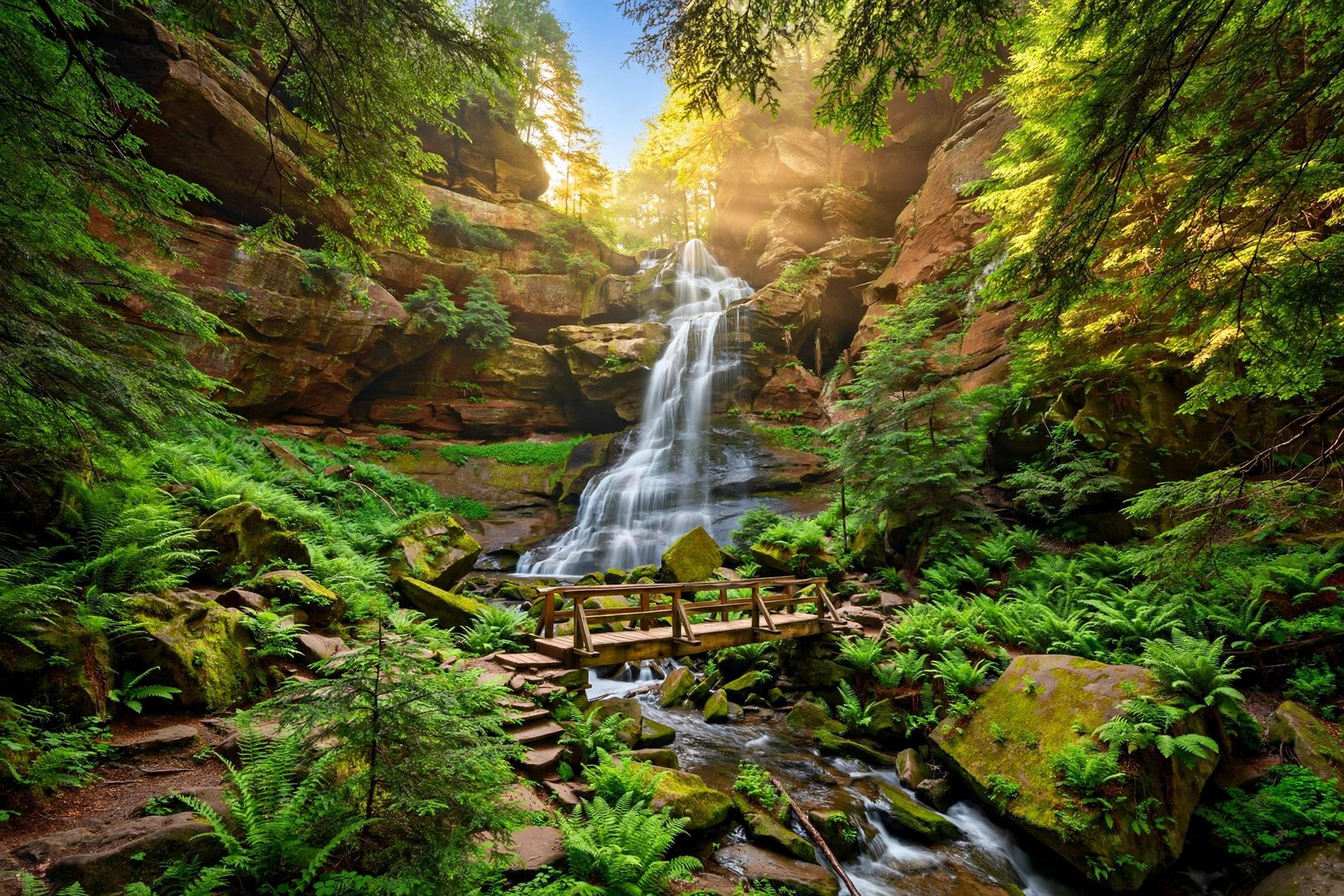
Drive southeast from Columbus, Ohio, and the flat farmland gradually gives way to something unexpected. The road dips and curls, the trees close in, and suddenly you are in a landscape of towering sandstone cliffs, deep shaded gorges, and waterfalls tumbling into fern-filled hollows. This is Hocking Hills, a pocket of Appalachian Ohio that feels like it belongs much farther from the Midwest than it actually is. It is one of the most beautiful places in Ohio, and yet plenty of Americans have never heard of it.
Hocking Hills State Park sits in Hocking County, near the small city of Logan, and it is the anchor of the whole region. The park is not one continuous block of land but a collection of separate areas, each with its own character: Old Man’s Cave, Ash Cave, Cedar Falls, Rock House, Cantwell Cliffs, and the Whispering Cave area. Around them lies the Hocking State Forest, plus nearby state nature preserves such as Conkle’s Hollow. Together they offer some of the most dramatic hiking east of the Mississippi, and admission to the state park itself is free.
What makes Hocking Hills special is the rock itself. The cliffs and gorges are carved from Blackhand sandstone, laid down long ago as sand in an ancient sea and then slowly cut by water over millions of years. The result is a landscape of recess caves, narrow passages, natural bridges, and waterfalls that feels almost sculpted. Hemlock trees shade the gorge floors, keeping them cool and green even in high summer, while ferns and wildflowers fill every damp crevice. It is a place that rewards slowing down.
Old Man’s Cave: The Heart of Hocking Hills
Start at Old Man’s Cave, the most popular and most photographed area in the park. A loop trail of about a mile winds through the gorge, passing the Upper Falls, the Lower Falls, and the Devil’s Bathtub, a swirling pool carved into the rock by the stream. Stone steps, some cut by hand decades ago, lead down into the gorge, and bridges cross the creek at just the right spots for photographs.
The cave itself is a broad recess in the cliff, and according to local tradition it takes its name from a hermit named Richard Rowe, who is said to have lived in the gorge in the late 1700s. Whether every detail of the legend is exact matters less than the atmosphere: standing in the cool shade beneath the overhang, listening to water echo off the stone, it is easy to understand why someone would choose to stay.
Old Man’s Cave is also where you will find the park’s visitor center, with maps and exhibits that help first-time visitors plan their day. Arrive early, especially on weekends, because the parking area fills up fast. The gorge trail is moderate in difficulty, with steps and uneven surfaces, so wear sturdy shoes and take your time on the stone stairways.
Ash Cave: The Giant Recess Cave
If you only have time for one easy stop, make it Ash Cave. A short, mostly paved trail leads through a quiet gorge to a horseshoe-shaped recess cave that stretches about 700 feet across, making it the largest recess cave in Ohio. A seasonal waterfall pours over the rim and drops into a shallow pool on the gorge floor, and the acoustics inside the great stone amphitheater are remarkable.
Ash Cave is also the most accessible of the park’s major areas, which makes it a wonderful choice for families with small children, visitors with limited mobility, and anyone who wants a big payoff for a short walk. Because the trail is gentle and the cave is so vast, it is a favorite spot for weddings and quiet moments alike. Visit after rain if you want to see the waterfall at its best, and visit on a weekday morning if you want the echoing chamber mostly to yourself.
Cedar Falls: The Park’s Most Powerful Waterfall
Cedar Falls is often described as the most powerful waterfall in Hocking Hills, and on a spring day after rain it is easy to believe. The water drops about 50 feet over a wide rock face into a cool, shaded gorge, and the sound fills the hollow long before you reach the viewing area. Early settlers mistook the hemlock trees around the falls for cedars, and the name stuck even though the trees are hemlocks.
The trail to Cedar Falls is about half a mile and moderate in difficulty, with rocky and sometimes muddy sections. It is a lovely walk in its own right, winding through the forest before opening onto the falls. Cedar Falls also sits roughly midway between Old Man’s Cave and Ash Cave, which makes it a natural stopping point on a longer hike through the park.
Rock House, Cantwell Cliffs, and Conkle’s Hollow
Beyond the big three, Hocking Hills rewards explorers who venture a little farther. Rock House is the park’s only true cave, a tunnel-like corridor carved into a cliff, with windows and openings that frame the forest outside. It feels completely different from the open recess caves, darker and more enclosed, and it is a favorite with children who love the idea of a real cave to walk through.
Cantwell Cliffs is the wilder, more rugged cousin of the other areas. The trail climbs to a narrow ridge with sweeping views, then drops into a deep gorge. It is rated difficult, with steep steps and uneven ground, and it is best saved for confident hikers. Conkle’s Hollow, a separate state nature preserve nearby, offers a gorge trail that is wheelchair accessible along the valley floor, plus a rim trail for those who want a view from above. The hollow’s towering cliffs are among the tallest in the region, and the gorge stays cool and green all summer.
Whispering Cave, opened to the public along with the Hemlock Bridge, is the park’s second-largest recess cave and tends to be quieter than the headline attractions. The suspension bridge that leads toward it is itself an experience, stretching across the gorge and offering a view that makes first-time visitors stop mid-step.
The Grandma Gatewood Trail
For hikers who want the full Hocking Hills experience in a single walk, the Grandma Gatewood Trail connects Old Man’s Cave to Cedar Falls and on to Ash Cave, a one-way distance of about six miles. The trail is named for Emma Gatewood, the Ohio grandmother who became the first woman to hike the entire Appalachian Trail alone, which she did in her late sixties. Her story is part of American hiking legend, and walking a trail named for her, through the hills of her home state, feels entirely fitting.
You do not have to hike the whole route to enjoy it. Many visitors walk one section, such as Old Man’s Cave to Cedar Falls, and arrange a shuttle or a second car. The full trail is moderate to demanding in places, with steps and gorge terrain, so plan water, snacks, and plenty of time. Sections of it also form part of Ohio’s Buckeye Trail and longer national trail routes, which is a reminder that Hocking Hills sits on a much bigger map of American footpaths.
Cabins, Lodges, and Small-Town Stays
Part of the charm of Hocking Hills is that you can stay right in the landscape. The state park operates cabins and campgrounds, including a lodge with a restaurant, and the surrounding countryside is full of privately owned cabins, from simple A-frames to luxury retreats with hot tubs on wooded decks. Many visitors come for a weekend cabin stay, hiking by day and sitting on the porch by night, listening to the forest.
The nearby town of Logan makes a good base, with restaurants, shops, and local outfitters, and the wider region offers extras such as canoeing on the Hocking River, zipline tours through the treetops, and horseback riding. If you are planning a cabin weekend, book well ahead for autumn, when the fall color turns the hills gold and red and demand peaks. Weekdays and the quieter winter months offer a calmer, sometimes snow-dusted version of the same beauty.
When to Visit Hocking Hills
There is no bad season in Hocking Hills, only different versions of it. Spring brings the strongest waterfalls and fresh green growth, and it is the best time for waterfall lovers. Summer is lush and shaded in the gorges, though weekends are busy. Autumn is the showstopper, with fall foliage setting the cliffs ablaze, and it is also the most crowded season, so plan ahead. Winter has its own magic: waterfalls freeze into curtains of ice, snow softens the trails, and the park feels almost empty.
Whatever the season, a few rules keep the visit safe and pleasant. Swimming and wading are not permitted in the park’s waterfalls, creeks, or streams, so admire the water from the trail. Stay on marked paths, especially near cliff edges, and keep a respectful distance from ledges. Trails can be slippery after rain, and gorge stairs demand attention. Pack out everything you bring in, and leave the rock formations exactly as you found them.
Planning Your Hocking Hills Trip
A simple first visit looks like this: start at Old Man’s Cave in the morning, spend an hour or two on the gorge loop, drive to Cedar Falls for a midday stop, and finish at Ash Cave in the afternoon light. If you have a second day, add Rock House and Conkle’s Hollow, and leave time for a slow evening in Logan. Bring water, sturdy footwear, a light layer for the cool gorge air, and a camera you do not mind getting a little damp near the falls.
Hocking Hills is also an easy addition to a wider Ohio road trip. It sits within a few hours’ drive of Columbus, Cleveland, and Cincinnati, and it pairs naturally with a visit to the state’s other small-town and scenic attractions. But it is worth a trip all on its own. Few places in the Midwest pack so much drama, waterfalls, caves, and forest quiet into such a compact area, and fewer still manage to feel like a secret while welcoming everyone.
Frequently Asked Questions
Where is Hocking Hills State Park?
Hocking Hills State Park is in Hocking County in southeastern Ohio, near the town of Logan. The park’s main areas are spread around the region, with Old Man’s Cave serving as the central hub and visitor center location.
Is there an entrance fee for Hocking Hills State Park?
No, admission to Hocking Hills State Park is free. Parking at the main areas is also free, though lots at Old Man’s Cave and other popular spots can fill up on weekends and holidays, so arriving early is wise.
Which Hocking Hills hike is best for beginners?
Ash Cave is the easiest of the major hikes, with a short, mostly paved gorge trail leading to a spectacular recess cave. Old Man’s Cave offers a moderate one-mile gorge loop, while Cantwell Cliffs is the most difficult and best left to experienced hikers.
Can you swim in the waterfalls at Hocking Hills?
No, swimming and wading are not permitted in the waterfalls, creeks, or streams within the park. The rule protects both visitors, because gorge currents and rocks can be dangerous, and the fragile gorge environment itself.
Related reading
- Bisbee, Arizona: The Queen Mine Town That Is a Hidden Gem
- Assateague and Chincoteague: The Wild Ponies and the Famous Pony Swim
- How National Parks Power America’s Gateway Towns
For official park information, maps, and current alerts, visit the Ohio Department of Natural Resources page for Hocking Hills State Park, and check the Hocking Hills State Park guide for seasonal visitor tips. The story of the Ash Cave historical marker is a good introduction to the human history layered into the landscape.